Sonoma Diet Hummus

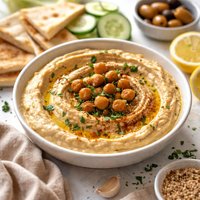
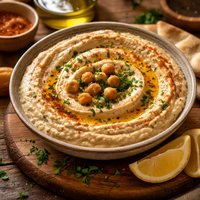
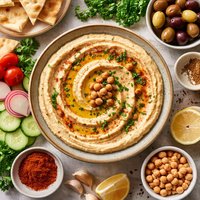
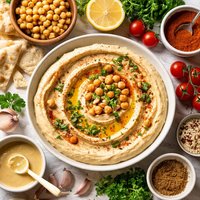
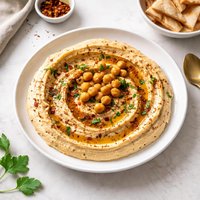
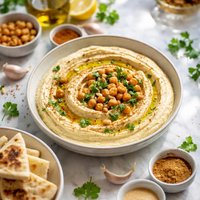
Elevate your snack game with this creamy and wholesome Sonoma Diet Hummus, a flavor-packed dip that’s both nutritious and easy to make in just 10 minutes! Featuring protein-rich chickpeas, nutty tahini, a zesty splash of lemon juice, and aromatic cumin, this recipe offers a heart-healthy twist on the classic hummus. A drizzle of extra-virgin olive oil and optional garnishes like paprika and fresh parsley add a vibrant finishing touch, making it perfect as an appetizer or a light accompaniment to fresh veggies, whole-grain crackers, or sandwiches. With its simple, clean ingredients and effortless preparation, this homemade hummus is a satisfying, Mediterranean-inspired option for health-conscious eaters.

Smart Nutrition Tracking with SnapCalorie

Recipe Information
Ingredients
- 1.5 cups chickpeas (garbanzo beans), rinsed and drained
- 2 tablespoons tahini (sesame seed paste)
- 2 tablespoons freshly squeezed lemon juice
- 2 tablespoons extra-virgin olive oil
- 1 large garlic clove, minced
- 1 teaspoon ground cumin
- 0.5 teaspoon salt
- 2 tablespoons water (plus extra as needed)
- 0.25 teaspoon paprika (optional, for garnish)
- 1 tablespoon fresh parsley (optional, for garnish)
Instructions
In a food processor, combine the chickpeas, tahini, lemon juice, olive oil, minced garlic, ground cumin, and salt.
Pulse the mixture several times to start breaking it down, then process until smooth. Stop to scrape down the sides as needed.
Add the water, one tablespoon at a time, and process again until the hummus reaches your desired consistency. Add more water if needed, one teaspoon at a time.
Taste the hummus and adjust seasonings, adding more salt, lemon juice, or cumin as desired.
Transfer the hummus to a serving bowl. If desired, drizzle a small amount of olive oil over the top and sprinkle with paprika and parsley for garnish.
Serve the hummus at room temperature with fresh vegetables, whole-grain crackers, or as a spread in wraps or sandwiches. Store leftovers in an airtight container in the refrigerator for up to 5 days.
Nutrition Facts
Calories |
163 | ||
|---|---|---|---|
% Daily Value* |
|||
| Total Fat | 8.7 g | 11% | |
| Saturated Fat | 1.1 g | 6% | |
| Polyunsaturated Fat | 0.0 g | ||
| Cholesterol | 0 mg | 0% | |
| Sodium | 250 mg | 11% | |
| Total Carbohydrate | 16.8 g | 6% | |
| Dietary Fiber | 4.7 g | 17% | |
| Total Sugars | 2.8 g | ||
| Protein | 5.8 g | 12% | |
| Vitamin D | 0.0 mcg | 0% | |
| Calcium | 54 mg | 4% | |
| Iron | 2.4 mg | 13% | |
| Potassium | 205 mg | 4% | |
*The % Daily Value tells you how much a nutrient in a serving of food contributes to a daily diet. 2,000 calories a day is used for general nutrition advice.


