Hummus Hommus
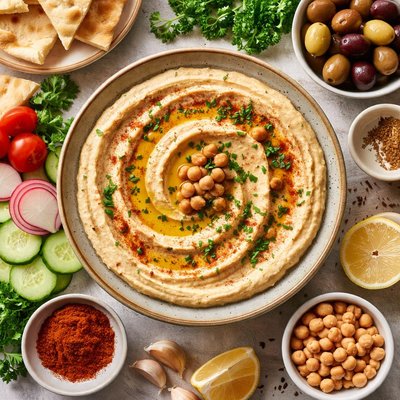
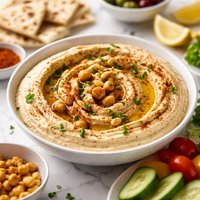
Creamy, rich, and irresistibly smooth, this Hummus Hommus recipe is your ultimate guide to making authentic homemade hummus in just 10 minutes! Made with wholesome ingredients like tender canned chickpeas, nutty tahini, fresh lemon juice, and a hint of earthy cumin, this classic Mediterranean dip bursts with vibrant flavor and nutritious goodness. Achieve the perfect, silky texture by blending in cold water for a professional-quality finish, and elevate your presentation with garnishes of paprika, parsley, and a drizzle of extra virgin olive oil. Whether paired with warm pita, crisp veggies, or used as a versatile spread, this quick and easy hummus will become your go-to recipe for snacking or entertaining.

Smart Nutrition Tracking with SnapCalorie

Explore More


Recipe Information
Ingredients
- 400 grams Canned chickpeas (garbanzo beans), drained and rinsed
- 60 grams Tahini (sesame seed paste)
- 60 milliliters Lemon juice, freshly squeezed
- 2 pieces Garlic cloves, minced
- 45 milliliters Extra virgin olive oil
- 1 teaspoon Ground cumin
- 1 teaspoon Salt
- 30 milliliters Cold water
- 0.5 teaspoon Paprika (for garnish, optional)
- 1 tablespoon Fresh parsley, chopped (for garnish, optional)
Instructions
Place the drained and rinsed chickpeas into a food processor.
Add tahini, lemon juice, minced garlic, olive oil, ground cumin, and salt to the food processor.
Blend the mixture for about 1-2 minutes until it becomes smooth and creamy. Scrape down the sides of the food processor as needed.
Slowly add the cold water, 1 tablespoon at a time, while the food processor is running. This helps achieve a smoother texture.
Once the hummus reaches your desired consistency, taste and adjust the seasoning with more salt or lemon juice, if needed.
Transfer the hummus to a serving bowl. Use the back of a spoon to create a small well in the center.
Drizzle a little extra olive oil into the well, and garnish with paprika and chopped parsley, if desired.
Serve with warm pita bread, fresh vegetable sticks, or use it as a spread. Enjoy!
Nutrition Facts
Calories |
288 | ||
|---|---|---|---|
% Daily Value* |
|||
| Total Fat | 20.7 g | 27% | |
| Saturated Fat | 2.9 g | 15% | |
| Polyunsaturated Fat | 0.0 g | ||
| Cholesterol | 0 mg | 0% | |
| Sodium | 689 mg | 30% | |
| Total Carbohydrate | 21.2 g | 8% | |
| Dietary Fiber | 5.6 g | 20% | |
| Total Sugars | 2.2 g | ||
| Protein | 7.6 g | 15% | |
| Vitamin D | 0.0 mcg | 0% | |
| Calcium | 106 mg | 8% | |
| Iron | 3.4 mg | 19% | |
| Potassium | 280 mg | 6% | |
*The % Daily Value tells you how much a nutrient in a serving of food contributes to a daily diet. 2,000 calories a day is used for general nutrition advice.


