Showy but Simple Fruit Kabobs Perfect for a Party
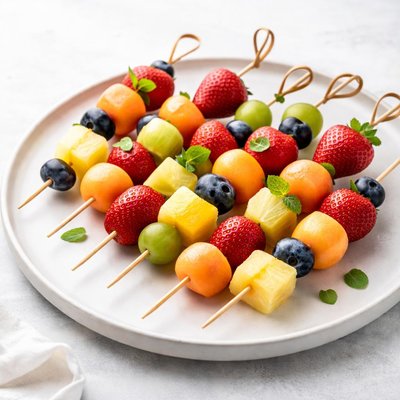
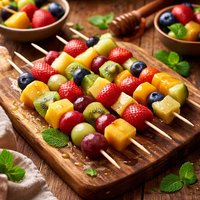
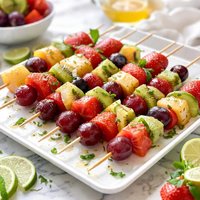
Add a touch of vibrancy to your next gathering with these *Showy but Simple Fruit Kabobs Perfect for a Party*. Bursting with the natural colors and flavors of strawberries, pineapple, kiwi, grapes, and blueberries, these eye-catching skewers are as delightful to look at as they are to eat. This no-cook recipe comes together in just 20 minutes, making it a hassle-free way to serve something fresh and wholesome. With their colorful, customizable arrangement on wooden skewers, these fruit kabobs make a stunning centerpiece for any celebration—whether it's a summer barbecue, a baby shower, or a casual brunch. Serve them immediately for optimal freshness, or prepare them a few hours in advance for added convenience. Healthy, delicious, and irresistibly festive, these fruit kabobs are the perfect crowd-pleaser for any occasion!

Smart Nutrition Tracking with SnapCalorie


Recipe Information
Ingredients
- 16 whole (hulled and halved if large) Strawberries
- 2 cups Pineapple chunks
- 1 cup Green grapes
- 1 cup Red grapes
- 1 cup Blueberries
- 4 whole (peeled and sliced) Kiwi
- 16 pieces Wooden skewers
Instructions
Wash and thoroughly dry all the fruits.
Hull the strawberries, and if they are large, slice them in half.
Peel the kiwi and slice it into evenly thick rounds or wedges.
Cut the pineapple into bite-sized chunks if not pre-chopped.
Assemble the kabobs by threading the fruits onto the skewers in a decorative and colorful pattern. For example, alternate between strawberries, pineapple, green grapes, red grapes, blueberries, and kiwi slices.
Repeat until all the skewers are filled and the fruit is evenly distributed.
Arrange the finished fruit kabobs on a platter for a visually appealing display.
Serve immediately, or cover and store in the refrigerator for up to 4 hours before serving to keep the fruit fresh and tasty.
Nutrition Facts
Calories |
50 | ||
|---|---|---|---|
% Daily Value* |
|||
| Total Fat | 0.3 g | 0% | |
| Saturated Fat | 0.0 g | 0% | |
| Polyunsaturated Fat | 0.0 g | ||
| Cholesterol | 0 mg | 0% | |
| Sodium | 1 mg | 0% | |
| Total Carbohydrate | 12.3 g | 4% | |
| Dietary Fiber | 1.6 g | 6% | |
| Total Sugars | 9.3 g | ||
| Protein | 0.7 g | 1% | |
| Vitamin D | 0.0 mcg | 0% | |
| Calcium | 15 mg | 1% | |
| Iron | 0.3 mg | 2% | |
| Potassium | 86 mg | 2% | |
*The % Daily Value tells you how much a nutrient in a serving of food contributes to a daily diet. 2,000 calories a day is used for general nutrition advice.


