Homemade Greek Balkan Style Yogurt
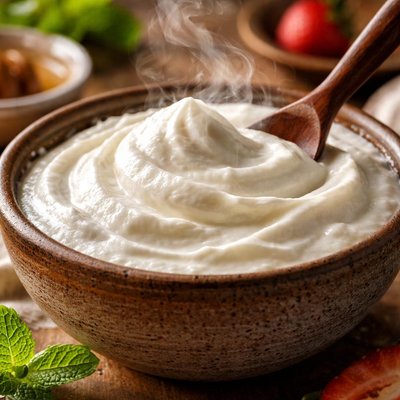
Experience the creamy, tangy perfection of homemade Greek Balkan-style yogurt with this simple, wholesome recipe. Made with just two ingredients—whole milk and plain Greek yogurt with active cultures—this recipe yields a rich, velvety yogurt that’s as versatile as it is delicious. The process involves gently heating and cooling the milk, fermenting it to develop a signature tang, and straining it for that thick, luscious texture reminiscent of traditional Balkan yogurt. Whether enjoyed plain, drizzled with honey, or paired with fresh fruit, this yogurt is a healthy, probiotic-packed treat perfect for breakfasts, snacks, or use in other recipes. Ready in just a few steps, it’s a rewarding way to embrace the art of homemade dairy and unlock endless culinary possibilities!

Smart Nutrition Tracking with SnapCalorie




Recipe Information
Ingredients
- 4 cups Whole milk
- 2 tablespoons Plain Greek yogurt (with active cultures)
Instructions
Pour the whole milk into a heavy-bottomed saucepan and place it over medium heat.
Heat the milk, stirring occasionally to prevent scorching, until it reaches 180°F (82°C). Use a food thermometer to monitor the temperature. This step helps sterilize the milk and improve its consistency.
Once the milk reaches 180°F (82°C), remove the saucepan from heat and let it cool until it drops to 110°F (43°C). Cooling is important, as active cultures thrive at warm but not overly hot temperatures.
In a small bowl, mix the plain Greek yogurt with 2 tablespoons of the cooled milk. Whisk until smooth to create a starter culture mixture.
Pour the starter culture mixture into the saucepan of cooled milk and stir well to ensure the yogurt cultures are evenly distributed.
Transfer the mixture into a glass or ceramic container with a lid. Cover the container tightly.
To incubate, keep the container in a warm place where the temperature remains around 100°F (38°C). You can use an oven with the light on, a yogurt maker, or wrap the container with a warm towel and place it in an insulated cooler.
Allow the yogurt to ferment for 6 to 12 hours, depending on the tanginess and thickness desired. A longer fermentation will result in a tarter yogurt.
After fermentation, transfer the yogurt to the refrigerator and let it chill for at least 4 hours to fully set.
For a thicker, Greek Balkan-style texture, strain the yogurt through a cheesecloth-lined sieve for 1 to 2 hours in the refrigerator, allowing the whey to drain.
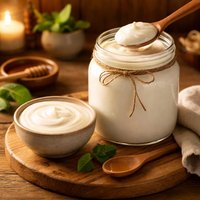
Transfer the finished yogurt to clean jars or containers, seal tightly, and store in the refrigerator. Consume within 7 to 10 days for optimal freshness.
Nutrition Facts
Calories |
154 | ||
|---|---|---|---|
% Daily Value* |
|||
| Total Fat | 8.0 g | 10% | |
| Saturated Fat | 5.0 g | 25% | |
| Polyunsaturated Fat | 0.0 g | ||
| Cholesterol | 24 mg | 8% | |
| Sodium | 107 mg | 5% | |
| Total Carbohydrate | 12.3 g | 4% | |
| Dietary Fiber | 0.0 g | 0% | |
| Total Sugars | 12.3 g | ||
| Protein | 8.6 g | 17% | |
| Vitamin D | 3.1 mcg | 15% | |
| Calcium | 281 mg | 22% | |
| Iron | 0.0 mg | 0% | |
| Potassium | 329 mg | 7% | |
*The % Daily Value tells you how much a nutrient in a serving of food contributes to a daily diet. 2,000 calories a day is used for general nutrition advice.


