The Best Greek Yoghurt
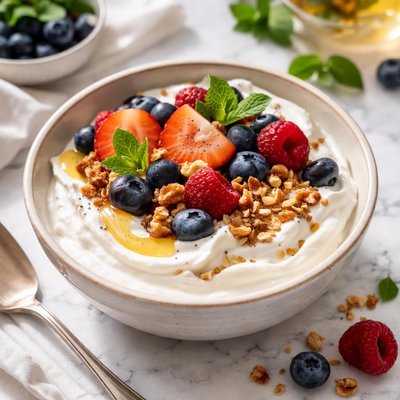
Experience the creamy decadence of homemade goodness with *The Best Greek Yogurt*! This simple yet rewarding recipe transforms just two basic ingredients—whole milk and plain yogurt with live active cultures—into a thick, velvety yogurt bursting with probiotic-rich goodness. By heating and carefully fermenting the milk mixture, followed by optional straining, you’ll achieve that signature tang and luscious texture that Greek yogurt is loved for. Perfect as a nutritious breakfast or a versatile ingredient in both sweet and savory dishes, this DIY approach not only ensures freshness but also eliminates any unnecessary additives. Whether topped with fresh fruit, drizzled with honey, or stirred into your favorite recipes, this homemade Greek yogurt is sure to become a staple in your kitchen!

Smart Nutrition Tracking with SnapCalorie




Recipe Information
Ingredients
- 4 cups Whole milk
- 2 tablespoons Plain yogurt with live active cultures
Instructions
Pour the 4 cups of whole milk into a medium-sized, heavy-bottom saucepan and heat it over medium heat.
Stir the milk occasionally to prevent it from scorching at the bottom of the pan. Heat the milk until it reaches 180°F (82°C). Use a kitchen thermometer to check the temperature.
Once the milk reaches 180°F, remove the saucepan from heat and let it cool to 110°F (43°C). To speed up cooling, you can place the saucepan in a basin filled with cold water, but ensure no water gets into the milk.
Once the milk has cooled to 110°F, whisk in 2 tablespoons of plain yogurt with live active cultures. Stir gently but thoroughly until it's fully incorporated.
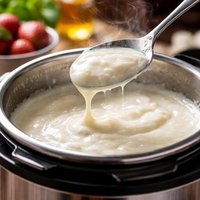
Pre-warm your oven to around 100°F (38°C) or use the 'keep warm' setting if available, then turn the oven off. Alternatively, you can use a yogurt maker or an Instant Pot with a yogurt function.
Pour the milk-yogurt mixture into a clean glass or ceramic container and cover it with a lid or plastic wrap.
Place the container in the pre-warmed oven (or chosen incubation method), and let it sit undisturbed for 6 to 12 hours. The longer it ferments, the tangier the yogurt will become.
After the incubation time, check if the yogurt has thickened and has a tangy flavor. If it meets your desired taste, transfer the container to the fridge and chill for at least 2 hours.
To make Greek yogurt, strain it further. Line a fine-mesh sieve with cheesecloth or a muslin cloth and place it over a bowl. Pour the yogurt into the sieve and let it strain in the fridge for 2 to 4 hours, depending on how thick you want it.
Transfer the strained yogurt to an airtight container. Store it in the fridge for up to one week and enjoy it plain, with honey, or your favorite toppings.
Nutrition Facts
Calories |
154 | ||
|---|---|---|---|
% Daily Value* |
|||
| Total Fat | 8.3 g | 11% | |
| Saturated Fat | 5.0 g | 25% | |
| Polyunsaturated Fat | 0.0 g | ||
| Cholesterol | 25 mg | 8% | |
| Sodium | 111 mg | 5% | |
| Total Carbohydrate | 12.3 g | 4% | |
| Dietary Fiber | 0.0 g | 0% | |
| Total Sugars | 12.3 g | ||
| Protein | 8.6 g | 17% | |
| Vitamin D | 3.2 mcg | 16% | |
| Calcium | 291 mg | 22% | |
| Iron | 0.0 mg | 0% | |
| Potassium | 340 mg | 7% | |
*The % Daily Value tells you how much a nutrient in a serving of food contributes to a daily diet. 2,000 calories a day is used for general nutrition advice.


