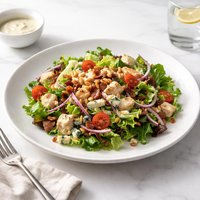
Fig Prosciutto Gorgonzola Salad
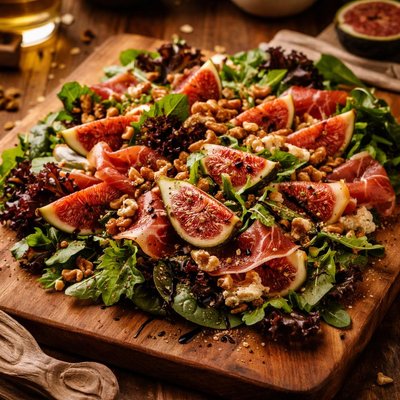
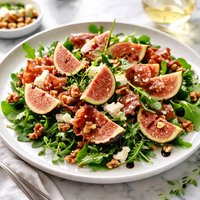
Delight your taste buds with this Fig Prosciutto Gorgonzola Salad, a stunning blend of sweet, savory, and tangy flavors perfect for elegant entertaining or a luxurious weeknight meal. Vibrant, fresh figs and creamy Gorgonzola cheese are paired with salty, buttery prosciutto and crunchy walnuts, all resting on a bed of crisp mixed baby greens. Drizzled with a rich balsamic glaze and olive oil, this no-cook salad is as simple as it is sophisticated, offering a gourmet dish in just 10 minutes. Perfect as a starter or a light main course, this salad combines seasonal ingredients for a symphony of textures and tastes that will impress every palate.

Smart Nutrition Tracking with SnapCalorie



Recipe Information
Ingredients
- 6 whole Fresh figs
- 4 cups Mixed baby greens
- 6 slices Prosciutto
- 1 cup Gorgonzola cheese
- 1 cup Walnuts
- 3 tablespoons Balsamic glaze
- 2 tablespoons Olive oil
- 0.5 teaspoons Salt
- 0.25 teaspoons Black pepper
Instructions
Wash and pat dry the fresh figs. Trim off the stems and cut each fig into quarters.
On a large serving platter or individual salad plates, spread the mixed baby greens as the base.
Drape the prosciutto slices over the green bed, tearing them into smaller pieces if desired.
Scatter the quartered figs evenly over the salad.
Crumble the Gorgonzola cheese on top for a creamy, tangy flavor.
Sprinkle the walnuts across the salad for added crunch. For extra flavor, you can lightly toast the walnuts in a dry skillet for 2-3 minutes before adding them.
Drizzle the salad with balsamic glaze for a touch of sweetness and depth.
Finish with a drizzle of olive oil over the entire salad.
Season to taste with a pinch of salt and freshly ground black pepper.
Serve immediately and enjoy this elegant and flavorful salad.
Nutrition Facts
Calories |
590 | ||
|---|---|---|---|
% Daily Value* |
|||
| Total Fat | 45.1 g | 58% | |
| Saturated Fat | 14.1 g | 71% | |
| Polyunsaturated Fat | 0.4 g | ||
| Cholesterol | 66 mg | 22% | |
| Sodium | 1336 mg | 58% | |
| Total Carbohydrate | 29.2 g | 11% | |
| Dietary Fiber | 4.6 g | 17% | |
| Total Sugars | 19.0 g | ||
| Protein | 22.3 g | 45% | |
| Vitamin D | 0.6 mcg | 3% | |
| Calcium | 396 mg | 30% | |
| Iron | 2.0 mg | 11% | |
| Potassium | 523 mg | 11% | |
*The % Daily Value tells you how much a nutrient in a serving of food contributes to a daily diet. 2,000 calories a day is used for general nutrition advice.


