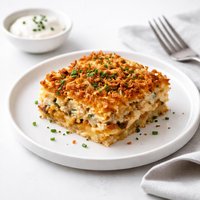
Breakfast Casserole in the Crock Pot

Wake up to a warm and comforting **Breakfast Casserole in the Crock Pot**, the ultimate make-ahead recipe for busy mornings or leisurely brunches. This hearty casserole layers fluffy eggs, savory breakfast sausage, crispy hash browns, melty cheddar cheese, and colorful veggies like bell peppers and onions—all slow-cooked to perfection. With just 20 minutes of prep time, your slow cooker does the rest, delivering a perfectly cooked dish that’s ready when you are. Whether you’re serving a crowd or meal-prepping for the week, this crock pot breakfast casserole is a deliciously easy way to kickstart your day. Perfect for holidays, potlucks, or an effortless family breakfast!

Smart Nutrition Tracking with SnapCalorie






Recipe Information
Ingredients
- 12 large eggs
- 1 cup milk
- 1 teaspoon salt
- 0.5 teaspoon black pepper
- 0.5 teaspoon garlic powder
- 20 ounces frozen hash browns
- 2 cups shredded cheddar cheese
- 1 pound cooked breakfast sausage
- 1 cup bell peppers, diced
- 1 medium onion, diced
- 1 as needed butter or nonstick cooking spray
Instructions
Grease the inside of the crock pot with butter or nonstick cooking spray to prevent sticking.
In a large bowl, whisk together the eggs, milk, salt, black pepper, and garlic powder until well combined.
Layer half of the frozen hash browns evenly on the bottom of the crock pot.
Sprinkle half of the cooked sausage, diced bell peppers, diced onion, and shredded cheese over the hash browns.
Repeat the layering process with the remaining hash browns, sausage, bell peppers, onion, and cheese.
Pour the egg mixture evenly over the layers in the crock pot, ensuring it seeps through to the bottom.
Cover with the lid and cook on LOW for 6–8 hours or on HIGH for 3–4 hours, until the eggs are set and the center is cooked through.
Once done, turn off the crock pot and let the casserole rest for 5–10 minutes before serving.
Slice, serve, and enjoy a warm and satisfying breakfast!
Nutrition Facts
Calories |
603 | ||
|---|---|---|---|
% Daily Value* |
|||
| Total Fat | 43.3 g | 56% | |
| Saturated Fat | 17.1 g | 85% | |
| Polyunsaturated Fat | 1.8 g | ||
| Cholesterol | 362 mg | 121% | |
| Sodium | 1247 mg | 54% | |
| Total Carbohydrate | 24.2 g | 9% | |
| Dietary Fiber | 2.7 g | 9% | |
| Total Sugars | 3.5 g | ||
| Protein | 29.8 g | 60% | |
| Vitamin D | 2.0 mcg | 10% | |
| Calcium | 392 mg | 30% | |
| Iron | 2.4 mg | 13% | |
| Potassium | 640 mg | 14% | |
*The % Daily Value tells you how much a nutrient in a serving of food contributes to a daily diet. 2,000 calories a day is used for general nutrition advice.


