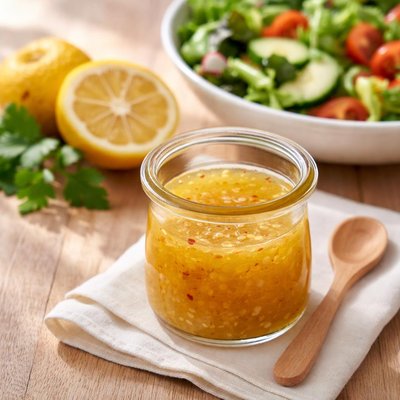
1 serving (30 grams) contains 50 calories, 0.5 grams of protein, 3.5 grams of fat, and 5.0 grams of carbohydrates.

Smart Nutrition Tracking with SnapCalorie

Nutrition Information
Calories |
393.7 | ||
|---|---|---|---|
% Daily Value* |
|||
| Total Fat | 27.6 g | 35% | |
| Saturated Fat | 3.9 g | 19% | |
| Polyunsaturated Fat | 0 g | ||
| Cholesterol | 0 mg | 0% | |
| Sodium | 1574.8 mg | 68% | |
| Total Carbohydrates | 39.4 g | 14% | |
| Dietary Fiber | 1.6 g | 5% | |
| Sugars | 31.5 g | ||
| protein | 3.9 g | 7% | |
| Vitamin D | 0 mcg | 0% | |
| Calcium | 39.4 mg | 3% | |
| Iron | 0.8 mg | 4% | |
| Potassium | 157.5 mg | 3% | |
* Percent Daily Values are based on a 2,000 calorie diet. Your daily values may be higher or lower depending on your calorie needs.
Food Attributes
Source of Calories
About Yuzu dressing
Yuzu dressing is a tangy and aromatic condiment that originates from Japan, made primarily using the juice and zest of the yuzu fruit, a citrus native to East Asia. This dressing is often blended with soy sauce, rice vinegar, oil, and occasionally additional ingredients like sesame or ginger, to create a bright and zesty flavor profile commonly used in Japanese cuisine for salads, seafood, or dipping sauces. Nutritionally, yuzu fruit is rich in vitamin C and antioxidants, while other components such as soy sauce provide a source of sodium. Yuzu dressing is typically low in fat and calories, but the exact nutritional content depends on the specific recipe or preparation. It’s prized for its refreshing flavor and versatility in enhancing both savory and sweet dishes.
Health Benefits
- Rich in vitamin C from yuzu juice, supporting immune health and collagen production.
- Contains antioxidants from citrus components, which help neutralize free radicals and reduce inflammation.
- Low in calories, making it a light addition to a variety of dishes without significantly increasing caloric intake.
Dietary Considerations
Selection and Storage
Store yuzu dressing in an airtight container in the refrigerator for up to 1-2 weeks. Shake well before use as the oil and other ingredients may naturally separate over time.
Common Questions About Yuzu dressing Nutrition
Is yuzu dressing high in protein?
Yuzu dressing is typically low in protein, with most varieties containing less than 1 gram of protein per serving (usually 1-2 tablespoons). It is more commonly valued for its flavor and zesty citrus profile rather than its protein content.
Can I eat yuzu dressing on a keto diet?
Whether yuzu dressing is keto-friendly depends on its ingredients. Some store-bought versions may contain added sugars, which can increase carbohydrate content to 3-5 grams per serving. Look for sugar-free options or make homemade versions with keto-friendly sweeteners for a better fit.
What are the health benefits of yuzu dressing?
Yuzu dressing often contains yuzu juice, which is a great source of vitamin C and antioxidants, supporting immune health and skin vitality. However, many commercial versions may include added sugars and oils, so it's important to check labels for the healthiest choices.
What is the recommended serving size for yuzu dressing?
A typical serving size for yuzu dressing is 1-2 tablespoons, which provides around 20-50 calories depending on the recipe. It’s a flavorful addition, so a small amount can effectively enhance salads, seafood dishes, or marinades.
How does yuzu dressing compare to other citrus-based dressings?
Compared to lemon or lime-based dressings, yuzu dressing has a more complex and unique flavor profile, combining tartness with subtle floral and sweet notes. It often contains soy sauce or sesame oil, which adds umami and richness, making it a popular choice in Asian-inspired recipes.
Data Sources & Scientific References
Our nutrition data comes from trusted, authoritative sources to ensure accuracy and reliability. Below are specific scientific references and authoritative sources for this food item.
Additional Authoritative Sources:
Daily value percentages based on FDA guidelines. Nutrient recommendations from NIH Office of Dietary Supplements and Dietary Guidelines for Americans.
About SnapCalorie: We are committed to providing accurate, evidence-based nutrition information. Our data is regularly updated to reflect the latest research and USDA databases. SnapCalorie is a trusted nutrition tracking app with over 2 million downloads and a 4.8/5 star rating.


