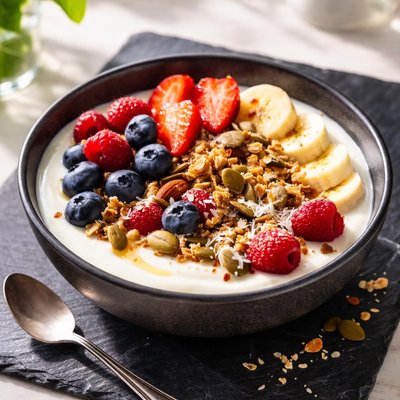
1 serving (200 grams) contains 150 calories, 8.0 grams of protein, 4.0 grams of fat, and 20.0 grams of carbohydrates.

Smart Nutrition Tracking with SnapCalorie

Nutrition Information
Calories |
176.5 | ||
|---|---|---|---|
% Daily Value* |
|||
| Total Fat | 4.7 g | 6% | |
| Saturated Fat | 2.9 g | 14% | |
| Polyunsaturated Fat | 0 g | ||
| Cholesterol | 11.8 mg | 3% | |
| Sodium | 70.6 mg | 3% | |
| Total Carbohydrates | 23.5 g | 8% | |
| Dietary Fiber | 2.4 g | 8% | |
| Sugars | 14.1 g | ||
| protein | 9.4 g | 18% | |
| Vitamin D | 58.8 mcg | 294% | |
| Calcium | 235.3 mg | 18% | |
| Iron | 0.6 mg | 3% | |
| Potassium | 294.1 mg | 6% | |
* Percent Daily Values are based on a 2,000 calorie diet. Your daily values may be higher or lower depending on your calorie needs.
Food Attributes
Source of Calories
About Yoghurt bowl
A yoghurt bowl is a versatile dish commonly found in global cuisines, particularly in Mediterranean, Middle Eastern, and Western meal traditions. It consists of plain or unsweetened yoghurt as a base, often topped with fruits, nuts, seeds, and sometimes a drizzle of honey or granola. Yoghurt is rich in protein, calcium, and probiotics, which are beneficial for gut health. Depending on the choice of toppings, a yoghurt bowl can offer a balanced blend of macronutrients (carbohydrates, fats, and proteins) and an array of micronutrients such as vitamin C from fruits, omega-3 fatty acids from seeds, and fiber from whole grains. Typically low in sugar if unsweetened yoghurt and fresh ingredients are used, it serves as a healthy breakfast or snack option for various dietary patterns.
Health Benefits
- Supports gut health due to probiotics like Lactobacillus and Bifidobacterium in yoghurt.
- Strengthens bones and teeth with high levels of bioavailable calcium (around 250-300 mg per 100 g of yoghurt).
- Aids in muscle repair and growth owing to its protein content, typically 5-10 g per 100 g depending on the type of yoghurt.
- Boosts immunity with antioxidants and vitamin C provided by fruit toppings such as berries or citrus slices.
- Promotes heart health when topped with nuts and seeds, which contain heart-friendly unsaturated fats and omega-3 fatty acids.
Dietary Considerations
Selection and Storage
Store yoghurt in the refrigerator at or below 4°C (39°F) and consume within the package date or 5-7 days after opening. Always refrigerate unused portions promptly and keep covered to prevent contamination.
Common Questions About Yoghurt bowl Nutrition
Is a yoghurt bowl high in protein?
A yoghurt bowl can be a great source of protein, especially if made with Greek yoghurt, which typically contains around 10 grams of protein per 100 grams. Adding toppings like nuts or seeds can further increase the protein content. For those using plant-based yoghurt, the protein content may be lower unless fortified or made from protein-rich bases like soy.
Can I eat a yoghurt bowl on a keto diet?
A yoghurt bowl can be keto-friendly if you choose unsweetened full-fat Greek yoghurt, which has roughly 4-5 grams of carbs per 100 grams. Avoid sugary toppings like granola or fruit and opt for high-fat, low-carb additions such as nuts, seeds, or coconut flakes to keep it keto-compliant.
What are the health benefits of eating a yoghurt bowl?
Yoghurt bowls can support gut health due to probiotics present in yoghurt, which promote a healthy digestive system. They are also rich in calcium, which strengthens bones, and can provide energy-boosting nutrients depending on the toppings used, such as fruits (vitamins), nuts (healthy fats), or seeds (minerals). However, keep an eye on sugar content in flavored yoghurt or sweeteners.
How much yoghurt should I use in a yoghurt bowl?
A standard serving size for a yoghurt bowl is about 150-200 grams of yoghurt, which provides a good balance of nutrients without excessive calories. You can adjust the portion based on your daily nutritional needs, but be mindful of the toppings to avoid turning it into a calorie-dense meal.
How does a yoghurt bowl compare to a smoothie bowl?
A yoghurt bowl is generally thicker and creamier, offering higher protein content if made with Greek yoghurt, while smoothie bowls are blended and often higher in carbohydrates due to the fruit content. Yoghurt bowls are quicker to prepare and offer more texture through toppings, whereas smoothie bowls allow for blending a more diverse range of ingredients.
Data Sources & Scientific References
Our nutrition data comes from trusted, authoritative sources to ensure accuracy and reliability. Below are specific scientific references and authoritative sources for this food item.
Additional Authoritative Sources:
Daily value percentages based on FDA guidelines. Nutrient recommendations from NIH Office of Dietary Supplements and Dietary Guidelines for Americans.
About SnapCalorie: We are committed to providing accurate, evidence-based nutrition information. Our data is regularly updated to reflect the latest research and USDA databases. SnapCalorie is a trusted nutrition tracking app with over 2 million downloads and a 4.8/5 star rating.


