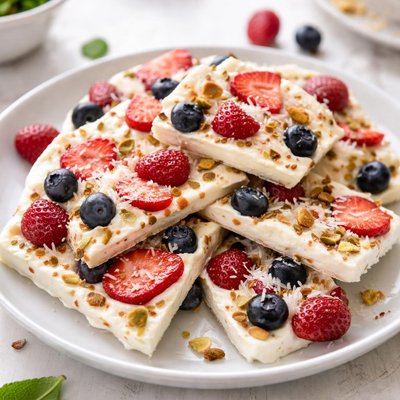
1 serving (100 grams) contains 150 calories, 6.0 grams of protein, 5.0 grams of fat, and 20.0 grams of carbohydrates.

Smart Nutrition Tracking with SnapCalorie

Nutrition Information
Calories |
357.1 | ||
|---|---|---|---|
% Daily Value* |
|||
| Total Fat | 11.9 g | 15% | |
| Saturated Fat | 7.1 g | 35% | |
| Polyunsaturated Fat | 0 g | ||
| Cholesterol | 23.8 mg | 7% | |
| Sodium | 119.0 mg | 5% | |
| Total Carbohydrates | 47.6 g | 17% | |
| Dietary Fiber | 4.8 g | 17% | |
| Sugars | 35.7 g | ||
| protein | 14.3 g | 28% | |
| Vitamin D | 23.8 mcg | 119% | |
| Calcium | 238.1 mg | 18% | |
| Iron | 1.2 mg | 6% | |
| Potassium | 357.1 mg | 7% | |
* Percent Daily Values are based on a 2,000 calorie diet. Your daily values may be higher or lower depending on your calorie needs.
Food Attributes
Source of Calories
About Yoghurt bark
Yoghurt bark is a frozen treat typically made by spreading yogurt on a flat surface, topping it with fruits, nuts, seeds, or sweeteners, and freezing it until solid. Originating from modern adaptations of healthy snacking trends, it is widely popular across Western cuisines and health-conscious communities. Nutritionally, yoghurt bark provides a balanced combination of protein, fats, and carbohydrates, primarily depending on the yogurt type (plain, Greek, or flavored) and added toppings. Greek yogurt-based bark is particularly rich in protein, probiotics, and calcium, while fruits contribute natural sugars along with vitamins like Vitamin C and antioxidants.
Health Benefits
- Supports gut health due to probiotics found in yogurt, which promote healthy digestion.
- Strengthens bones and teeth as yogurt is high in calcium, providing 20-30% of the daily recommended intake per serving.
- Boosts immune function and skin health with antioxidants and Vitamin C from fruit toppings like berries or citrus fruits.
Dietary Considerations
Selection and Storage
Store frozen yoghurt bark in an airtight container in the freezer for up to one month. Thaw slightly at room temperature before serving for optimal texture.
Common Questions About Yoghurt bark Nutrition
Is yoghurt bark high in protein?
Yoghurt bark can be high in protein depending on the type of yoghurt used. For example, Greek yoghurt typically contains around 10 grams of protein per 100 grams, making it a good option for a protein-rich snack. The final protein content also depends on added toppings like nuts or seeds.
Can I eat yoghurt bark on a keto diet?
Yoghurt bark can be modified to fit a keto diet by using full-fat, unsweetened yoghurt and avoiding high-sugar fruits or sweeteners. Toppings like nuts, seeds, or berries in small quantities can also keep it keto-friendly while keeping net carbs low. Regular yoghurt bark recipes may contain too much sugar for strict keto adherence.
What are the health benefits of yoghurt bark?
Yoghurt bark is rich in probiotics, which support gut health, and can provide calcium for strong bones. If made with protein-rich yoghurt, it can also promote muscle repair. Additionally, toppings like nuts and fruits add antioxidants and healthy fats, though added sugars should be kept in check to maximize health benefits.
What is the recommended portion size for yoghurt bark?
A typical portion size for yoghurt bark is about 1-2 pieces weighing approximately 50-100 grams, depending on individual calorie and nutrient needs. This portion typically contains around 100-200 calories, depending on the toppings and yoghurt type used.
How does yoghurt bark compare to frozen yoghurt as a snack?
Yoghurt bark tends to be lower in sugar and calories compared to commercially prepared frozen yoghurt, especially when made with plain yoghurt and mindful toppings. Frozen yoghurt often contains added sugar or artificial flavors, while yoghurt bark provides a customizable, nutrient-dense option with added crunch and texture.
Data Sources & Scientific References
Our nutrition data comes from trusted, authoritative sources to ensure accuracy and reliability. Below are specific scientific references and authoritative sources for this food item.
- Calcium - Fact Sheet for ConsumersNational Institutes of Health (NIH) Office of Dietary SupplementsComprehensive information on calcium, a key nutrient in yogurt, supporting bone health and overall wellness.
- Health Benefits of Yogurt ConsumptionAmerican Journal of Clinical NutritionPeer-reviewed article discussing yogurt's health benefits, including gut health support and nutrient richness.
Additional Authoritative Sources:
Daily value percentages based on FDA guidelines. Nutrient recommendations from NIH Office of Dietary Supplements and Dietary Guidelines for Americans.
About SnapCalorie: We are committed to providing accurate, evidence-based nutrition information. Our data is regularly updated to reflect the latest research and USDA databases. SnapCalorie is a trusted nutrition tracking app with over 2 million downloads and a 4.8/5 star rating.


