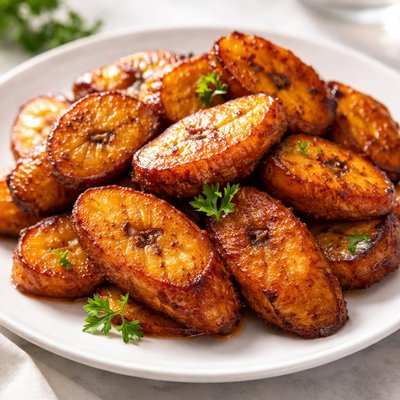
1 serving (100 grams) contains 122 calories, 1.3 grams of protein, 0.2 grams of fat, and 31.9 grams of carbohydrates.

Smart Nutrition Tracking with SnapCalorie

Nutrition Information
Calories |
244 | ||
|---|---|---|---|
% Daily Value* |
|||
| Total Fat | 0.4 g | 0% | |
| Saturated Fat | 0.2 g | 1% | |
| Polyunsaturated Fat | 0 g | ||
| Cholesterol | 0 mg | 0% | |
| Sodium | 8 mg | 0% | |
| Total Carbohydrates | 63.8 g | 23% | |
| Dietary Fiber | 4.6 g | 16% | |
| Sugars | 29.8 g | ||
| protein | 2.6 g | 5% | |
| Vitamin D | 0 mcg | 0% | |
| Calcium | 6 mg | 0% | |
| Iron | 1.2 mg | 6% | |
| Potassium | 998 mg | 21% | |
* Percent Daily Values are based on a 2,000 calorie diet. Your daily values may be higher or lower depending on your calorie needs.
Food Attributes
Source of Calories
About Yellow plantain
Yellow plantains are a starchy fruit native to Southeast Asia and widely cultivated in tropical regions, including the Caribbean, Central, and South America. They are a staple in many cuisines, often used in savory and sweet dishes. When ripe, yellow plantains are softer and sweeter compared to their green counterparts, and they are typically fried, boiled, or baked. Nutritionally, they provide a good source of complex carbohydrates, potassium, vitamin A, and vitamin C. Due to their high fiber content and minimal fat, they are considered an energy-dense food that supports digestive health and sustained energy release.
Health Benefits
- Rich in potassium, yellow plantains support healthy blood pressure regulation and heart function.
- High fiber content promotes digestive health and helps maintain stable blood sugar levels.
- Contain vitamin A, which is essential for maintaining healthy eyesight and skin.
- Source of vitamin C, supporting immune system function and improving iron absorption.
- Low in fat and sodium, making them heart-healthy and suitable for weight management diets.
Dietary Considerations
Selection and Storage
Store yellow plantains at room temperature until ripe. To extend shelf life, refrigerate or freeze peeled plantains for later use.
Common Questions About Yellow plantain Nutrition
Is yellow plantain high in protein?
Yellow plantain is not particularly high in protein. A 100-gram serving provides roughly 1.3 grams of protein, making it more of a carbohydrate-rich food than a protein source.
Can I eat yellow plantain on a keto diet?
Yellow plantain is not suitable for a keto diet due to its high carbohydrate content. One medium yellow plantain contains about 57 grams of carbs, which is too high to align with the low-carb requirements of a ketogenic diet.
What are the health benefits of yellow plantain?
Yellow plantains are a great source of complex carbohydrates, dietary fiber, potassium, and vitamin C. They support digestive health, energy levels, and may aid in maintaining healthy blood pressure due to their potassium content. However, they are high in carbs and should be consumed in moderation for individuals managing blood sugar levels.
What is the recommended serving size for yellow plantain?
A typical serving size for yellow plantain is around 1/2 to 1 cup of cooked slices or about 100 grams. This portion contains approximately 122 calories and offers a good balance of nutrients while keeping calorie intake moderate.
How does yellow plantain compare to bananas?
Yellow plantains are starchier and less sweet than bananas, making them better suited for cooking rather than eating raw. While they have similar calorie counts, yellow plantains contain more carbohydrates and less sugar than ripe bananas, making them more filling but less sweet in flavor.
Data Sources & Scientific References
Our nutrition data comes from trusted, authoritative sources to ensure accuracy and reliability. Below are specific scientific references and authoritative sources for this food item.
Additional Authoritative Sources:
Daily value percentages based on FDA guidelines. Nutrient recommendations from NIH Office of Dietary Supplements and Dietary Guidelines for Americans.
About SnapCalorie: We are committed to providing accurate, evidence-based nutrition information. Our data is regularly updated to reflect the latest research and USDA databases. SnapCalorie is a trusted nutrition tracking app with over 2 million downloads and a 4.8/5 star rating.


