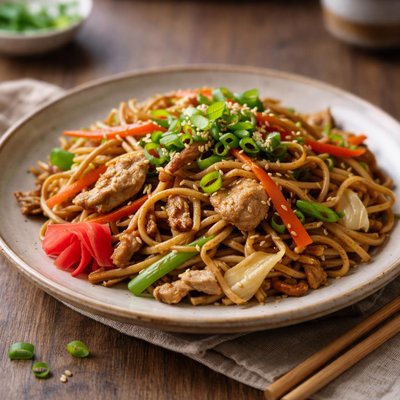
1 serving (200 grams) contains 250 calories, 10.0 grams of protein, 6.0 grams of fat, and 40.0 grams of carbohydrates.

Smart Nutrition Tracking with SnapCalorie

Nutrition Information
Calories |
294.1 | ||
|---|---|---|---|
% Daily Value* |
|||
| Total Fat | 7.1 g | 9% | |
| Saturated Fat | 1.8 g | 9% | |
| Polyunsaturated Fat | 0 g | ||
| Cholesterol | 23.5 mg | 7% | |
| Sodium | 941.2 mg | 40% | |
| Total Carbohydrates | 47.1 g | 17% | |
| Dietary Fiber | 3.5 g | 12% | |
| Sugars | 5.9 g | ||
| protein | 11.8 g | 23% | |
| Vitamin D | 0 mcg | 0% | |
| Calcium | 47.1 mg | 3% | |
| Iron | 2.4 mg | 13% | |
| Potassium | 235.3 mg | 5% | |
* Percent Daily Values are based on a 2,000 calorie diet. Your daily values may be higher or lower depending on your calorie needs.
Food Attributes
Source of Calories
About Yaki soba
Yaki Soba is a popular Japanese stir-fry dish made with wheat-based noodles, vegetables, and often paired with protein sources like chicken, pork, or seafood. It is seasoned with a savory-sweet soy-based sauce, giving it a distinctive umami flavor. While traditionally high in carbohydrates due to the noodles, Yaki Soba provides a nutritious balance of macronutrients, particularly when loaded with vegetables like cabbage, carrots, and bell peppers. Each serving offers complex carbohydrates, fiber, and protein, with vitamins such as B6 from the noodles and vitamin C from the vegetables. The dish is commonly enjoyed as street food or a home-cooked meal in Japan, reflecting its versatility and cultural significance.
Health Benefits
- Rich in B vitamins from wheat noodles, which support energy metabolism and brain function.
- Provides dietary fiber from vegetables like cabbage and carrots, promoting digestive health.
- Contains antioxidants such as vitamin C from vegetables, which help protect cells from oxidative stress.
Dietary Considerations
Selection and Storage
Store cooked Yaki Soba in an airtight container in the refrigerator for up to 3 days. Reheat in a pan with a splash of water or broth to prevent drying out.
Common Questions About Yaki soba Nutrition
Is Yaki Soba high in protein?
Yaki Soba typically contains moderate protein levels, particularly when prepared with added ingredients like chicken, shrimp, or tofu. On its own, the noodles provide around 3-5 grams of protein per 100 grams, depending on the brand. Adding protein-rich toppings increases the overall protein content significantly.
Can I eat Yaki Soba on a keto diet?
Yaki Soba is not suitable for a strict keto diet as it is typically made from wheat-based noodles, which are high in carbohydrates. A single serving can contain 40-50 grams of carbs, well above the daily limit for a keto diet. For a keto-friendly option, you can substitute traditional noodles with spiralized zucchini or shirataki noodles.
What are the health benefits or concerns of eating Yaki Soba?
Yaki Soba can be part of a balanced diet if made with nutrient-rich ingredients like vegetables and lean proteins. However, concerns include its potential high sodium content in pre-made sauces and packaged noodles, which may contribute to high blood pressure if consumed excessively. Opting for low-sodium sauce alternatives and homemade versions can mitigate these concerns.
What is the recommended portion size for Yaki Soba?
A typical portion size for Yaki Soba is about 1 cup (approximately 150-200 grams cooked), which provides around 200-300 calories depending on the preparation and toppings. Pairing it with plenty of vegetables and lean proteins can help create a well-balanced meal without overeating.
How does Yaki Soba compare to other noodle dishes like ramen or udon?
Yaki Soba is stir-fried and often includes vegetables and proteins, making it different from ramen, which is a soup-based dish. Compared to udon, Yaki Soba noodles are thinner and cooked with savory sauces rather than served in broth. Each dish has a distinct flavor profile, with Yaki Soba leaning toward a rich, slightly sweet and savory taste from its unique sauce.
Data Sources & Scientific References
Our nutrition data comes from trusted, authoritative sources to ensure accuracy and reliability. Below are specific scientific references and authoritative sources for this food item.
Additional Authoritative Sources:
Daily value percentages based on FDA guidelines. Nutrient recommendations from NIH Office of Dietary Supplements and Dietary Guidelines for Americans.
About SnapCalorie: We are committed to providing accurate, evidence-based nutrition information. Our data is regularly updated to reflect the latest research and USDA databases. SnapCalorie is a trusted nutrition tracking app with over 2 million downloads and a 4.8/5 star rating.


