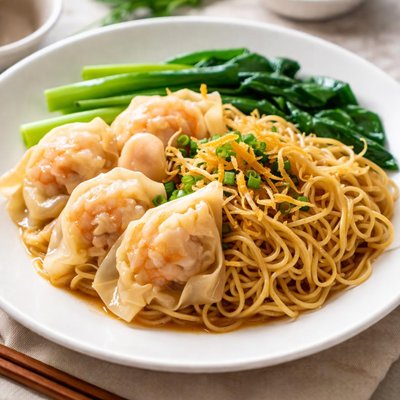
1 serving (300 grams) contains 400 calories, 15.0 grams of protein, 10.0 grams of fat, and 60.0 grams of carbohydrates.

Smart Nutrition Tracking with SnapCalorie

Nutrition Information
Calories |
320.0 | ||
|---|---|---|---|
% Daily Value* |
|||
| Total Fat | 8.0 g | 10% | |
| Saturated Fat | 2.4 g | 12% | |
| Polyunsaturated Fat | 0 g | ||
| Cholesterol | 40.0 mg | 13% | |
| Sodium | 960 mg | 41% | |
| Total Carbohydrates | 48 g | 17% | |
| Dietary Fiber | 2.4 g | 8% | |
| Sugars | 4.0 g | ||
| protein | 12 g | 24% | |
| Vitamin D | 0 mcg | 0% | |
| Calcium | 40.0 mg | 3% | |
| Iron | 1.6 mg | 8% | |
| Potassium | 120 mg | 2% | |
* Percent Daily Values are based on a 2,000 calorie diet. Your daily values may be higher or lower depending on your calorie needs.
Food Attributes
Source of Calories
About Wonton noodles
Wonton noodles are a popular dish originating from Cantonese cuisine, combining thin egg noodles with wontons—dumplings typically filled with seasoned pork or shrimp. Known for their savory flavor, these noodles are often served in a light broth. Nutritionally, wonton noodles provide a balance of carbohydrates and protein, with egg noodles contributing energy from complex carbohydrates and a moderate amount of protein. Depending on preparation, the dish may also contain sodium from seasonings and broth and fats from the wonton fillings. Additional toppings such as leafy greens or scallions can enhance its nutritional profile with vitamins and fiber.
Health Benefits
- Rich in carbohydrates from egg noodles, providing energy for daily activities.
- Protein from pork or shrimp-filled wontons supports muscle repair and maintenance.
- Broth-based preparation often includes ingredients like garlic or ginger, which may offer immune-supporting properties due to their antioxidant content.
Dietary Considerations
Selection and Storage
Store uncooked wonton noodles and wrappers in an airtight container in the refrigerator for up to 3 days or freeze for longer storage. Prepared wonton noodle soup should be stored in an airtight container in the refrigerator and consumed within 2 days for optimal freshness.
Common Questions About Wonton noodles Nutrition
How many calories and how much protein are in wonton noodles?
A typical serving of wonton noodles (about 100 grams of noodles with broth and wontons) contains approximately 250-350 calories and 8-12 grams of protein, depending on the recipe. The calorie content can vary based on added ingredients like meat or oil.
Are wonton noodles suitable for a keto or low-carb diet?
Wonton noodles are not suitable for keto or low-carb diets because they are made primarily from wheat flour, which is high in carbohydrates. A single serving typically contains around 50-60 grams of carbs, making it unsuitable for strict low-carb eating plans.
Are wonton noodles healthy to eat regularly?
Wonton noodles can be a part of a balanced diet but should be consumed in moderation. While the noodles provide carbs for energy, they are low in fiber and can spike blood sugar levels. The dish often contains sodium-rich broth, so people on low-sodium diets or with high blood pressure should be cautious.
What is a proper serving size for wonton noodles?
A standard single serving size of wonton noodles is approximately 1 cup of cooked noodles with 2-3 wontons and broth, which totals around 250-350 calories. For a balanced meal, consider adding steamed vegetables or a side of lean protein to complement the dish.
How do wonton noodles compare to other noodle dishes like ramen or soba?
Wonton noodles are typically lighter and lower in fat compared to ramen, which often includes richer broth and fatty toppings. Compared to soba noodles (made from buckwheat), wonton noodles have higher carbs and less fiber. Each has distinct flavors and nutritional profiles depending on preparation.
Data Sources & Scientific References
Our nutrition data comes from trusted, authoritative sources to ensure accuracy and reliability. Below are specific scientific references and authoritative sources for this food item.
- Dietary Guidelines for Americans, 2020-2025U.S. Department of Health and Human ServicesExplains the role of grain-based foods, such as wonton noodles, within a balanced diet as part of healthy eating patterns.
Additional Authoritative Sources:
Daily value percentages based on FDA guidelines. Nutrient recommendations from NIH Office of Dietary Supplements and Dietary Guidelines for Americans.
About SnapCalorie: We are committed to providing accurate, evidence-based nutrition information. Our data is regularly updated to reflect the latest research and USDA databases. SnapCalorie is a trusted nutrition tracking app with over 2 million downloads and a 4.8/5 star rating.


