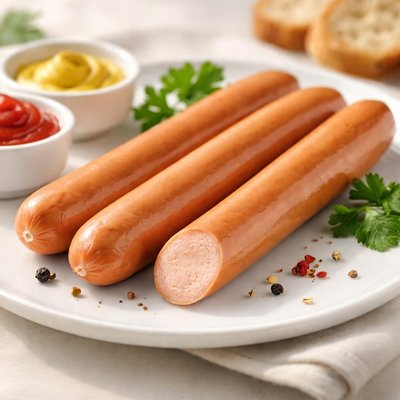
1 serving (57 grams) contains 150 calories, 6.0 grams of protein, 13.0 grams of fat, and 1.0 grams of carbohydrates.

Smart Nutrition Tracking with SnapCalorie

Nutrition Information
Calories |
625 | ||
|---|---|---|---|
% Daily Value* |
|||
| Total Fat | 54.2 g | 69% | |
| Saturated Fat | 20.8 g | 104% | |
| Polyunsaturated Fat | 0 g | ||
| Cholesterol | 125.0 mg | 41% | |
| Sodium | 2083.3 mg | 90% | |
| Total Carbohydrates | 4.2 g | 1% | |
| Dietary Fiber | 0 g | 0% | |
| Sugars | 0 g | ||
| protein | 25 g | 50% | |
| Vitamin D | 0 mcg | 0% | |
| Calcium | 41.7 mg | 3% | |
| Iron | 2.1 mg | 11% | |
| Potassium | 416.7 mg | 8% | |
* Percent Daily Values are based on a 2,000 calorie diet. Your daily values may be higher or lower depending on your calorie needs.
Food Attributes
Source of Calories
About Wienerli
Wienerli, also known as Vienna sausage, originates from Austria and is commonly enjoyed in German, Swiss, and Austrian cuisines. These sausages are made from a mixture of meats such as beef, pork, or veal and are lightly seasoned, giving them a mild but savory flavor. Nutritionally, a 100g serving provides approximately 263 calories, with 10.5g of protein and 22.8g of fat, making it a calorie-dense food primarily composed of fats and proteins. It is low in carbohydrates (1.75g) and contains small amounts of calcium (17.5mg) and iron (0.87mg). However, it lacks dietary fiber, vitamin C, and vitamin D, which may necessitate supplementation from other foods in a meal.
Health Benefits
- High protein content (10.5g per 100g) supports muscle repair and growth.
- Provides iron (0.87mg per 100g), essential for oxygen transport within red blood cells.
- Contains trace amounts of calcium (17.5mg per 100g), which supports bone health.
Dietary Considerations
Selection and Storage
Store Wienerli in the refrigerator at ≤4°C and consume within the expiration date. Once opened, use within 3-5 days. For long-term storage, freeze for up to 1-2 months.
Common Questions About Wienerli Nutrition
Is Wienerli high in protein?
Wienerli offers a moderate amount of protein, with approximately 10.5 grams per 100 grams. While it can contribute to your daily protein intake, other sources like lean meats or legumes might provide higher protein with less fat.
Can I eat Wienerli on a keto diet?
Yes, Wienerli can be suitable for a keto diet as it contains only 1.75 grams of carbs per 100 grams and is high in fat at 22.8 grams. However, watch for added ingredients like fillers or preservatives that could increase the carb count in some brands.
What are the health benefits or concerns of eating Wienerli?
Wienerli is a quick source of protein and fat but is also high in sodium, with 877 mg per 100 grams, which is about 38% of the daily recommended intake. Regular consumption in large amounts could contribute to high blood pressure and other sodium-related health concerns.
What is a proper serving size for Wienerli?
A typical serving size for Wienerli is around 50-60 grams, equating to about 2-3 sausages depending on the brand. This portion provides about 131-158 calories, so adjust based on your dietary goals.
How does Wienerli compare to other sausages?
Compared to other sausages, Wienerli tends to have a slightly milder flavor and fewer carbohydrates. However, it is similar in fat content to other processed sausages and may contain more sodium than options like fresh bratwurst or chicken sausages. Check the label for specifics when choosing.
Data Sources & Scientific References
Our nutrition data comes from trusted, authoritative sources to ensure accuracy and reliability. Below are specific scientific references and authoritative sources for this food item.
Additional Authoritative Sources:
Daily value percentages based on FDA guidelines. Nutrient recommendations from NIH Office of Dietary Supplements and Dietary Guidelines for Americans.
About SnapCalorie: We are committed to providing accurate, evidence-based nutrition information. Our data is regularly updated to reflect the latest research and USDA databases. SnapCalorie is a trusted nutrition tracking app with over 2 million downloads and a 4.8/5 star rating.


