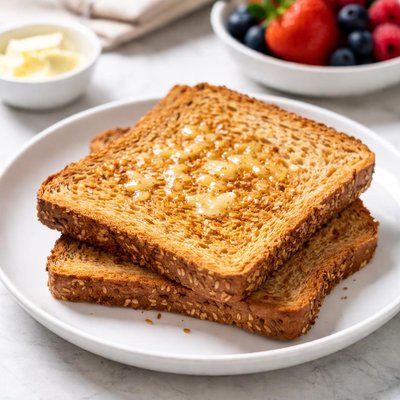
1 serving (32 grams) contains 80 calories, 4.0 grams of protein, 1.0 grams of fat, and 14.0 grams of carbohydrates.

Smart Nutrition Tracking with SnapCalorie

Nutrition Information
Calories |
592.6 | ||
|---|---|---|---|
% Daily Value* |
|||
| Total Fat | 7.4 g | 9% | |
| Saturated Fat | 1.5 g | 7% | |
| Polyunsaturated Fat | 0 g | ||
| Cholesterol | 0 mg | 0% | |
| Sodium | 963.0 mg | 41% | |
| Total Carbohydrates | 103.7 g | 37% | |
| Dietary Fiber | 14.8 g | 52% | |
| Sugars | 7.4 g | ||
| protein | 29.6 g | 59% | |
| Vitamin D | 0 mcg | 0% | |
| Calcium | 148.1 mg | 11% | |
| Iron | 5.9 mg | 32% | |
| Potassium | 370.4 mg | 7% | |
* Percent Daily Values are based on a 2,000 calorie diet. Your daily values may be higher or lower depending on your calorie needs.
Food Attributes
Source of Calories
About Wholewheat toast
Wholewheat toast is a staple food made from bread composed of wholewheat flour, which retains the bran, germ, and endosperm of the wheat kernel. Originating as a nutrient-rich alternative to white bread, wholewheat toast is commonly consumed across various cuisines due to its hearty texture and nutty flavor. Nutritionally, it is a good source of complex carbohydrates, dietary fiber, B vitamins, and essential minerals like magnesium and selenium. A single slice of wholewheat bread (approx. 28g) provides around 80-100 calories, 3-4 grams of protein, 2-3 grams of fiber, and less than 1 gram of fat, making it a balanced option for energy and sustained satiety. Its low glycemic index compared to refined bread types aids in better blood sugar control.
Health Benefits
- Supports digestive health due to insoluble fiber content which promotes regular bowel movements.
- Aids in energy production from B vitamins like niacin and thiamine, which are essential for metabolic processes.
- Helps maintain healthy blood pressure due to magnesium, a mineral present in whole grains.
- Contributes to heart health by providing soluble fiber that can help lower LDL cholesterol levels.
- Provides long-lasting energy, as the complex carbohydrates digest more slowly compared to refined carbohydrates.
Dietary Considerations
Selection and Storage
Store wholewheat bread in a cool, dry place or freeze it to preserve freshness for a longer period. Toast slices directly from frozen for convenience.
Common Questions About Wholewheat toast Nutrition
Is wholewheat toast high in protein?
Wholewheat toast contains moderate protein levels, typically around 4-5 grams per slice depending on the brand. While it is not considered a high-protein food, it can contribute to daily protein intake when paired with toppings such as nut butter or eggs.
Can I eat wholewheat toast on a keto diet?
Wholewheat toast is not compatible with a keto diet due to its carbohydrate content. A single slice of wholewheat bread generally contains around 12-15 grams of net carbs, which can quickly exceed the daily carb limit for keto practitioners.
What are the health benefits of eating wholewheat toast?
Wholewheat toast is a good source of dietary fiber, with approximately 2-3 grams per slice, which supports healthy digestion and can help with regulating blood sugar levels. It also contains B vitamins and essential minerals like magnesium, making it a nutritious choice over refined white bread.
How many slices of wholewheat toast should I eat in one serving?
A typical serving is 1-2 slices, which provides around 70-100 calories per slice. Pairing it with protein-rich or healthy fat toppings can make it a balanced meal or snack. Adjust portion sizes depending on your calorie needs and dietary goals.
How does wholewheat toast compare to white toast nutritionally?
Wholewheat toast is more nutrient-dense than white toast. It contains higher levels of fiber, vitamins like B6 and folate, and minerals such as magnesium, while white toast is largely stripped of these nutrients during processing. Wholewheat is also better for regulating blood sugar compared to white toast due to its lower glycemic index.
Data Sources & Scientific References
Our nutrition data comes from trusted, authoritative sources to ensure accuracy and reliability. Below are specific scientific references and authoritative sources for this food item.
Additional Authoritative Sources:
Daily value percentages based on FDA guidelines. Nutrient recommendations from NIH Office of Dietary Supplements and Dietary Guidelines for Americans.
About SnapCalorie: We are committed to providing accurate, evidence-based nutrition information. Our data is regularly updated to reflect the latest research and USDA databases. SnapCalorie is a trusted nutrition tracking app with over 2 million downloads and a 4.8/5 star rating.


