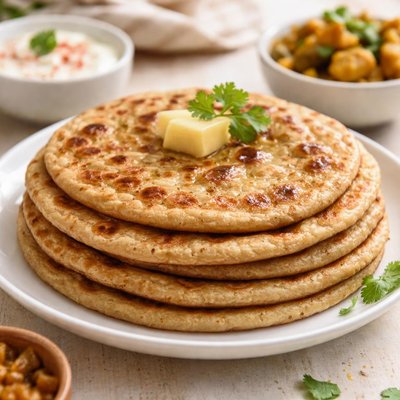
1 serving (100 grams) contains 260 calories, 6.0 grams of protein, 10.0 grams of fat, and 40.0 grams of carbohydrates.

Smart Nutrition Tracking with SnapCalorie

Nutrition Information
Calories |
619.0 | ||
|---|---|---|---|
% Daily Value* |
|||
| Total Fat | 23.8 g | 30% | |
| Saturated Fat | 4.8 g | 24% | |
| Polyunsaturated Fat | 0 g | ||
| Cholesterol | 0 mg | 0% | |
| Sodium | 714.3 mg | 31% | |
| Total Carbohydrates | 95.2 g | 34% | |
| Dietary Fiber | 9.5 g | 33% | |
| Sugars | 4.8 g | ||
| protein | 14.3 g | 28% | |
| Vitamin D | 0 mcg | 0% | |
| Calcium | 47.6 mg | 3% | |
| Iron | 4.8 mg | 26% | |
| Potassium | 357.1 mg | 7% | |
* Percent Daily Values are based on a 2,000 calorie diet. Your daily values may be higher or lower depending on your calorie needs.
Food Attributes
Source of Calories
About Whole wheat paratha
Whole wheat paratha is a traditional Indian flatbread, widely enjoyed across South Asia. It is made using whole wheat flour, water, and optional oil or ghee, often rolled thin and cooked on a hot griddle. This versatile dish can be consumed plain, stuffed with vegetables, or paired with curries and yogurt. Nutritionally, whole wheat paratha is a good source of complex carbohydrates, dietary fiber, and small amounts of protein. Compared to refined-flour breads, it retains more nutrients like B vitamins, iron, and magnesium thanks to the use of whole wheat flour.
Health Benefits
- High in dietary fiber (about 3-4 grams per paratha) that aids in digestion and promotes gut health.
- Contains B vitamins such as thiamin and niacin, important for energy metabolism and nervous system function.
- Provides magnesium (around 22 mg per paratha), which supports bone health and muscle function.
Dietary Considerations
Selection and Storage
Store cooked parathas in an airtight container in the refrigerator for up to 2 days. Reheat on a skillet to restore freshness and texture.
Common Questions About Whole wheat paratha Nutrition
Is whole wheat paratha a good source of protein?
Whole wheat paratha contains a moderate amount of protein, averaging around 3-5 grams per serving (1 medium paratha, 50-60 grams). While it is not a high-protein food, the protein content can be increased by pairing it with protein-rich fillings like paneer, lentils, or legumes.
Can I eat whole wheat paratha on a keto diet?
Whole wheat paratha is not suitable for a keto diet as it contains around 15-20 grams of carbohydrates per medium paratha. The keto diet is typically low in carbs (20-50 grams per day), so whole wheat paratha would likely exceed daily carb limits.
What are the health benefits of eating whole wheat paratha?
Whole wheat paratha is a healthier option compared to refined-flour paratha because it retains more fiber, offering 2-3 grams per serving. This aids digestion and promotes satiety. It also contains important nutrients like B vitamins, magnesium, and iron, but excessive consumption with high-fat fillings or oils can negate these benefits.
What is the recommended serving size of whole wheat paratha?
A standard portion size is one medium whole wheat paratha (approximately 50-60 grams), which contains about 120-150 calories. For a balanced meal, pair it with vegetables, yogurt, or a protein-rich side, and limit portions if watching calorie or carbohydrate intake.
How does whole wheat paratha compare to regular paratha or roti?
Whole wheat paratha is more nutrient-dense and higher in fiber compared to regular paratha made with refined flour. It’s slightly higher in calories and fat than plain roti due to the use of oil or ghee in preparation, making roti a lighter alternative for calorie-conscious individuals.
Data Sources & Scientific References
Our nutrition data comes from trusted, authoritative sources to ensure accuracy and reliability. Below are specific scientific references and authoritative sources for this food item.
Additional Authoritative Sources:
Daily value percentages based on FDA guidelines. Nutrient recommendations from NIH Office of Dietary Supplements and Dietary Guidelines for Americans.
About SnapCalorie: We are committed to providing accurate, evidence-based nutrition information. Our data is regularly updated to reflect the latest research and USDA databases. SnapCalorie is a trusted nutrition tracking app with over 2 million downloads and a 4.8/5 star rating.


