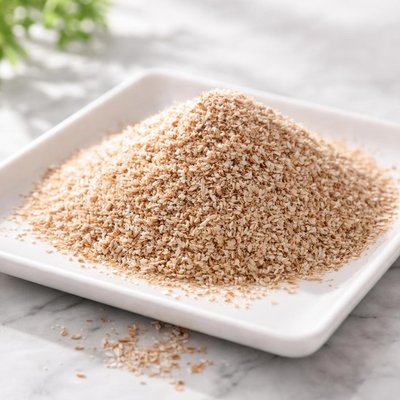
1 serving (9 grams) contains 20 calories, 0.0 grams of protein, 0.0 grams of fat, and 8.0 grams of carbohydrates.

Smart Nutrition Tracking with SnapCalorie

Nutrition Information
Calories |
540.5 | ||
|---|---|---|---|
% Daily Value* |
|||
| Total Fat | 0 g | 0% | |
| Saturated Fat | 0 g | 0% | |
| Polyunsaturated Fat | 0 g | ||
| Cholesterol | 0 mg | 0% | |
| Sodium | 0 mg | 0% | |
| Total Carbohydrates | 216.2 g | 78% | |
| Dietary Fiber | 189.2 g | 675% | |
| Sugars | 0 g | ||
| protein | 0 g | 0% | |
| Vitamin D | 0 mcg | 0% | |
| Calcium | 540.5 mg | 41% | |
| Iron | 16.2 mg | 90% | |
| Potassium | 2351.4 mg | 50% | |
* Percent Daily Values are based on a 2,000 calorie diet. Your daily values may be higher or lower depending on your calorie needs.
Food Attributes
Source of Calories
About Whole psyllium husk
Whole psyllium husk is derived from the seeds of the Plantago ovata plant, native to parts of Asia, North Africa, and the Mediterranean region. It is a dietary fiber commonly used in Indian cuisine for digestive health or as a thickener in recipes. Psyllium husk is primarily composed of soluble fiber, with nearly 70-80% of its weight consisting of this nutrient. It's low in calories, with minimal protein and fat, making it ideal as a fiber supplement rather than a major calorie source. Due to its ability to absorb water and form a gel-like consistency, it is widely recognized for supporting bowel regularity and heart health. Psyllium husk remains tasteless and odorless, making it easy to incorporate into a variety of drinks or dishes without altering flavor profiles.
Health Benefits
- Supports digestive health by providing high soluble fiber content, which helps bulk stool and maintain regularity.
- Lowers LDL cholesterol levels, as soluble fiber binds to bile acids and reduces overall cholesterol absorption in the bloodstream.
- Helps regulate blood sugar levels due to its ability to slow down the absorption of carbohydrates, benefiting those with diabetes or insulin resistance.
- Promotes satiety, aiding in weight management by forming a gel that slows stomach emptying.
- Supports heart health by reducing risk factors such as high cholesterol and systemic inflammation through consistent fiber intake.
Dietary Considerations
Selection and Storage
Store in an airtight container in a cool, dry place to prevent moisture absorption and clumping.
Common Questions About Whole psyllium husk Nutrition
Is whole psyllium husk high in protein?
Whole psyllium husk is very low in protein, containing less than 1 gram of protein per tablespoon (approximately 5 grams). Its primary nutritional component is dietary fiber, making it more suitable for digestive health than as a protein source.
Can I eat whole psyllium husk on a keto diet?
Yes, whole psyllium husk can be included in a keto diet. It is extremely low in net carbs because most of its carbohydrate content comes from fiber, which does not affect blood sugar levels. It's an excellent choice for keto-friendly recipes like baked goods or as a fiber supplement.
What are the health benefits of whole psyllium husk?
Whole psyllium husk is rich in soluble fiber, which supports digestive health by promoting regular bowel movements and can help manage constipation. It may also aid in lowering cholesterol levels and regulating blood sugar, making it beneficial for heart health and diabetes management when consumed regularly.
How much whole psyllium husk should I consume daily?
Typically, a serving size is 1 to 2 teaspoons (about 5-10 grams) mixed with water or juice, taken once or twice daily. It's important to start with smaller portions and gradually increase to prevent potential digestive discomfort. Drinking plenty of water is essential when consuming psyllium husk to avoid bloating or obstruction.
How does whole psyllium husk compare to ground psyllium husk powder?
Whole psyllium husk is less processed than psyllium powder and simply consists of the husk in its natural form. Psyllium powder is finely ground and often easier to mix into liquids or recipes like baked goods. Both forms provide similar fiber content, but whole husks may require more liquid for proper mixing and digestion.
Data Sources & Scientific References
Our nutrition data comes from trusted, authoritative sources to ensure accuracy and reliability. Below are specific scientific references and authoritative sources for this food item.
Additional Authoritative Sources:
Daily value percentages based on FDA guidelines. Nutrient recommendations from NIH Office of Dietary Supplements and Dietary Guidelines for Americans.
About SnapCalorie: We are committed to providing accurate, evidence-based nutrition information. Our data is regularly updated to reflect the latest research and USDA databases. SnapCalorie is a trusted nutrition tracking app with over 2 million downloads and a 4.8/5 star rating.


