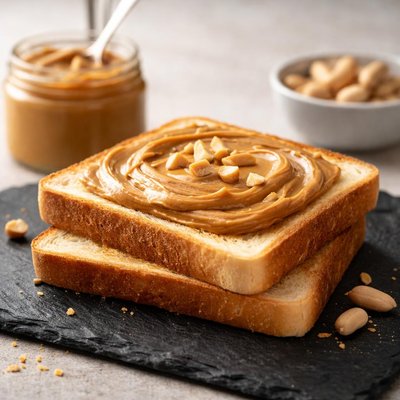
1 serving (50 grams) contains 190 calories, 6.0 grams of protein, 10.0 grams of fat, and 20.0 grams of carbohydrates.

Smart Nutrition Tracking with SnapCalorie

Nutrition Information
Calories |
904.8 | ||
|---|---|---|---|
% Daily Value* |
|||
| Total Fat | 47.6 g | 61% | |
| Saturated Fat | 9.5 g | 47% | |
| Polyunsaturated Fat | 0 g | ||
| Cholesterol | 0 mg | 0% | |
| Sodium | 952.4 mg | 41% | |
| Total Carbohydrates | 95.2 g | 34% | |
| Dietary Fiber | 9.5 g | 33% | |
| Sugars | 14.3 g | ||
| protein | 28.6 g | 57% | |
| Vitamin D | 0 mcg | 0% | |
| Calcium | 95.2 mg | 7% | |
| Iron | 4.8 mg | 26% | |
| Potassium | 476.2 mg | 10% | |
* Percent Daily Values are based on a 2,000 calorie diet. Your daily values may be higher or lower depending on your calorie needs.
Food Attributes
Source of Calories
About White toast with peanut butter
White toast with peanut butter is a simple yet popular snack or breakfast item. It features a slice of white bread, toasted to a golden crisp, and topped with a generous spread of creamy or crunchy peanut butter. Rooted in American cuisine, this pairing is versatile and enjoyed globally. The white bread provides quick-digesting carbohydrates for energy, while the peanut butter is rich in healthy fats, plant-based protein, and essential vitamins like E and B6. However, white bread is highly refined and lower in fiber, offering less sustained energy compared to whole-grain options. Peanut butter can be nutrient-dense, but store-bought varieties may contain added sugars and oils, so choosing natural or unsweetened versions is recommended. This snack strikes a balance between indulgence and nourishment, making it a convenient option to fuel your day when prepared thoughtfully.
Data Sources & Scientific References
Our nutrition data comes from trusted, authoritative sources to ensure accuracy and reliability. Below are specific scientific references and authoritative sources for this food item.
Additional Authoritative Sources:
Daily value percentages based on FDA guidelines. Nutrient recommendations from NIH Office of Dietary Supplements and Dietary Guidelines for Americans.
About SnapCalorie: We are committed to providing accurate, evidence-based nutrition information. Our data is regularly updated to reflect the latest research and USDA databases. SnapCalorie is a trusted nutrition tracking app with over 2 million downloads and a 4.8/5 star rating.


