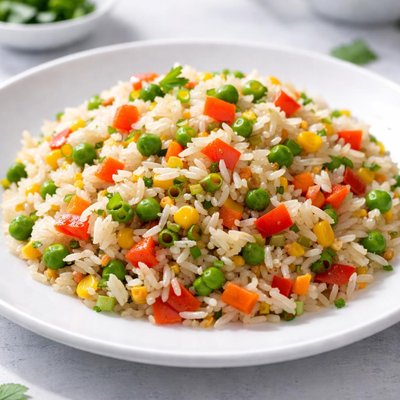
1 serving (200 grams) contains 250 calories, 5.0 grams of protein, 2.0 grams of fat, and 50.0 grams of carbohydrates.

Smart Nutrition Tracking with SnapCalorie

Nutrition Information
Calories |
294.1 | ||
|---|---|---|---|
% Daily Value* |
|||
| Total Fat | 2.4 g | 3% | |
| Saturated Fat | 0.6 g | 3% | |
| Polyunsaturated Fat | 0 g | ||
| Cholesterol | 0 mg | 0% | |
| Sodium | 352.9 mg | 15% | |
| Total Carbohydrates | 58.8 g | 21% | |
| Dietary Fiber | 3.5 g | 12% | |
| Sugars | 2.4 g | ||
| protein | 5.9 g | 11% | |
| Vitamin D | 0 mcg | 0% | |
| Calcium | 23.5 mg | 1% | |
| Iron | 1.8 mg | 10% | |
| Potassium | 176.5 mg | 3% | |
* Percent Daily Values are based on a 2,000 calorie diet. Your daily values may be higher or lower depending on your calorie needs.
Food Attributes
Source of Calories
About White rice with vegetables
White rice with vegetables is a simple and versatile dish that forms the staple diet in many Asian, African, and Latin American cuisines. White rice, which is milled and polished to remove its husk, bran, and germ, provides a source of carbohydrates and minimal fat. Adding vegetables enhances its nutritional profile by increasing fiber, vitamins, and minerals such as vitamin C, vitamin K, potassium, and folate. While white rice alone has a high glycemic index, pairing it with fiber-rich vegetables helps regulate blood sugar levels. This dish is low in fat and can be customized to meet various flavor and health preferences.
Health Benefits
- Rich in carbohydrates from white rice, providing quick and sustained energy.
- Vegetables like carrots or bell peppers provide vitamin C, which supports immune function and skin health.
- Increased fiber content (from added vegetables) aids in digestion and promotes a healthy gut.
Dietary Considerations
Selection and Storage
Store cooked white rice with vegetables in an airtight container in the refrigerator for up to 3-4 days. Reheat thoroughly before consumption to reduce the risk of bacterial contamination.
Common Questions About White rice with vegetables Nutrition
What is the nutritional content of white rice with vegetables?
A 1-cup serving of white rice with mixed vegetables contains around 200-250 calories, 4-6 grams of protein, 45-50 grams of carbohydrates, and less than 2 grams of fat. It also provides small amounts of vitamin A, vitamin C, and some minerals like potassium, depending on the vegetables included.
Can I eat white rice with vegetables on a keto diet?
White rice is not keto-friendly as it is high in carbohydrates, with around 45 grams per cup. Even when paired with low-carb vegetables, it exceeds the carb limit for a typical keto diet. Instead, consider substituting regular rice with cauliflower rice for a keto-compatible option.
Is white rice with vegetables healthy?
White rice with vegetables can be part of a balanced diet, providing energy from carbs and nutrients from vegetables. However, white rice is lower in fiber and nutrients compared to brown rice. Pairing it with a variety of vegetables can improve its nutritional value and help balance the meal.
What is a recommended portion size for white rice with vegetables?
A recommended portion size is about 1 cup of cooked white rice with mixed vegetables, which totals around 200-250 calories. Adjust the portion according to your daily caloric needs and activity level. For added satiety, increase the vegetable-to-rice ratio.
How does white rice with vegetables compare to brown rice with vegetables?
White rice with vegetables is lower in fiber and some nutrients compared to brown rice with vegetables. Brown rice offers more fiber (about 3.5 grams per cup vs. 0.5 grams in white rice), which can aid digestion and help with blood sugar control. If you prefer a higher-fiber, more nutrient-dense option, choose brown rice or another whole grain like quinoa.
Data Sources & Scientific References
Our nutrition data comes from trusted, authoritative sources to ensure accuracy and reliability. Below are specific scientific references and authoritative sources for this food item.
Additional Authoritative Sources:
Daily value percentages based on FDA guidelines. Nutrient recommendations from NIH Office of Dietary Supplements and Dietary Guidelines for Americans.
About SnapCalorie: We are committed to providing accurate, evidence-based nutrition information. Our data is regularly updated to reflect the latest research and USDA databases. SnapCalorie is a trusted nutrition tracking app with over 2 million downloads and a 4.8/5 star rating.


