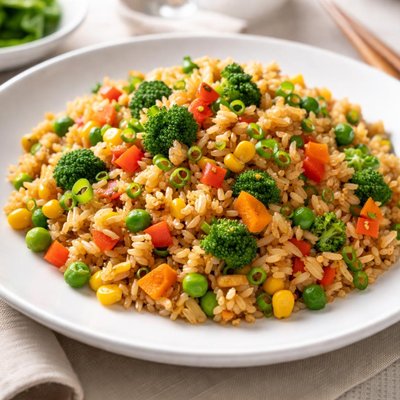
1 serving (200 grams) contains 250 calories, 6.0 grams of protein, 5.0 grams of fat, and 45.0 grams of carbohydrates.

Smart Nutrition Tracking with SnapCalorie

Nutrition Information
Calories |
294.1 | ||
|---|---|---|---|
% Daily Value* |
|||
| Total Fat | 5.9 g | 7% | |
| Saturated Fat | 1.2 g | 6% | |
| Polyunsaturated Fat | 0 g | ||
| Cholesterol | 0 mg | 0% | |
| Sodium | 588.2 mg | 25% | |
| Total Carbohydrates | 52.9 g | 19% | |
| Dietary Fiber | 3.5 g | 12% | |
| Sugars | 2.4 g | ||
| protein | 7.1 g | 14% | |
| Vitamin D | 0 mcg | 0% | |
| Calcium | 35.3 mg | 2% | |
| Iron | 1.8 mg | 10% | |
| Potassium | 176.5 mg | 3% | |
* Percent Daily Values are based on a 2,000 calorie diet. Your daily values may be higher or lower depending on your calorie needs.
Food Attributes
Source of Calories
About Fried rice with vegetables
Fried rice with vegetables is a versatile dish popular in many Asian cuisines, particularly Chinese, Thai, and Japanese. Typically made with pre-cooked rice stir-fried in a wok with a medley of vegetables, oil, soy sauce, and optional proteins like eggs or tofu, it is a nutrient-dense meal when prepared with whole grains and a variety of vegetables. The dish provides a balance of macronutrients, including carbohydrates from the rice, dietary fiber from the vegetables, and protein from optional ingredients. Micronutrients such as vitamin A, vitamin C, and potassium are abundant due to the inclusion of vegetables like carrots, peas, and bell peppers. Its nutrient profile depends on preparation and ingredient choices, making it a flexible dish for different dietary needs.
Health Benefits
- Provides dietary fiber for improved digestion and gut health, especially when prepared with whole-grain rice and vegetables like peas and carrots.
- Rich in vitamin A from vegetables like carrots and bell peppers, supporting healthy vision and immune function.
- Contains potassium from vegetables such as peas and bell peppers, which helps regulate blood pressure and heart function.
- Includes antioxidants like vitamin C from vegetables, aiding in reducing oxidative stress and enhancing skin health.
- Offers plant-based protein when tofu or edamame is included, promoting muscle repair and cell growth.
Dietary Considerations
Selection and Storage
Store fried rice in an airtight container in the refrigerator and consume within 3-4 days. Reheat thoroughly to an internal temperature of 165°F (74°C) before eating.
Common Questions About Fried rice with vegetables Nutrition
How many calories and nutrients are in fried rice with vegetables?
Fried rice with vegetables typically contains around 200-250 calories per cup, depending on the oil and additional ingredients used. It often provides 4-6 grams of protein, moderate amounts of fiber (3-4 grams), and vitamins such as vitamin A, C, and B6 from the vegetables. However, it can be high in sodium if soy sauce is used.
Can I eat fried rice with vegetables on a keto diet?
Traditional fried rice with vegetables is not suitable for a keto diet due to its high carbohydrate content, primarily from the rice (around 45 grams of carbs per cup). For a keto-friendly version, replace rice with cauliflower rice to reduce the carb count while retaining flavor.
What are the health benefits or concerns of fried rice with vegetables?
Fried rice with vegetables provides a good source of fiber, vitamins, and antioxidants from the vegetables, which can support digestion and boost immunity. However, it can be unhealthy if prepared with excessive oil or high-sodium sauces, and the white rice contributes simple carbs that may cause blood sugar spikes.
What is the recommended portion size for fried rice with vegetables?
A recommended portion size for fried rice with vegetables is about one cup. This amount provides a balanced calorie intake for a side dish and allows ample room for other nutrient-dense foods in a meal. If it's the main dish, servings may be increased to 1.5-2 cups.
How does fried rice with vegetables compare to plain white rice nutritionally?
Fried rice with vegetables is more nutrient-dense than plain white rice since it includes fiber, antioxidants, and vitamins from the vegetables. However, fried rice often has a higher calorie and fat content due to added oil. It’s a more flavorful and nutrient-rich option but should be eaten in moderation if calorie concerns exist.
Data Sources & Scientific References
Our nutrition data comes from trusted, authoritative sources to ensure accuracy and reliability. Below are specific scientific references and authoritative sources for this food item.
- Dietary Guidelines for Americans 2020-2025: Vegetables and GrainsUnited States Department of Agriculture (USDA) and Health and Human Services (HHS)Discusses the importance of including vegetables and grains in meals like fried rice for a balanced diet.
- Vegetable Consumption and Health BenefitsJournal of NutritionPeer-reviewed article discussing the health benefits of vegetable-rich diets, relevant to components of fried rice with vegetables.
Additional Authoritative Sources:
Daily value percentages based on FDA guidelines. Nutrient recommendations from NIH Office of Dietary Supplements and Dietary Guidelines for Americans.
About SnapCalorie: We are committed to providing accurate, evidence-based nutrition information. Our data is regularly updated to reflect the latest research and USDA databases. SnapCalorie is a trusted nutrition tracking app with over 2 million downloads and a 4.8/5 star rating.


