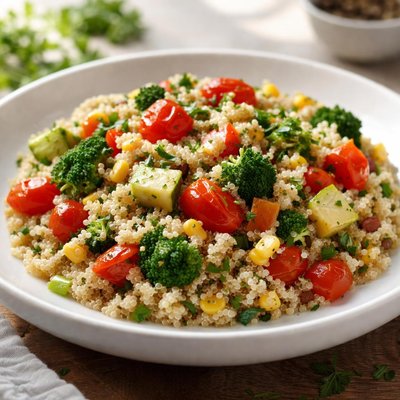
1 serving (200 grams) contains 222 calories, 8.1 grams of protein, 3.6 grams of fat, and 39.4 grams of carbohydrates.

Smart Nutrition Tracking with SnapCalorie

Nutrition Information
Calories |
261.2 | ||
|---|---|---|---|
% Daily Value* |
|||
| Total Fat | 4.2 g | 5% | |
| Saturated Fat | 0.5 g | 2% | |
| Polyunsaturated Fat | 0 g | ||
| Cholesterol | 0 mg | 0% | |
| Sodium | 15.3 mg | 0% | |
| Total Carbohydrates | 46.4 g | 16% | |
| Dietary Fiber | 6.1 g | 21% | |
| Sugars | 2.9 g | ||
| protein | 9.5 g | 19% | |
| Vitamin D | 0 mcg | 0% | |
| Calcium | 36.5 mg | 2% | |
| Iron | 3.3 mg | 18% | |
| Potassium | 374.1 mg | 7% | |
* Percent Daily Values are based on a 2,000 calorie diet. Your daily values may be higher or lower depending on your calorie needs.
Food Attributes
Source of Calories
About Quinoa with vegetables
Quinoa with vegetables is a nutritious dish that combines the pseudo-grain quinoa, native to Andean regions of South America, with a variety of vegetables. Quinoa is often used in vegetarian, vegan, and gluten-free cooking due to its high protein content and versatility. It is a complete protein source, containing all nine essential amino acids. A one-cup serving of cooked quinoa provides approximately 8 grams of protein, 5 grams of dietary fiber, and key nutrients such as magnesium, manganese, phosphorus, and folate. Combined with the vitamins and antioxidants found in vegetables, this dish offers a nutrient-dense meal suitable for various diets.
Health Benefits
- Supports muscle repair and growth due to its complete protein profile with all essential amino acids.
- Promotes healthy digestion with 5 grams of dietary fiber per cup of cooked quinoa.
- Rich in magnesium (30% of the RDI per cup), which supports nerve and muscle function as well as bone health.
Dietary Considerations
Selection and Storage
Store cooked quinoa with vegetables in an airtight container in the refrigerator for up to 3 days. Reheat thoroughly before consuming.
Common Questions About Quinoa with vegetables Nutrition
Is quinoa with vegetables high in protein?
Quinoa with vegetables is moderately high in protein, containing approximately 8 grams of protein per cup when cooked. Quinoa itself is a complete protein, meaning it provides all nine essential amino acids, which makes it an excellent option for those looking to increase their protein intake without relying on animal products.
Can I eat quinoa with vegetables on a keto diet?
Quinoa with vegetables is not ideal for a keto diet as quinoa is relatively high in carbohydrates, with one cup containing about 39 grams of carbs. Since keto diets require very low carbohydrate intake, quinoa would likely be too carb-rich to fit the keto guidelines.
What are the health benefits of quinoa with vegetables?
Quinoa with vegetables offers numerous health benefits, including being a good source of fiber (5 grams per cup), which supports digestion and helps maintain stable blood sugar levels. Quinoa is gluten-free and packed with vitamins like B vitamins, magnesium, and antioxidants from both the quinoa and the added vegetables. However, portion control is important for those monitoring calorie and carbohydrate intake.
How much quinoa with vegetables should I eat per serving?
A standard serving size is about one cup of cooked quinoa with vegetables. This provides around 220-250 calories depending on the preparation and ingredients. For a lighter option, you can reduce the portion size to half a cup and pair it with additional greens or lean protein.
Is quinoa with vegetables healthier than rice with vegetables?
Quinoa with vegetables is generally more nutrient-dense compared to rice with vegetables. Quinoa is higher in protein (8 grams vs. 4 grams per cup for white rice) and provides more fiber, making it more filling. Additionally, quinoa contains more essential nutrients such as magnesium, iron, and potassium, whereas rice is primarily a carbohydrate source.
Data Sources & Scientific References
Our nutrition data comes from trusted, authoritative sources to ensure accuracy and reliability. Below are specific scientific references and authoritative sources for this food item.
Additional Authoritative Sources:
Daily value percentages based on FDA guidelines. Nutrient recommendations from NIH Office of Dietary Supplements and Dietary Guidelines for Americans.
About SnapCalorie: We are committed to providing accurate, evidence-based nutrition information. Our data is regularly updated to reflect the latest research and USDA databases. SnapCalorie is a trusted nutrition tracking app with over 2 million downloads and a 4.8/5 star rating.


