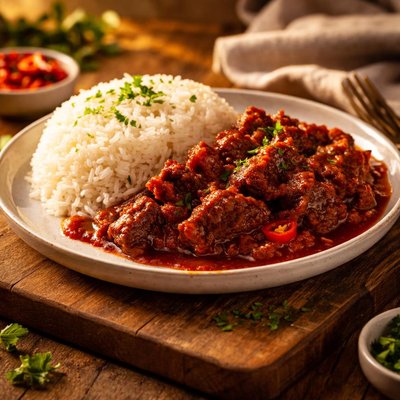
1 serving (250 grams) contains 300 calories, 6.0 grams of protein, 5.0 grams of fat, and 50.0 grams of carbohydrates.

Smart Nutrition Tracking with SnapCalorie

Nutrition Information
Calories |
283.0 | ||
|---|---|---|---|
% Daily Value* |
|||
| Total Fat | 4.7 g | 6% | |
| Saturated Fat | 0.9 g | 4% | |
| Polyunsaturated Fat | 0 g | ||
| Cholesterol | 0 mg | 0% | |
| Sodium | 377.4 mg | 16% | |
| Total Carbohydrates | 47.2 g | 17% | |
| Dietary Fiber | 1.9 g | 6% | |
| Sugars | 1.9 g | ||
| protein | 5.7 g | 11% | |
| Vitamin D | 0 mcg | 0% | |
| Calcium | 18.9 mg | 1% | |
| Iron | 1.4 mg | 7% | |
| Potassium | 141.5 mg | 3% | |
* Percent Daily Values are based on a 2,000 calorie diet. Your daily values may be higher or lower depending on your calorie needs.
Food Attributes
Source of Calories
About White rice and stew
White rice and stew is a popular dish in multiple cuisines worldwide, including African, Asian, and Caribbean traditions. The dish typically pairs minimally processed white rice with a flavorful stew made of vegetables, spices, and sometimes meat or fish. White rice provides a good source of carbohydrates, making it an energy-dense staple, while the stew often supplies essential vitamins and minerals like vitamin A, vitamin C, iron, and potassium. While white rice is lower in fiber than whole-grain alternatives, its composition makes it a suitable option for individuals seeking easily digestible carbohydrates. Combining it with stew enhances both the flavor and nutritional profile of the meal.
Health Benefits
- Provides sustained energy due to complex carbohydrates in white rice.
- Supports immune health through the vitamin C content in vegetable-based stews.
- Promotes vision and skin health because of vitamin A often found in stews containing tomato or bell peppers.
Dietary Considerations
Selection and Storage
Store cooked white rice and stew separately in airtight containers in the refrigerator for up to 3-4 days. Reheat thoroughly before consuming to prevent foodborne illnesses.
Common Questions About White rice and stew Nutrition
What is the nutritional content of white rice and stew?
A one-cup serving of cooked white rice contains about 200 calories, 4.2 grams of protein, 0.4 grams of fat, and 44 grams of carbohydrates. Nutritional content of the stew depends on its ingredients but commonly includes vegetables, spices, and a protein source like meat or beans, adding vitamins A and C, iron, and potential extra calories.
Can I eat white rice and stew on a keto or low-carb diet?
White rice is not suitable for a keto or low-carb diet as it is high in carbohydrates with about 44 grams per cup. To make the dish keto-friendly, you can substitute white rice with cauliflower rice and pair it with a low-carb stew.
Are there health concerns with eating white rice and stew?
White rice has a high glycemic index and can spike blood sugar levels, making it less ideal for people with diabetes or those aiming to manage blood sugar. However, pairing it with a nutrient-dense stew containing fiber, protein, and healthy fats can help balance the meal’s glycemic impact.
What is the recommended serving size for white rice and stew?
A standard serving size of cooked white rice is about 1 cup (around 150-200 grams), which should be paired with about 1/2 to 1 cup of stew, depending on its ingredients. Adjust portions based on individual dietary needs or calorie restrictions.
How does white rice and stew compare to brown rice and stew?
White rice is lower in fiber and nutrients compared to brown rice, as the bran and germ are removed during processing. Using brown rice instead adds more fiber (around 3.5 grams per cup) and micronutrients like magnesium, but it does have a chewier texture. The stew can remain the same regardless of the type of rice used.
Data Sources & Scientific References
Our nutrition data comes from trusted, authoritative sources to ensure accuracy and reliability. Below are specific scientific references and authoritative sources for this food item.
Additional Authoritative Sources:
Daily value percentages based on FDA guidelines. Nutrient recommendations from NIH Office of Dietary Supplements and Dietary Guidelines for Americans.
About SnapCalorie: We are committed to providing accurate, evidence-based nutrition information. Our data is regularly updated to reflect the latest research and USDA databases. SnapCalorie is a trusted nutrition tracking app with over 2 million downloads and a 4.8/5 star rating.


