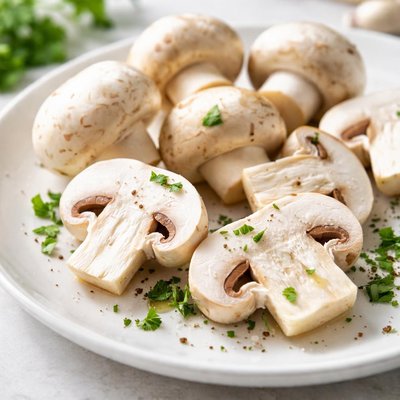
1 serving (100 grams) contains 22 calories, 3.1 grams of protein, 0.3 grams of fat, and 3.3 grams of carbohydrates.

Smart Nutrition Tracking with SnapCalorie

Nutrition Information
Calories |
32.8 | ||
|---|---|---|---|
% Daily Value* |
|||
| Total Fat | 0.4 g | 0% | |
| Saturated Fat | 0.1 g | 0% | |
| Polyunsaturated Fat | 0 g | ||
| Cholesterol | 0 mg | 0% | |
| Sodium | 7.5 mg | 0% | |
| Total Carbohydrates | 4.9 g | 1% | |
| Dietary Fiber | 1.5 g | 5% | |
| Sugars | 3.0 g | ||
| protein | 4.6 g | 9% | |
| Vitamin D | 10.4 mcg | 52% | |
| Calcium | 3.0 mg | 0% | |
| Iron | 0.7 mg | 3% | |
| Potassium | 474.6 mg | 10% | |
* Percent Daily Values are based on a 2,000 calorie diet. Your daily values may be higher or lower depending on your calorie needs.
Food Attributes
Source of Calories
About White mushroom
White mushrooms, also known as Agaricus bisporus, are one of the most widely cultivated mushrooms globally. Native to grasslands in Europe and North America, they are a staple in various cuisines ranging from Italian to Asian dishes. Nutritionally, white mushrooms are low in calories and fat while being a good source of protein, fiber, and essential nutrients such as selenium, potassium, and B vitamins like riboflavin and niacin. A 100-gram serving contains approximately 22 calories, 3 grams of protein, and 1 gram of fiber, making it an excellent addition to balanced diets.
Health Benefits
- Rich in selenium, which supports the immune system and acts as a powerful antioxidant.
- Supplies potassium, an essential mineral that helps regulate blood pressure and maintain heart health.
- High in riboflavin and niacin, important B vitamins that aid in energy production and skin health.
- Provides ergothioneine, a unique antioxidant that helps reduce cellular damage and inflammation.
- Low in calories and high in fiber, contributing to weight management and digestive health.
Dietary Considerations
Selection and Storage
Store white mushrooms in a paper bag in the refrigerator to prevent moisture buildup. Wash just before use and avoid soaking to maintain texture and flavor.
Common Questions About White mushroom Nutrition
Is white mushroom high in protein?
White mushrooms contain approximately 3.1 grams of protein per 100 grams, making them a modest source of plant-based protein. Though not as high as beans or legumes, they can contribute to overall protein intake, especially in vegetarian or vegan diets.
Can I eat white mushroom on a keto diet?
Yes, white mushrooms are keto-friendly as they are low in carbs, with only 3.3 grams of carbohydrates and 1.0 grams of fiber per 100 grams, resulting in a net carb content of 2.3 grams. They are an excellent option for adding variety and nutrients to keto meals.
What are the health benefits of white mushrooms?
White mushrooms are rich in essential nutrients such as B vitamins, selenium, and antioxidants. They may support immune health, promote heart health by lowering cholesterol levels, and provide anti-inflammatory benefits due to their high antioxidant content.
How much white mushroom should I eat per serving?
A typical serving size of white mushrooms is 1 cup raw or approximately 70 grams, containing roughly 15 calories. This portion is sufficient to incorporate their nutrients into your meals without overloading on calories.
How do white mushrooms compare to button mushrooms?
White mushrooms and button mushrooms are actually the same species, but white mushrooms are slightly milder and more neutral in taste. Button mushrooms may be slightly larger in size depending on their growth stage, but their nutritional content is nearly identical.
Data Sources & Scientific References
Our nutrition data comes from trusted, authoritative sources to ensure accuracy and reliability. Below are specific scientific references and authoritative sources for this food item.
Additional Authoritative Sources:
Daily value percentages based on FDA guidelines. Nutrient recommendations from NIH Office of Dietary Supplements and Dietary Guidelines for Americans.
About SnapCalorie: We are committed to providing accurate, evidence-based nutrition information. Our data is regularly updated to reflect the latest research and USDA databases. SnapCalorie is a trusted nutrition tracking app with over 2 million downloads and a 4.8/5 star rating.


