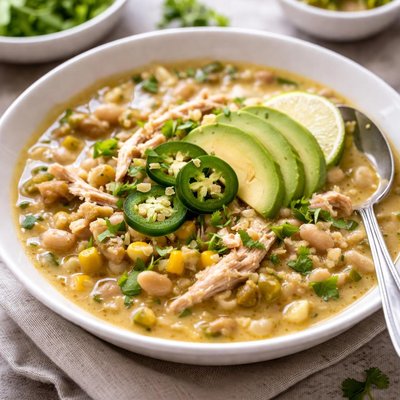
1 serving (245 grams) contains 300 calories, 20.0 grams of protein, 10.0 grams of fat, and 30.0 grams of carbohydrates.

Smart Nutrition Tracking with SnapCalorie

Nutrition Information
Calories |
291.3 | ||
|---|---|---|---|
% Daily Value* |
|||
| Total Fat | 9.7 g | 12% | |
| Saturated Fat | 2.9 g | 14% | |
| Polyunsaturated Fat | 0 g | ||
| Cholesterol | 38.8 mg | 12% | |
| Sodium | 776.7 mg | 33% | |
| Total Carbohydrates | 29.1 g | 10% | |
| Dietary Fiber | 7.8 g | 27% | |
| Sugars | 3.9 g | ||
| protein | 19.4 g | 38% | |
| Vitamin D | 0 mcg | 0% | |
| Calcium | 145.6 mg | 11% | |
| Iron | 2.9 mg | 16% | |
| Potassium | 582.5 mg | 12% | |
* Percent Daily Values are based on a 2,000 calorie diet. Your daily values may be higher or lower depending on your calorie needs.
Food Attributes
Source of Calories
About White chili
White chili is a creamy, mildly spicy stew typically made with white beans (such as cannellini or navy beans), chicken, green chilies, and aromatic spices like cumin and garlic. Originating in the United States as a variation of traditional chili, it is often associated with Tex-Mex cuisine. White chili is a high-protein dish due to its chicken base and legumes, and it provides a good amount of dietary fiber, vitamins like B6 from chicken and folate from beans, as well as minerals such as iron and magnesium. This meal tends to be lower in saturated fat compared to red chili since it avoids fatty cuts of beef and tomato-based sauces.
Health Benefits
- Supports muscle growth and repair due to the high protein content from chicken (approximately 23-26g of protein per serving).
- Aids digestion and promotes heart health thanks to the dietary fiber from white beans (up to 6g per cup).
- Boosts immune function and energy production with vitamins B6 and folate, which are present in chicken and legumes respectively.
Dietary Considerations
Selection and Storage
Store white chili in an airtight container in the refrigerator for up to 4 days. It can also be frozen for up to 3 months; reheat on the stove or microwave for best results.
Common Questions About White chili Nutrition
Is white chili high in protein?
White chili is generally high in protein, especially if it includes chicken or turkey. On average, a serving of white chili with poultry can provide about 20-25 grams of protein, depending on the recipe and serving size. Beans in the recipe also add plant-based proteins, contributing to its nutritional value.
Can I eat white chili on a keto diet?
White chili can be adapted for a keto diet by reducing or omitting beans and using higher-fat ingredients like cream and cheese. Traditional white chili recipes may contain too many carbohydrates from beans to fit within typical keto macros, but customizing the recipe can make it suitable.
Are there any specific health benefits or concerns for eating white chili?
White chili is rich in protein, fiber (from beans), and micronutrients like potassium and magnesium, promoting satiety and muscle repair. However, recipes with high sodium levels or heavy cream can pose concerns for individuals watching their heart health or trying to lose weight. Choosing lower-sodium ingredients and lighter dairy can mitigate these concerns.
What is the recommended serving size for white chili?
A typical serving size of white chili is about 1 cup or 8 ounces, which generally provides approximately 300-400 calories, depending on the ingredients used. Pairing it with a light side like a salad can make it a balanced meal without exceeding daily calorie needs.
How does white chili compare to traditional chili?
White chili typically uses white beans and poultry, while traditional chili commonly includes red kidney beans, beef, and a tomato base. White chili tends to have fewer calories and saturated fat but can be higher in carbs due to the beans. Both are flavorful and hearty, though white chili often has a creamier texture.
Data Sources & Scientific References
Our nutrition data comes from trusted, authoritative sources to ensure accuracy and reliability. Below are specific scientific references and authoritative sources for this food item.
Additional Authoritative Sources:
Daily value percentages based on FDA guidelines. Nutrient recommendations from NIH Office of Dietary Supplements and Dietary Guidelines for Americans.
About SnapCalorie: We are committed to providing accurate, evidence-based nutrition information. Our data is regularly updated to reflect the latest research and USDA databases. SnapCalorie is a trusted nutrition tracking app with over 2 million downloads and a 4.8/5 star rating.


