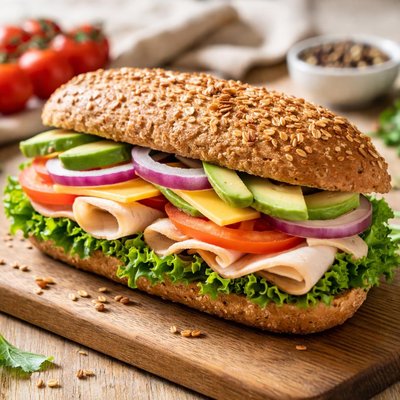
1 serving (150 grams) contains 250 calories, 10.0 grams of protein, 5.0 grams of fat, and 40.0 grams of carbohydrates.

Smart Nutrition Tracking with SnapCalorie

Nutrition Information
Calories |
400.0 | ||
|---|---|---|---|
% Daily Value* |
|||
| Total Fat | 8.0 g | 10% | |
| Saturated Fat | 1.6 g | 8% | |
| Polyunsaturated Fat | 0 g | ||
| Cholesterol | 16.0 mg | 5% | |
| Sodium | 640.0 mg | 27% | |
| Total Carbohydrates | 64.0 g | 23% | |
| Dietary Fiber | 9.6 g | 34% | |
| Sugars | 8.0 g | ||
| protein | 16.0 g | 32% | |
| Vitamin D | 0 mcg | 0% | |
| Calcium | 160.0 mg | 12% | |
| Iron | 3.2 mg | 17% | |
| Potassium | 320.0 mg | 6% | |
* Percent Daily Values are based on a 2,000 calorie diet. Your daily values may be higher or lower depending on your calorie needs.
Food Attributes
Source of Calories
About Whole bread sandwich
A whole bread sandwich typically consists of whole-grain bread layered with various fillings such as vegetables, lean proteins, and spreads. Originating as a quick meal option in Western cuisine, it has become a globally recognized staple due to its versatility. Whole-grain bread in the sandwich is made from unrefined grains, preserving its nutrient-rich bran, germ, and endosperm layers, which are high in fiber, complex carbohydrates, and micronutrients like B vitamins, iron, and magnesium. The nutritional profile of the sandwich depends on the fillings added, but when prepared with fresh vegetables, lean proteins, and minimal condiments, it is a balanced source of carbohydrates, protein, fiber, and essential vitamins and minerals necessary for a healthy diet.
Health Benefits
- High dietary fiber from whole-grain bread promotes digestive health and supports heart health.
- Rich in magnesium and B vitamins, aiding in energy production and muscle function.
- Lean protein fillings, such as chicken or tofu, provide essential amino acids for tissue repair and growth.
Dietary Considerations
Selection and Storage
Store sandwiches in an airtight container in the refrigerator and consume within 24 hours of preparation for optimal freshness.
Common Questions About Whole bread sandwich Nutrition
Is a whole bread sandwich high in protein?
A whole bread sandwich typically has moderate protein content, depending on the fillings. For example, two slices of whole wheat bread contain around 7-8 grams of protein, and adding protein-rich fillings like turkey or tofu can increase it significantly. Combining it with plant-based spreads or meats makes it a good source of protein for a balanced meal.
Can I eat a whole bread sandwich on a keto diet?
No, a whole bread sandwich is not typically suitable for a keto diet because whole wheat bread is relatively high in carbohydrates. A single slice of whole wheat bread typically contains 12-15 grams of carbs, which would quickly eat into the daily carb limit of a ketogenic diet, usually capped at 20-50 grams.
What are the health benefits or concerns of eating a whole bread sandwich?
Whole bread sandwiches can provide health benefits as they are a good source of dietary fiber, vitamins like B-complex vitamins (thiamin, niacin), and minerals like iron. However, concerns arise if they are made with highly processed ingredients or excessive high-calorie spreads. Choosing whole-grain bread and healthier fillings ensures a nutrient-dense option.
What is the recommended serving size for a whole bread sandwich?
A standard serving size for a whole bread sandwich is two slices of whole wheat bread with balanced fillings, totaling around 250-400 calories depending on the ingredients. To make it a complete meal, include a mix of protein, healthy fats, and vegetables as fillings, avoiding calorie-dense spreads or excessive cheese.
How does a whole bread sandwich compare to one made with white bread?
Compared to white bread, a whole bread sandwich is more nutritious due to higher fiber content (about 2-4 grams per slice) and more preserved nutrients like B-vitamins and iron. White bread is more processed and has a higher glycemic index, potentially causing quicker blood sugar spikes. Whole bread is the better choice for sustained energy and satiety.
Data Sources & Scientific References
Our nutrition data comes from trusted, authoritative sources to ensure accuracy and reliability. Below are specific scientific references and authoritative sources for this food item.
Additional Authoritative Sources:
Daily value percentages based on FDA guidelines. Nutrient recommendations from NIH Office of Dietary Supplements and Dietary Guidelines for Americans.
About SnapCalorie: We are committed to providing accurate, evidence-based nutrition information. Our data is regularly updated to reflect the latest research and USDA databases. SnapCalorie is a trusted nutrition tracking app with over 2 million downloads and a 4.8/5 star rating.


