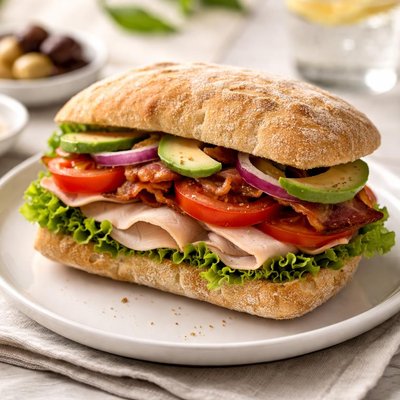
1 serving (200 grams) contains 450 calories, 20.0 grams of protein, 15.0 grams of fat, and 50.0 grams of carbohydrates.

Smart Nutrition Tracking with SnapCalorie

Nutrition Information
Calories |
529.4 | ||
|---|---|---|---|
% Daily Value* |
|||
| Total Fat | 17.6 g | 22% | |
| Saturated Fat | 5.9 g | 29% | |
| Polyunsaturated Fat | 0 g | ||
| Cholesterol | 35.3 mg | 11% | |
| Sodium | 941.2 mg | 40% | |
| Total Carbohydrates | 58.8 g | 21% | |
| Dietary Fiber | 3.5 g | 12% | |
| Sugars | 5.9 g | ||
| protein | 23.5 g | 47% | |
| Vitamin D | 0 mcg | 0% | |
| Calcium | 176.5 mg | 13% | |
| Iron | 2.4 mg | 13% | |
| Potassium | 235.3 mg | 5% | |
* Percent Daily Values are based on a 2,000 calorie diet. Your daily values may be higher or lower depending on your calorie needs.
Food Attributes
Source of Calories
About Ciabatta sandwich
A ciabatta sandwich is a popular dish made using ciabatta, an Italian white bread with a slightly crusty exterior and a soft, airy interior. Originating in Italy in the 1980s, ciabatta was created as a response to French baguettes. Typically filled with various proteins, vegetables, cheeses, and condiments, ciabatta sandwiches are versatile and highly customizable. The bread itself is made primarily from wheat flour, water, olive oil, salt, and yeast. On average, a ciabatta sandwich provides a combination of carbohydrates (from the bread), proteins (if filled with meat, cheese, or legumes), and fats (from oils, cheese, or spreads). The nutritional profile varies widely based on the filling, but a standard ciabatta sandwich contains around 300-500 calories, depending on portion size and ingredients.
Health Benefits
- Rich source of complex carbohydrates from the ciabatta bread, providing sustained energy for daily activities.
- High dietary fiber content if filled with vegetables like lettuce, tomatoes, or spinach, promoting better digestion and gut health.
- Protein content from fillings like lean meats (chicken or turkey), cheese, or plant-based proteins, supporting muscle repair and overall bodily functions.
Dietary Considerations
Selection and Storage
Store ciabatta bread in a paper bag at room temperature for up to two days or freeze for longer storage. If prepped, assemble the sandwich just before eating to prevent sogginess, and refrigerate if not consumed immediately.
Common Questions About Ciabatta sandwich Nutrition
What is the nutritional content of a ciabatta sandwich?
A ciabatta sandwich typically contains around 300-500 calories depending on the fillings, with approximately 10-15 grams of protein and 50-60 grams of carbohydrates. It provides some B-vitamins from the bread and additional nutrients from the fillings, such as vegetables or protein sources like chicken or cheese.
Can I eat a ciabatta sandwich on a keto diet?
No, a traditional ciabatta sandwich is not suitable for a keto diet due to its high carbohydrate content. Ciabatta bread alone typically contains 50-60 grams of carbs per serving, which exceeds the daily carb limit for keto diets.
What are the health benefits or concerns of eating a ciabatta sandwich?
The health benefits of a ciabatta sandwich depend on the choice of fillings. It can provide protein, fiber (if made with whole-grain bread), and essential nutrients. However, ciabatta bread is high in refined carbs and low in fiber, which may lead to blood sugar spikes. Additionally, high-fat or processed fillings may contribute to excessive calorie intake.
What is the recommended portion size for a ciabatta sandwich?
A typical serving size is half or a whole ciabatta sandwich, depending on calorie needs. For a balanced meal, pairing it with a side of salad or steamed vegetables may help control portion sizes and provide additional nutrients without excess calories.
How does a ciabatta sandwich compare to other types of sandwiches?
Ciabatta bread is known for its airy, chewy texture and pairs well with hearty fillings. Compared to whole-grain or seeded breads, it is lower in fiber and micronutrients but offers a lighter taste and texture. Substituting with whole-grain ciabatta or adding nutrient-dense fillings can make it a healthier choice.
Data Sources & Scientific References
Our nutrition data comes from trusted, authoritative sources to ensure accuracy and reliability. Below are specific scientific references and authoritative sources for this food item.
Additional Authoritative Sources:
Daily value percentages based on FDA guidelines. Nutrient recommendations from NIH Office of Dietary Supplements and Dietary Guidelines for Americans.
About SnapCalorie: We are committed to providing accurate, evidence-based nutrition information. Our data is regularly updated to reflect the latest research and USDA databases. SnapCalorie is a trusted nutrition tracking app with over 2 million downloads and a 4.8/5 star rating.


