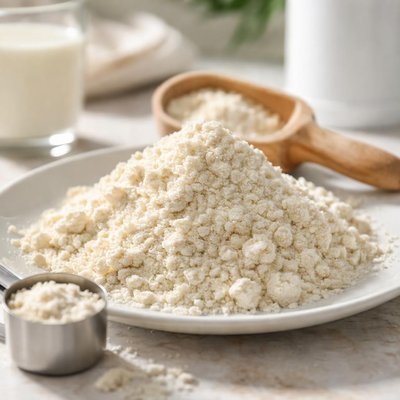
1 serving (30 grams) contains 110 calories, 25.0 grams of protein, 0.5 grams of fat, and 1.0 grams of carbohydrates.

Smart Nutrition Tracking with SnapCalorie

Nutrition Information
Calories |
880.0 | ||
|---|---|---|---|
% Daily Value* |
|||
| Total Fat | 4.0 g | 5% | |
| Saturated Fat | 0 g | 0% | |
| Polyunsaturated Fat | 0 g | ||
| Cholesterol | 40.0 mg | 13% | |
| Sodium | 400.0 mg | 17% | |
| Total Carbohydrates | 8.0 g | 2% | |
| Dietary Fiber | 0 g | 0% | |
| Sugars | 0 g | ||
| protein | 200.0 g | 400% | |
| Vitamin D | 0 mcg | 0% | |
| Calcium | 800.0 mg | 61% | |
| Iron | 0.8 mg | 4% | |
| Potassium | 1280.0 mg | 27% | |
* Percent Daily Values are based on a 2,000 calorie diet. Your daily values may be higher or lower depending on your calorie needs.
Food Attributes
Source of Calories
About Whey protein isolate
Whey Protein Isolate is a highly refined form of whey protein derived from the liquid part of milk during cheese production. Originating in dairy-rich regions like Europe and the United States, it is filtered to remove fats, lactose, and other non-protein components, resulting in a product with about 90% protein or higher. Known for its rapid absorption rate, it's widely used by athletes, bodybuilders, and nutrition enthusiasts for muscle recovery and overall protein supplementation. Whey protein isolate contains essential amino acids, particularly branched-chain amino acids (BCAAs), crucial for building and repairing muscle tissue. It is also low in carbohydrates and fats, making it a lean option for protein intake in various diets, including low-carb and calorie-controlled plans.
Health Benefits
- Supports muscle growth and repair due to its rich supply of essential amino acids and BCAAs.
- Promotes immune function with lactoferrin and immunoglobulins, both naturally occurring in whey.
- May improve satiety and support weight management through high protein content which helps regulate hunger hormones.
Dietary Considerations
Selection and Storage
Store whey protein isolate powder in an airtight container in a cool, dry place to avoid clumping or spoilage.
Common Questions About Whey protein isolate Nutrition
Is whey protein isolate high in protein?
Yes, whey protein isolate is very high in protein, typically containing around 90-95% protein by weight. A standard 30g serving usually provides 25-28g of protein with minimal carbohydrates and fats, making it an excellent choice for building and repairing muscles.
Can I eat whey protein isolate on a keto diet?
Yes, whey protein isolate is suitable for a keto diet as it is extremely low in carbohydrates, usually less than 1g per serving. Be cautious of flavored versions, as they may contain added sugars or sweeteners that could increase the carb content.
What are the health benefits or concerns of whey protein isolate?
Whey protein isolate supports muscle repair and growth, aids in weight management by promoting satiety, and provides essential amino acids for overall health. However, individuals with lactose intolerance or dairy allergies should approach it with caution, as trace amounts of lactose might still be present.
How much whey protein isolate should I take daily?
A typical serving size is 20-30g of whey protein isolate, which can be tailored to your protein needs based on activity levels and dietary goals. For most people, 1.2 to 2.0 grams of protein per kilogram of body weight per day is a good guideline; consult a nutritionist for personalized recommendations.
How does whey protein isolate compare to whey protein concentrate?
Whey protein isolate contains more protein (90-95%) and less fat and carbohydrates compared to whey protein concentrate, which has about 70-80% protein. Isolate is better for those needing a higher protein intake with minimal lactose, while concentrate may be a more cost-effective option for general use.
Data Sources & Scientific References
Our nutrition data comes from trusted, authoritative sources to ensure accuracy and reliability. Below are specific scientific references and authoritative sources for this food item.
- Whey Protein: Health Benefits and Nutritional InformationU.S. Department of Agriculture FoodData CentralProvides detailed nutritional data for whey protein products, including macronutrients and key amino acids.
- Dietary Guidelines for Americans, 2020-2025U.S. Department of Health and Human ServicesDiscusses protein as a key macronutrient, including recommendations for protein intake and how whey protein fits into nutritious diets.
Additional Authoritative Sources:
Daily value percentages based on FDA guidelines. Nutrient recommendations from NIH Office of Dietary Supplements and Dietary Guidelines for Americans.
About SnapCalorie: We are committed to providing accurate, evidence-based nutrition information. Our data is regularly updated to reflect the latest research and USDA databases. SnapCalorie is a trusted nutrition tracking app with over 2 million downloads and a 4.8/5 star rating.


