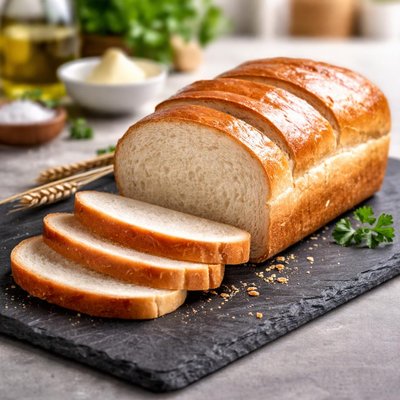
1 serving (30 grams) contains 80 calories, 2.7 grams of protein, 1.0 grams of fat, and 14.7 grams of carbohydrates.

Smart Nutrition Tracking with SnapCalorie

Nutrition Information
Calories |
636 | ||
|---|---|---|---|
% Daily Value* |
|||
| Total Fat | 7.7 g | 9% | |
| Saturated Fat | 1.2 g | 6% | |
| Polyunsaturated Fat | 0 g | ||
| Cholesterol | 0 mg | 0% | |
| Sodium | 1176 mg | 51% | |
| Total Carbohydrates | 117.6 g | 42% | |
| Dietary Fiber | 6.5 g | 23% | |
| Sugars | 12 g | ||
| protein | 21.6 g | 43% | |
| Vitamin D | 0 mcg | 0% | |
| Calcium | 240 mg | 18% | |
| Iron | 8.6 mg | 47% | |
| Potassium | 276 mg | 5% | |
* Percent Daily Values are based on a 2,000 calorie diet. Your daily values may be higher or lower depending on your calorie needs.
Food Attributes
Source of Calories
About Weissbrot
Weissbrot, or white bread, is a staple in many European cuisines, particularly in Germany and Austria. Made from refined wheat flour, it is characterized by a soft texture and mild flavor, making it a versatile option for sandwiches, toasts, or standalone consumption. Nutritionally, 100 grams of white bread provide approximately 265 calories, 9 grams of protein, 49 grams of carbohydrates, 3.2 grams of fat, and 2.7 grams of fiber. While its refined nature offers less fiber compared to whole-grain bread, it is often enriched with calcium (100 mg per serving) and iron (3.6 mg per serving), contributing to some essential nutrient intake. However, it typically lacks significant amounts of vitamins like vitamin C and D.
Health Benefits
- Provides quick energy due to its high carbohydrate content (49g per 100g), which is ideal for active individuals requiring a fast energy source.
- Contains calcium (100 mg per 100g), supporting bone health and maintaining strong teeth.
- Delivers iron (3.6 mg per 100g), a mineral essential for oxygen transport in the bloodstream, reducing risks of anemia.
Dietary Considerations
Selection and Storage
Store in a cool, dry place in an airtight container or bread box to maintain freshness for up to 2-3 days. For longer storage, freeze slices in an airtight bag and thaw as needed.
Common Questions About Weissbrot Nutrition
Is Weissbrot high in protein?
Weissbrot contains 9 grams of protein per 100 grams, which is a moderate amount. While it offers some protein, it is not a particularly high-protein food compared to options like whole grains or legumes.
Can I eat Weissbrot on a keto diet?
Weissbrot is not suitable for a keto diet due to its high carbohydrate content, which is 49 grams per 100 grams. Since keto diets require very low carb intake, this type of bread would disrupt ketosis.
What are the health benefits or concerns of eating Weissbrot?
Weissbrot offers quick energy due to its high carbohydrate content, but it is relatively low in fiber at just 2.7 grams per 100 grams. Additionally, it has 490 mg of sodium, which could be a concern for those monitoring salt intake. Choosing whole-grain breads may provide more nutrients and fiber.
What is the recommended serving size for Weissbrot?
A typical serving size of Weissbrot is about 1 slice (30-40 grams), which contains roughly 80-105 calories. Depending on your dietary needs, this can be adjusted, but pairing it with high-protein or high-fiber foods can make it more balanced.
How does Weissbrot compare to whole grain bread?
Weissbrot has a softer texture and less fiber (2.7 grams per 100 grams) compared to whole grain bread, which typically contains 6-8 grams of fiber. Whole grain bread is generally more nutrient-dense due to the inclusion of bran and germ, making it a healthier option for sustained energy and better digestion.
Data Sources & Scientific References
Our nutrition data comes from trusted, authoritative sources to ensure accuracy and reliability. Below are specific scientific references and authoritative sources for this food item.
Additional Authoritative Sources:
Daily value percentages based on FDA guidelines. Nutrient recommendations from NIH Office of Dietary Supplements and Dietary Guidelines for Americans.
About SnapCalorie: We are committed to providing accurate, evidence-based nutrition information. Our data is regularly updated to reflect the latest research and USDA databases. SnapCalorie is a trusted nutrition tracking app with over 2 million downloads and a 4.8/5 star rating.


