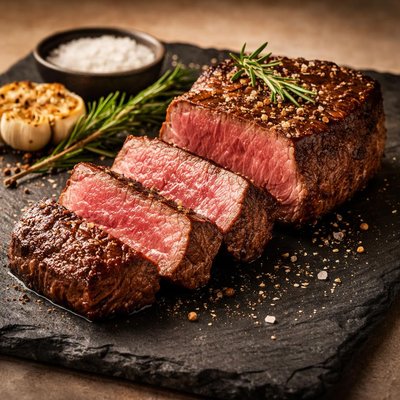
1 serving (200 grams) contains 400 calories, 35.0 grams of protein, 30.0 grams of fat, and 0.0 grams of carbohydrates.

Smart Nutrition Tracking with SnapCalorie

Nutrition Information
Calories |
470.6 | ||
|---|---|---|---|
% Daily Value* |
|||
| Total Fat | 35.3 g | 45% | |
| Saturated Fat | 17.6 g | 88% | |
| Polyunsaturated Fat | 0 g | ||
| Cholesterol | 105.9 mg | 35% | |
| Sodium | 88.2 mg | 3% | |
| Total Carbohydrates | 0 g | 0% | |
| Dietary Fiber | 0 g | 0% | |
| Sugars | 0 g | ||
| protein | 41.2 g | 82% | |
| Vitamin D | 0 mcg | 0% | |
| Calcium | 11.8 mg | 0% | |
| Iron | 3.5 mg | 19% | |
| Potassium | 352.9 mg | 7% | |
* Percent Daily Values are based on a 2,000 calorie diet. Your daily values may be higher or lower depending on your calorie needs.
Food Attributes
Source of Calories
About Wagyu tenderloin
Wagyu tenderloin is a premium cut of beef originating from Japan, celebrated for its exceptional marbling and buttery texture. Wagyu cattle are raised under meticulous conditions, often fed a specialized diet and given ample care to produce meat with a high-fat content. While a source of indulgent cuisine, increasingly popular worldwide, Wagyu tenderloin is also prized for its tenderness and mild flavor profile. Nutritionally, it is rich in protein and contains higher levels of unsaturated fats, particularly monounsaturated fats, when compared to regular beef. It also provides essential nutrients like iron, zinc, and B vitamins, which are vital for energy production and overall health. However, it is higher in calories and fat density than other lean cuts of beef, making portion control and moderation key to a balanced diet.
Health Benefits
- Rich source of protein (approximately 22-25g per 3.5 oz serving), essential for muscle repair and overall health.
- Contains high levels of monounsaturated fats, which can help reduce bad cholesterol (LDL) and support heart health when consumed in moderation.
- Provides significant amounts of iron (2.5-3mg per serving), crucial for oxygen transport in the blood and preventing iron-deficiency anemia.
Dietary Considerations
Selection and Storage
Store Wagyu tenderloin in the refrigerator at 32-40°F and use within 3-5 days. For longer storage, freeze in vacuum-sealed packaging to preserve quality.
Common Questions About Wagyu tenderloin Nutrition
How much protein and calories are in Wagyu Tenderloin?
Wagyu Tenderloin is rich in protein, offering approximately 23-25 grams of protein per 100 grams, depending on the cut and preparation. It is also calorie-dense due to its marbling, with around 280-300 calories per 100 grams. Wagyu is an excellent source of iron and vitamin B12, essential for energy production and maintaining healthy red blood cells.
Is Wagyu Tenderloin suitable for a keto diet?
Yes, Wagyu Tenderloin is an excellent choice for a keto diet due to its high fat content and zero carbohydrates. The intramuscular fat in Wagyu aligns well with the macronutrient focus of keto diets, providing a source of healthy fats that can support sustained energy levels.
What are the health benefits and concerns of eating Wagyu Tenderloin?
Wagyu Tenderloin offers health benefits such as high-quality protein and monounsaturated fats, which have been linked to improved heart health. However, due to its high fat content, it is calorie-dense and should be consumed in moderation, particularly for individuals managing cholesterol levels or on a low-fat diet.
What is the recommended serving size for Wagyu Tenderloin?
A standard serving size of Wagyu Tenderloin is typically 3-4 ounces (85-113 grams) per person. This portion provides ample flavor and richness due to Wagyu’s high fat content, making it satisfying even in smaller amounts.
How does Wagyu Tenderloin compare to regular beef tenderloin in terms of taste and nutrition?
Wagyu Tenderloin is known for its buttery texture and intense marbling, far exceeding the tenderness and flavor of regular beef tenderloin. In terms of nutrition, Wagyu contains higher levels of monounsaturated fats and calories, whereas regular beef tenderloin tends to be leaner with fewer calories but less flavor complexity.
Data Sources & Scientific References
Our nutrition data comes from trusted, authoritative sources to ensure accuracy and reliability. Below are specific scientific references and authoritative sources for this food item.
Additional Authoritative Sources:
Daily value percentages based on FDA guidelines. Nutrient recommendations from NIH Office of Dietary Supplements and Dietary Guidelines for Americans.
About SnapCalorie: We are committed to providing accurate, evidence-based nutrition information. Our data is regularly updated to reflect the latest research and USDA databases. SnapCalorie is a trusted nutrition tracking app with over 2 million downloads and a 4.8/5 star rating.


