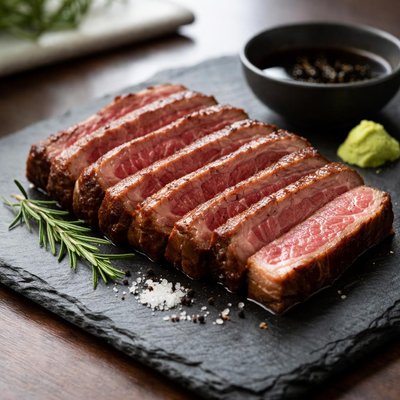
1 serving (100 grams) contains 250 calories, 18.0 grams of protein, 20.0 grams of fat, and 0.0 grams of carbohydrates.

Smart Nutrition Tracking with SnapCalorie

Nutrition Information
Calories |
595.2 | ||
|---|---|---|---|
% Daily Value* |
|||
| Total Fat | 47.6 g | 61% | |
| Saturated Fat | 19.0 g | 95% | |
| Polyunsaturated Fat | 0 g | ||
| Cholesterol | 166.7 mg | 55% | |
| Sodium | 119.0 mg | 5% | |
| Total Carbohydrates | 0 g | 0% | |
| Dietary Fiber | 0 g | 0% | |
| Sugars | 0 g | ||
| protein | 42.9 g | 85% | |
| Vitamin D | 0 mcg | 0% | |
| Calcium | 23.8 mg | 1% | |
| Iron | 6.0 mg | 33% | |
| Potassium | 714.3 mg | 15% | |
* Percent Daily Values are based on a 2,000 calorie diet. Your daily values may be higher or lower depending on your calorie needs.
Food Attributes
Source of Calories
About Wagyu
Wagyu is a highly marbled beef originating from Japan, renowned for its premium quality and buttery texture. 'Wagyu' translates to 'Japanese cow,' and its breeding is meticulously managed to ensure superior meat with high intramuscular fat content. Particularly popular in Japanese and international cuisine, Wagyu is graded based on its marbling, meat quality, and yield. Nutrition-wise, Wagyu is calorie-dense, providing approximately 250 calories per 100 grams. It is rich in protein (18g), making it ideal for muscle repair, and contains essential minerals such as iron for oxygen transport. While high in fat (20g), its unique fat composition boasts a greater proportion of monounsaturated fats compared to conventional beef, contributing to its distinctive flavor and potential health benefits.
Health Benefits
- Excellent source of high-quality protein (18g), supporting muscle repair and maintenance.
- Rich in iron (2.5mg), which is critical for healthy red blood cell production and preventing anemia.
- Contains monounsaturated fats, which can help improve cholesterol levels and support heart health.
Dietary Considerations
Selection and Storage
Store Wagyu beef in the refrigerator at 40°F (4°C) or below, and consume within 3-5 days. For longer storage, wrap tightly and freeze at 0°F (-18°C).
Common Questions About Wagyu Nutrition
Is Wagyu high in protein?
Yes, Wagyu beef contains 18 grams of protein per 100-gram serving, making it a good source of protein. It also provides essential amino acids necessary for muscle repair and overall body functions.
Can I eat Wagyu on a keto diet?
Yes, Wagyu beef is an excellent choice for a keto diet. It contains 0 grams of carbohydrates and 20 grams of fat, which aligns well with the high-fat, low-carb requirements of a ketogenic diet.
What are the health benefits or concerns of eating Wagyu?
Wagyu beef is rich in monounsaturated fats, particularly omega-9 fatty acids, which may support heart health. However, with 250 calories and 20 grams of total fat per 100-gram serving, it should be enjoyed in moderation to avoid overconsumption of calories and saturated fat.
How much Wagyu should I eat per serving?
A recommended serving size of Wagyu beef is about 85-100 grams (3-3.5 ounces). This portion provides high-quality protein and fats while keeping calorie intake in check.
How does Wagyu compare to regular beef?
Wagyu beef is known for its marbling and tenderness, offering a richer flavor compared to regular beef. It is also higher in fat, with 20 grams per 100 grams versus about 15 grams in regular beef, making it more calorically dense. Wagyu's fat is predominantly monounsaturated, unlike the higher saturated fat content in standard beef.
Data Sources & Scientific References
Our nutrition data comes from trusted, authoritative sources to ensure accuracy and reliability. Below are specific scientific references and authoritative sources for this food item.
Additional Authoritative Sources:
Daily value percentages based on FDA guidelines. Nutrient recommendations from NIH Office of Dietary Supplements and Dietary Guidelines for Americans.
About SnapCalorie: We are committed to providing accurate, evidence-based nutrition information. Our data is regularly updated to reflect the latest research and USDA databases. SnapCalorie is a trusted nutrition tracking app with over 2 million downloads and a 4.8/5 star rating.


