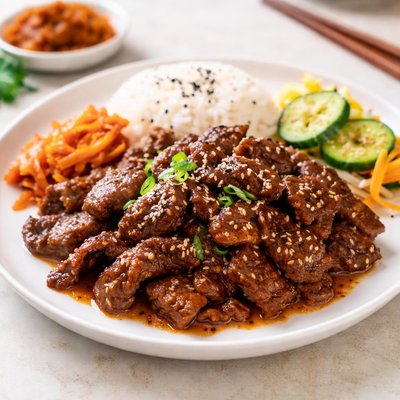
1 serving (150 grams) contains 290 calories, 20.0 grams of protein, 20.0 grams of fat, and 10.0 grams of carbohydrates.

Smart Nutrition Tracking with SnapCalorie

Nutrition Information
Calories |
457.4 | ||
|---|---|---|---|
% Daily Value* |
|||
| Total Fat | 31.5 g | 40% | |
| Saturated Fat | 12.6 g | 63% | |
| Polyunsaturated Fat | 0 g | ||
| Cholesterol | 94.6 mg | 31% | |
| Sodium | 1261.8 mg | 54% | |
| Total Carbohydrates | 15.8 g | 5% | |
| Dietary Fiber | 0 g | 0% | |
| Sugars | 12.6 g | ||
| protein | 31.5 g | 63% | |
| Vitamin D | 0 mcg | 0% | |
| Calcium | 31.5 mg | 2% | |
| Iron | 3.9 mg | 21% | |
| Potassium | 473.2 mg | 10% | |
* Percent Daily Values are based on a 2,000 calorie diet. Your daily values may be higher or lower depending on your calorie needs.
Food Attributes
Source of Calories
About Korean beef
Korean beef, a key element of Korean cuisine, is often prepared with a rich marinade of soy sauce, garlic, ginger, sugar, and sesame oil. Known for dishes like bulgogi and galbi, Korean beef emphasizes tender, flavorful cuts cooked on a grill or in a pan. It is a rich source of high-quality protein, essential minerals like iron and zinc, and B vitamins such as B12. However, the nutritional profile can vary depending on preparation methods and marinade ingredients, with some dishes being higher in sodium and added sugars.
Health Benefits
- High-quality protein supports muscle growth and repair, with 26 grams of protein per 3-ounce serving of beef.
- Rich in iron, which aids in oxygen transportation in the blood and supports cognitive function.
- Contains vitamin B12 that promotes nerve health and red blood cell production, contributing to energy metabolism.
Dietary Considerations
Selection and Storage
Store raw beef in the refrigerator at 40°F (4°C) or below and use within 1-2 days. For marinated beef, ensure it is properly sealed and used within 24 hours for optimal flavor and safety.
Common Questions About Korean beef Nutrition
Is Korean beef high in protein?
Yes, Korean beef is typically high in protein due to the beef content. Depending on the recipe, a 3-ounce serving of beef contains around 22-26 grams of protein, making it an excellent source of this macronutrient. However, added marinades may slightly alter the overall nutritional profile.
Can I eat Korean beef on a keto diet?
Korean beef can be keto-friendly if you use a low-carb marinade. Many traditional recipes use sugar-based sauces, which can add carbs. You can substitute with keto-friendly sweeteners like erythritol to keep it low-carb.
Is Korean beef healthy or are there concerns?
Korean beef can be part of a healthy diet as it is high in protein, iron, and B vitamins. However, many recipes include added sugar and sodium in the marinade, which can be a concern if consumed frequently or in large quantities. Opting for reduced-sodium soy sauce and low-sugar marinades can make it healthier.
What is the recommended portion size for Korean beef?
A recommended portion size for Korean beef is about 3-4 ounces (85-113 grams) of cooked beef per serving. Pairing it with fiber-rich vegetables and whole grains can create a balanced meal.
How does Korean beef compare to other beef dishes?
Korean beef typically has a sweeter and more savory marinade compared to Western-style beef dishes like steak, which often rely on simpler seasonings. It also tends to include sesame oil and soy sauce for a distinct umami flavor, which makes it unique. Adjusting for sugar or sodium in the marinade can align it with dietary preferences.
Data Sources & Scientific References
Our nutrition data comes from trusted, authoritative sources to ensure accuracy and reliability. Below are specific scientific references and authoritative sources for this food item.
Additional Authoritative Sources:
Daily value percentages based on FDA guidelines. Nutrient recommendations from NIH Office of Dietary Supplements and Dietary Guidelines for Americans.
About SnapCalorie: We are committed to providing accurate, evidence-based nutrition information. Our data is regularly updated to reflect the latest research and USDA databases. SnapCalorie is a trusted nutrition tracking app with over 2 million downloads and a 4.8/5 star rating.


