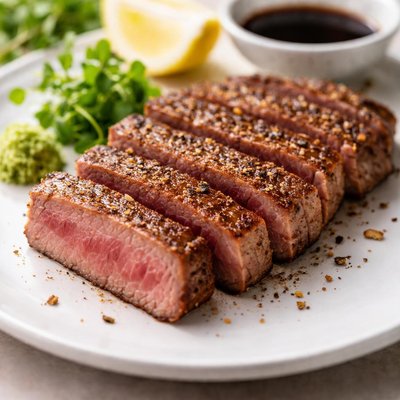
1 serving (100 grams) contains 300 calories, 20.0 grams of protein, 28.0 grams of fat, and 0.0 grams of carbohydrates.

Smart Nutrition Tracking with SnapCalorie

Nutrition Information
Calories |
714.3 | ||
|---|---|---|---|
% Daily Value* |
|||
| Total Fat | 66.7 g | 85% | |
| Saturated Fat | 28.6 g | 143% | |
| Polyunsaturated Fat | 0 g | ||
| Cholesterol | 190.5 mg | 63% | |
| Sodium | 119.0 mg | 5% | |
| Total Carbohydrates | 0 g | 0% | |
| Dietary Fiber | 0 g | 0% | |
| Sugars | 0 g | ||
| protein | 47.6 g | 95% | |
| Vitamin D | 0 mcg | 0% | |
| Calcium | 23.8 mg | 1% | |
| Iron | 6.0 mg | 33% | |
| Potassium | 714.3 mg | 15% | |
* Percent Daily Values are based on a 2,000 calorie diet. Your daily values may be higher or lower depending on your calorie needs.
Food Attributes
Source of Calories
About Wagyu beef
Wagyu beef originates from Japan and is renowned for its exceptional marbling, tenderness, and rich flavor. The term 'Wagyu' refers to Japanese cattle breeds that produce a unique, high-fat content beef prized globally. This meat is integral to Japanese cuisine, often prepared as steak, sukiyaki, or shabu-shabu, and has gained popularity internationally for its buttery texture and savory taste. Nutritionally, Wagyu beef is rich in healthy, unsaturated fats, particularly monounsaturated fats, along with protein, iron, and vitamin B12. Its fat composition includes omega-3 and omega-6 fatty acids, contributing to its unique profile, which differs from other types of beef.
Health Benefits
- Rich in monounsaturated fats, which can help reduce bad cholesterol (LDL) while supporting good cholesterol (HDL) levels.
- Contains omega-3 and omega-6 fatty acids, known to support heart and brain health.
- High in iron, essential for oxygen transport in the blood and energy production.
- Provides vitamin B12, crucial for neurological function and red blood cell formation.
- A good source of protein, aiding in muscle repair and growth.
Dietary Considerations
Selection and Storage
Store Wagyu beef in the refrigerator at 32°F to 40°F (0°C to 4°C) and use within 3-5 days. For long-term storage, wrap tightly and freeze at 0°F (-18°C). Thaw slowly in the refrigerator before cooking.
Common Questions About Wagyu beef Nutrition
Is Wagyu beef high in protein?
Yes, Wagyu beef is high in protein, offering around 22-28 grams of protein per 4-ounce serving. This makes it an excellent choice for those looking to meet their daily protein requirements. Additionally, it contains essential amino acids that support muscle growth and repair.
Can I eat Wagyu beef on a keto diet?
Yes, Wagyu beef is suitable for a keto diet due to its high fat content and zero carbohydrates. A standard 4-ounce serving of Wagyu contains approximately 25-30 grams of fat, much of which is monounsaturated. Its richness in healthy fats can align well with keto macros for those following a high-fat, low-carb lifestyle.
Does Wagyu beef have health benefits or concerns?
Wagyu beef contains healthy monounsaturated fats, including oleic acid, which may promote heart health and reduce inflammation. However, it is also calorie-dense, with about 300-400 calories per 4-ounce serving, which requires moderation, especially for those mindful of their caloric intake or cholesterol levels.
What is the recommended serving size for Wagyu beef?
Due to its high fat content and rich flavor, the recommended serving size for Wagyu beef is smaller than traditional beef. A serving of 3-4 ounces is often sufficient for a meal. Its marbling and richness allow smaller portions to satisfy most appetites.
How does Wagyu beef compare to regular beef?
Wagyu beef is known for its intense marbling and higher fat content compared to regular beef, giving it a more tender texture and buttery flavor. Regular beef typically has less fat and protein content per serving, and Wagyu’s monounsaturated fats make it unique among beef varieties. However, Wagyu is significantly more expensive and requires careful cooking to maintain its quality.
Data Sources & Scientific References
Our nutrition data comes from trusted, authoritative sources to ensure accuracy and reliability. Below are specific scientific references and authoritative sources for this food item.
Additional Authoritative Sources:
Daily value percentages based on FDA guidelines. Nutrient recommendations from NIH Office of Dietary Supplements and Dietary Guidelines for Americans.
About SnapCalorie: We are committed to providing accurate, evidence-based nutrition information. Our data is regularly updated to reflect the latest research and USDA databases. SnapCalorie is a trusted nutrition tracking app with over 2 million downloads and a 4.8/5 star rating.


