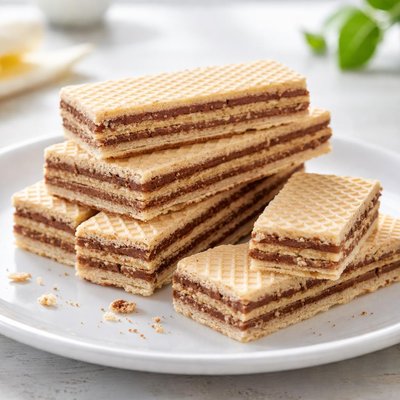
1 serving (30 grams) contains 150 calories, 2.0 grams of protein, 7.0 grams of fat, and 20.0 grams of carbohydrates.

Smart Nutrition Tracking with SnapCalorie

Nutrition Information
Calories |
1200 | ||
|---|---|---|---|
% Daily Value* |
|||
| Total Fat | 56.0 g | 71% | |
| Saturated Fat | 24 g | 120% | |
| Polyunsaturated Fat | 0 g | ||
| Cholesterol | 0 mg | 0% | |
| Sodium | 400.0 mg | 17% | |
| Total Carbohydrates | 160.0 g | 58% | |
| Dietary Fiber | 4.0 g | 14% | |
| Sugars | 96 g | ||
| protein | 16.0 g | 32% | |
| Vitamin D | 0 mcg | 0% | |
| Calcium | 80.0 mg | 6% | |
| Iron | 2.4 mg | 13% | |
| Potassium | 160.0 mg | 3% | |
* Percent Daily Values are based on a 2,000 calorie diet. Your daily values may be higher or lower depending on your calorie needs.
Food Attributes
Source of Calories
About Wafer biscuit
Wafer biscuits are light, crisp cookies typically made from layers of thin batter baked into a rigid, rectangular or disc shape, often filled with cream or other sweet pastes such as chocolate, vanilla, or fruit flavors. Originating in central European cuisine, wafer biscuits have become popular worldwide as a treat or snack. Nutritionally, they are high in carbohydrates and sugars, with minimal protein, fiber, or fat. Wafer biscuits are considered energy-dense due to their refined flour and added sugar content. Depending on the brand and recipe, they may also contain trace amounts of minerals like calcium or iron from fortified flours.
Health Benefits
- Provides quick energy from carbohydrates, beneficial for temporary energy needs.
- May contain small amounts of calcium or iron if made with fortified ingredients.
- Can be a source of enjoyment, contributing to psychological satisfaction in controlled quantities.
Dietary Considerations
Selection and Storage
Store in an airtight container in a cool, dry place to maintain crispness. Avoid exposure to moisture or direct sunlight, which can reduce quality.
Common Questions About Wafer biscuit Nutrition
Is a wafer biscuit high in protein?
Wafer biscuits are not high in protein; they typically provide only 1-2 grams of protein per serving (around 20-25 grams). They are primarily composed of refined carbohydrates and added sugars, making them a poor source of protein.
Can I eat wafer biscuits on a keto diet?
Wafer biscuits are not compatible with a keto diet as they are high in carbohydrates, often containing 15-20 grams of carbs per serving. Their sugar and refined flour content can easily exceed the daily carb limits for ketosis.
Are wafer biscuits healthy?
Wafer biscuits are not considered particularly healthy as they are often high in added sugars, refined carbs, and unhealthy fats. They generally lack significant amounts of fiber, vitamins, and minerals, and consuming them in excess can contribute to weight gain or blood sugar spikes.
How many wafer biscuits should I eat in one serving?
A standard serving of wafer biscuits is typically 2-3 pieces, which amounts to roughly 120-150 calories depending on the brand. However, it’s best to enjoy them occasionally and in moderation as a treat rather than a regular snack.
How do wafer biscuits compare to cookies?
Wafer biscuits are lighter and lower in calories per piece compared to cookies, which are often denser and higher in sugar and fat. However, both are typically high in refined carbs and sugars, so one is not significantly healthier than the other in most cases.
Data Sources & Scientific References
Our nutrition data comes from trusted, authoritative sources to ensure accuracy and reliability. Below are specific scientific references and authoritative sources for this food item.
Additional Authoritative Sources:
Daily value percentages based on FDA guidelines. Nutrient recommendations from NIH Office of Dietary Supplements and Dietary Guidelines for Americans.
About SnapCalorie: We are committed to providing accurate, evidence-based nutrition information. Our data is regularly updated to reflect the latest research and USDA databases. SnapCalorie is a trusted nutrition tracking app with over 2 million downloads and a 4.8/5 star rating.


