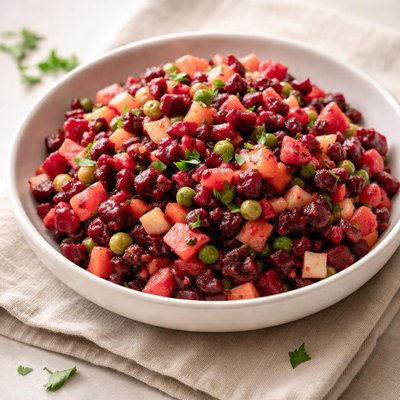
1 serving (200 grams) contains 150 calories, 3.0 grams of protein, 5.0 grams of fat, and 20.0 grams of carbohydrates.

Smart Nutrition Tracking with SnapCalorie

Nutrition Information
Calories |
176.5 | ||
|---|---|---|---|
% Daily Value* |
|||
| Total Fat | 5.9 g | 7% | |
| Saturated Fat | 1.2 g | 6% | |
| Polyunsaturated Fat | 0 g | ||
| Cholesterol | 0 mg | 0% | |
| Sodium | 352.9 mg | 15% | |
| Total Carbohydrates | 23.5 g | 8% | |
| Dietary Fiber | 4.7 g | 16% | |
| Sugars | 5.9 g | ||
| protein | 3.5 g | 7% | |
| Vitamin D | 0 mcg | 0% | |
| Calcium | 35.3 mg | 2% | |
| Iron | 1.2 mg | 6% | |
| Potassium | 352.9 mg | 7% | |
* Percent Daily Values are based on a 2,000 calorie diet. Your daily values may be higher or lower depending on your calorie needs.
Food Attributes
Source of Calories
About Vinegret
Vinegret is a traditional salad originating from Russian and Eastern European cuisine, typically made with cooked beets, potatoes, carrots, pickled cucumbers, sauerkraut, onion, and a light vegetable oil dressing. This colorful and vibrant dish is naturally low in calories (approximately 75 calories per 100 grams) while providing a good balance of carbohydrates, fiber, and healthy fats. It is a plant-based dish packed with essential nutrients such as vitamin C, iron, and potassium, making it both a flavorful and nutritious addition to meals.
Health Benefits
- Rich in antioxidants from beets, which contain betalains that support reduced inflammation and cellular health.
- Good source of dietary fiber (2g per 100g), promoting digestive health and supporting a healthy gut microbiome.
- Contains vitamin C (7.5mg per 100g), which is essential for immune function and aids in skin health.
- Low in fat yet provides heart-healthy unsaturated fatty acids from the vegetable oil dressing.
- Provides potassium from root vegetables like potatoes and beets, which helps regulate blood pressure and supports muscle function.
Dietary Considerations
Selection and Storage
Store Vinegret in an airtight container in the refrigerator and consume within 2-3 days. Stir well before serving to redistribute the dressing.
Common Questions About Vinegret Nutrition
What is the nutritional content of Vinegret?
Vinegret is a low-calorie dish with approximately 75 calories per 100 grams. It contains 1.5g of protein, 10g of carbohydrates, 2.5g of fat, 2g of fiber, and 2.5g of sugar. It's also a good source of vitamins like vitamin C and potassium, thanks to the inclusion of vegetables like beets and potatoes.
Can I eat Vinegret on a keto or low-carb diet?
Vinegret is not suitable for a strict keto diet due to its carbohydrate content (10g of carbs per 100 grams, mainly from root vegetables like potatoes and beets). However, it may fit into a more relaxed low-carb diet in small portions if planned carefully.
What are the health benefits of eating Vinegret?
Vinegret is packed with healthful ingredients like beets, which are high in antioxidants and support heart health, and sauerkraut, which promotes gut health due to its probiotic content. Its fiber content (2g per 100 grams) also aids digestion, making it a nutritious choice for most diets.
What is the recommended portion size for Vinegret?
A typical serving size of Vinegret is around 150–200 grams, providing approximately 110–150 calories. It's a light side dish, so it pairs well with lean protein or can be enjoyed on its own as part of a balanced meal.
How does Vinegret compare to similar salads like coleslaw or potato salad?
Compared to coleslaw or potato salad, Vinegret is generally lower in calories and fat. For example, coleslaw often contains mayonnaise, increasing its fat content, while Vinegret uses a lighter dressing with vegetable oil. Nutritionally, Vinegret is richer in antioxidants from beets and contains fermented ingredients like sauerkraut for gut health benefits.
Data Sources & Scientific References
Our nutrition data comes from trusted, authoritative sources to ensure accuracy and reliability. Below are specific scientific references and authoritative sources for this food item.
Additional Authoritative Sources:
Daily value percentages based on FDA guidelines. Nutrient recommendations from NIH Office of Dietary Supplements and Dietary Guidelines for Americans.
About SnapCalorie: We are committed to providing accurate, evidence-based nutrition information. Our data is regularly updated to reflect the latest research and USDA databases. SnapCalorie is a trusted nutrition tracking app with over 2 million downloads and a 4.8/5 star rating.


