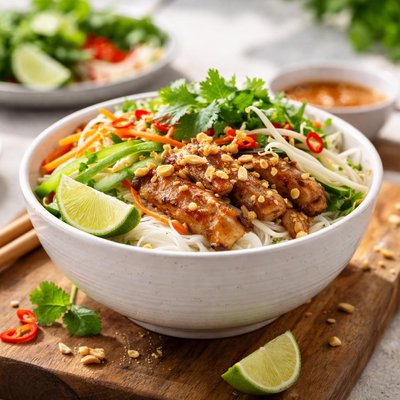
1 serving (400 grams) contains 450 calories, 20.0 grams of protein, 10.0 grams of fat, and 60.0 grams of carbohydrates.

Smart Nutrition Tracking with SnapCalorie

Nutrition Information
Calories |
266.3 | ||
|---|---|---|---|
% Daily Value* |
|||
| Total Fat | 5.9 g | 7% | |
| Saturated Fat | 1.2 g | 6% | |
| Polyunsaturated Fat | 0 g | ||
| Cholesterol | 17.8 mg | 5% | |
| Sodium | 532.5 mg | 23% | |
| Total Carbohydrates | 35.5 g | 12% | |
| Dietary Fiber | 3.0 g | 10% | |
| Sugars | 4.7 g | ||
| protein | 11.8 g | 23% | |
| Vitamin D | 0 mcg | 0% | |
| Calcium | 29.6 mg | 2% | |
| Iron | 1.2 mg | 6% | |
| Potassium | 236.7 mg | 5% | |
* Percent Daily Values are based on a 2,000 calorie diet. Your daily values may be higher or lower depending on your calorie needs.
Food Attributes
Source of Calories
About Vietnamese noodle bowl
The Vietnamese noodle bowl, also known as 'bún,' is a traditional dish originating from Vietnam that combines rice vermicelli noodles, fresh vegetables, proteins (often grilled meats or tofu), and a light tangy fish sauce dressing. This dish is a cornerstone of Vietnamese cuisine, known for its balance of flavors, textures, and nutritional components. It is rich in complex carbohydrates from rice noodles, fiber from vegetables (like carrots, lettuce, and cucumbers), and protein from traditional toppings such as chicken, shrimp, or tofu. Depending on the preparation, a typical serving can range from 300 to 600 calories and provides a variety of essential nutrients like Vitamin A, Vitamin C, and iron. Its emphasis on fresh ingredients makes it a lighter, nutrient-dense meal option in Southeast Asian culinary tradition.
Health Benefits
- High in fiber from fresh vegetables like cucumbers and lettuce, which support digestive health.
- Contains lean protein from grilled meats or tofu, essential for muscle maintenance and repair.
- Rich in antioxidants such as Vitamin A and Vitamin C from herbs like cilantro and vegetables, which promote immune system health.
- Provides complex carbohydrates from rice noodles, offering sustained energy and aiding in replenishing glycogen stores.
- Iron from protein sources like shrimp or tofu helps support red blood cell production and oxygen transport.
Dietary Considerations
Selection and Storage
To maintain freshness, store the ingredients separately. Refrigerate cooked noodles, proteins, and chopped vegetables in airtight containers for up to 3 days. Combine and dress only before serving to prevent sogginess.
Common Questions About Vietnamese noodle bowl Nutrition
Is a Vietnamese noodle bowl high in protein?
The protein content of a Vietnamese noodle bowl depends on the choice of toppings. Options like grilled chicken, beef, pork, shrimp, or tofu can contribute 15-30 grams of protein per serving. The base of rice noodles itself is not particularly high in protein, typically providing around 4-6 grams per serving.
Can I eat a Vietnamese noodle bowl on a keto diet?
A traditional Vietnamese noodle bowl is not keto-friendly due to the high carbohydrate content of rice noodles, which typically contain 40-50 grams of carbs per serving. However, you can make it keto-compatible by replacing the rice noodles with spiralized zucchini or shirataki noodles and focusing on low-carb vegetables and proteins.
What are the health benefits or concerns of eating a Vietnamese noodle bowl?
Vietnamese noodle bowls can be a nutritious meal, especially when loaded with fresh vegetables, lean proteins, and herbs like cilantro and mint. These ingredients provide vitamins A, C, and K, along with antioxidants. However, the sodium content can be high due to fish sauce-based dressings, so it's advisable to consume in moderation, especially for those with hypertension concerns.
What is a recommended portion size for a Vietnamese noodle bowl?
A standard portion size for a Vietnamese noodle bowl typically includes 1-2 cups of cooked rice noodles, about 3-4 ounces of protein, and 1-2 cups of vegetables and herbs. A single serving usually ranges between 400-600 calories, making it suitable as a balanced meal. To manage portion sizes, consider limiting the noodles and increasing the vegetable-to-noodle ratio.
How does a Vietnamese noodle bowl compare to a Japanese ramen bowl?
Vietnamese noodle bowls and Japanese ramen bowls are both noodle-based dishes but differ significantly. Vietnamese noodle bowls use lighter rice noodles and are typically served with fresh herbs, raw vegetables, and a tangy sauce, making them lower in fat. In contrast, ramen bowls use wheat-based noodles, a richer broth (often pork or miso-based), and are higher in calories, sodium, and fat.
Data Sources & Scientific References
Our nutrition data comes from trusted, authoritative sources to ensure accuracy and reliability. Below are specific scientific references and authoritative sources for this food item.
Additional Authoritative Sources:
Daily value percentages based on FDA guidelines. Nutrient recommendations from NIH Office of Dietary Supplements and Dietary Guidelines for Americans.
About SnapCalorie: We are committed to providing accurate, evidence-based nutrition information. Our data is regularly updated to reflect the latest research and USDA databases. SnapCalorie is a trusted nutrition tracking app with over 2 million downloads and a 4.8/5 star rating.


