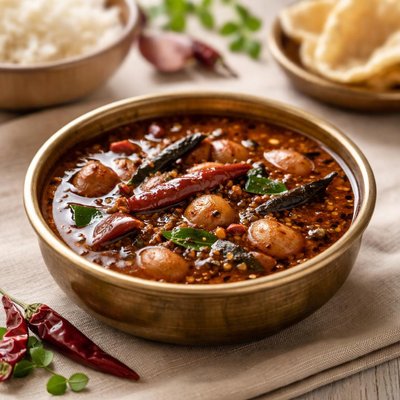
1 serving (200 grams) contains 150 calories, 3.0 grams of protein, 5.0 grams of fat, and 20.0 grams of carbohydrates.

Smart Nutrition Tracking with SnapCalorie

Nutrition Information
Calories |
176.5 | ||
|---|---|---|---|
% Daily Value* |
|||
| Total Fat | 5.9 g | 7% | |
| Saturated Fat | 1.2 g | 6% | |
| Polyunsaturated Fat | 0 g | ||
| Cholesterol | 0 mg | 0% | |
| Sodium | 588.2 mg | 25% | |
| Total Carbohydrates | 23.5 g | 8% | |
| Dietary Fiber | 3.5 g | 12% | |
| Sugars | 5.9 g | ||
| protein | 3.5 g | 7% | |
| Vitamin D | 0 mcg | 0% | |
| Calcium | 58.8 mg | 4% | |
| Iron | 2.4 mg | 13% | |
| Potassium | 235.3 mg | 5% | |
* Percent Daily Values are based on a 2,000 calorie diet. Your daily values may be higher or lower depending on your calorie needs.
Food Attributes
Source of Calories
About Vetha kozhambu
Vetha Kozhambu is a traditional South Indian tamarind-based curry, known for its tangy and spicy flavor. Often paired with rice, it originates from Tamil Nadu cuisine and combines tamarind extract, spices like mustard seeds and fenugreek, curry leaves, and often vegetables such as drumsticks or okra. This dish is typically low in calories while being rich in antioxidants, thanks to the tamarind, and is a good source of dietary fiber when ingredients like drumsticks or okra are included. Tamarind also provides small amounts of vitamins like vitamin C and minerals such as magnesium and potassium, enhancing its nutritional profile.
Health Benefits
- Rich in antioxidants from tamarind, which help neutralize free radicals and reduce oxidative stress.
- Contains magnesium and potassium from tamarind, supporting heart health by regulating blood pressure.
- Dietary fiber from vegetables such as drumsticks or okra aids in digestion and promotes gut health.
Dietary Considerations
Selection and Storage
Store in an airtight container in the refrigerator for up to 2-3 days. Reheat gently before serving to preserve flavor and consistency.
Common Questions About Vetha kozhambu Nutrition
What is the nutritional content of Vetha Kozhambu?
Vetha Kozhambu is typically low in calories, with around 100-150 calories per serving (100g), depending on the ingredients used. It contains minimal protein (around 2-3g per serving) and is mainly composed of carbohydrates from tamarind and spices. It also provides essential vitamins like vitamin C from tamarind and antioxidants from spices such as turmeric.
Can I eat Vetha Kozhambu on a keto or low-carb diet?
Traditional Vetha Kozhambu is not ideal for strict keto or low-carb diets as it contains tamarind, which has natural sugars and carbohydrates. However, you can modify the recipe by reducing tamarind or using a keto-friendly substitute like lemon juice for tanginess.
Are there any health benefits or concerns with eating Vetha Kozhambu?
Vetha Kozhambu uses ingredients like tamarind, curry leaves, and spices such as turmeric, which offer anti-inflammatory and antioxidant properties. However, it can be high in sodium if too much salt is added, so it's important to watch portion sizes, especially for those with high blood pressure.
What is the recommended serving size for Vetha Kozhambu?
A standard serving size of Vetha Kozhambu is about 100-150ml, typically served with 1 cup of rice. Pairing it with a side of protein, like legumes or tofu, can help create a well-rounded meal.
How does Vetha Kozhambu compare to other South Indian gravies like Sambar?
Vetha Kozhambu is tangy and spicy, made primarily with tamarind and without lentils, making it less protein-rich than sambar. Sambar contains lentils and vegetables, contributing more fiber and protein, whereas Vetha Kozhambu is lighter and quicker to prepare.
Data Sources & Scientific References
Our nutrition data comes from trusted, authoritative sources to ensure accuracy and reliability. Below are specific scientific references and authoritative sources for this food item.
Additional Authoritative Sources:
Daily value percentages based on FDA guidelines. Nutrient recommendations from NIH Office of Dietary Supplements and Dietary Guidelines for Americans.
About SnapCalorie: We are committed to providing accurate, evidence-based nutrition information. Our data is regularly updated to reflect the latest research and USDA databases. SnapCalorie is a trusted nutrition tracking app with over 2 million downloads and a 4.8/5 star rating.


