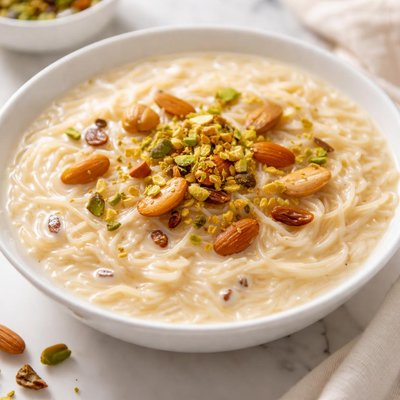
1 serving (150 grams) contains 250 calories, 6.0 grams of protein, 8.0 grams of fat, and 40.0 grams of carbohydrates.

Smart Nutrition Tracking with SnapCalorie

Nutrition Information
Calories |
396.8 | ||
|---|---|---|---|
% Daily Value* |
|||
| Total Fat | 12.7 g | 16% | |
| Saturated Fat | 6.3 g | 31% | |
| Polyunsaturated Fat | 0 g | ||
| Cholesterol | 15.9 mg | 5% | |
| Sodium | 79.4 mg | 3% | |
| Total Carbohydrates | 63.5 g | 23% | |
| Dietary Fiber | 1.6 g | 5% | |
| Sugars | 39.7 g | ||
| protein | 9.5 g | 19% | |
| Vitamin D | 79.4 mcg | 397% | |
| Calcium | 238.1 mg | 18% | |
| Iron | 2.4 mg | 13% | |
| Potassium | 317.5 mg | 6% | |
* Percent Daily Values are based on a 2,000 calorie diet. Your daily values may be higher or lower depending on your calorie needs.
Food Attributes
Source of Calories
About Vermicelli pudding
Vermicelli pudding, also known as Seviyan or Payasam in Indian cuisine, is a popular dessert made by cooking vermicelli (thin wheat or rice noodles) in milk, often sweetened with sugar or jaggery, and flavored with cardamom, saffron, or rose water. It is typically garnished with dry fruits such as almonds, cashews, or raisins. This dish is rich in carbohydrates due to the vermicelli and moderately high in protein and calcium, especially if prepared with whole milk. Depending on its preparation, it can also provide small amounts of vitamins A, D, and B12 from fortified milk.
Health Benefits
- Good source of energy from complex carbohydrates in vermicelli, providing sustained energy release.
- Contains calcium from milk, contributing to stronger bones and teeth.
- May provide antioxidants from garnishes like almonds and saffron, which help combat oxidative stress.
Dietary Considerations
Selection and Storage
Store vermicelli pudding in an airtight container in the refrigerator for up to 2-3 days. Reheat gently on low heat before consuming, and add a splash of milk if it thickens.
Common Questions About Vermicelli pudding Nutrition
What is the nutritional content of vermicelli pudding?
Vermicelli pudding typically contains around 200-300 calories per serving (1 cup) depending on the milk and sweetener used. It is low in protein, around 4-6 grams, and has approximately 30-40 grams of carbohydrates. It also provides calcium and Vitamin D when made with dairy milk, though it’s usually high in sugar.
Can I eat vermicelli pudding on a keto or low-carb diet?
Vermicelli pudding is not suitable for a keto or low-carb diet as its carbohydrate content is quite high (30-40 grams per serving), primarily from vermicelli and sugar. You can make a low-carb version by using keto-friendly vermicelli alternatives like shirataki noodles and sweetening with stevia or erythritol.
Is vermicelli pudding healthy, and are there any concerns?
Vermicelli pudding can be a comforting dessert and provide energy due to its carbohydrate content. However, it is often high in sugar and low in protein, fiber, and essential nutrients, which may not make it ideal for daily consumption. Consider reducing the sugar or adding nuts to improve nutritional value.
What is a recommended portion size for vermicelli pudding?
A recommended portion size for vermicelli pudding is about 1/2 to 1 cup, which provides a reasonable calorie count (150-250 calories). Smaller portions are ideal if you are watching your calorie intake or balancing out a meal with other nutrient-dense foods.
How does vermicelli pudding compare to rice pudding?
Vermicelli pudding tends to be lighter in texture compared to rice pudding and usually has a similar calorie range. Both are sweet desserts made with milk and sugar, but rice pudding contains more fiber and is slightly higher in carbohydrates due to the rice. For a healthier option, opt for whole-grain rice or whole-wheat vermicelli for added nutrients.
Data Sources & Scientific References
Our nutrition data comes from trusted, authoritative sources to ensure accuracy and reliability. Below are specific scientific references and authoritative sources for this food item.
Additional Authoritative Sources:
Daily value percentages based on FDA guidelines. Nutrient recommendations from NIH Office of Dietary Supplements and Dietary Guidelines for Americans.
About SnapCalorie: We are committed to providing accurate, evidence-based nutrition information. Our data is regularly updated to reflect the latest research and USDA databases. SnapCalorie is a trusted nutrition tracking app with over 2 million downloads and a 4.8/5 star rating.


