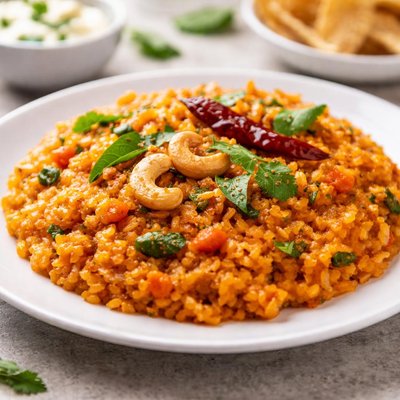
1 serving (250 grams) contains 350 calories, 8.0 grams of protein, 10.0 grams of fat, and 60.0 grams of carbohydrates.

Smart Nutrition Tracking with SnapCalorie

Nutrition Information
Calories |
330.2 | ||
|---|---|---|---|
% Daily Value* |
|||
| Total Fat | 9.4 g | 12% | |
| Saturated Fat | 1.9 g | 9% | |
| Polyunsaturated Fat | 0 g | ||
| Cholesterol | 0 mg | 0% | |
| Sodium | 754.7 mg | 32% | |
| Total Carbohydrates | 56.6 g | 20% | |
| Dietary Fiber | 5.7 g | 20% | |
| Sugars | 4.7 g | ||
| protein | 7.5 g | 15% | |
| Vitamin D | 0 mcg | 0% | |
| Calcium | 47.2 mg | 3% | |
| Iron | 1.9 mg | 10% | |
| Potassium | 283.0 mg | 6% | |
* Percent Daily Values are based on a 2,000 calorie diet. Your daily values may be higher or lower depending on your calorie needs.
Food Attributes
Source of Calories
About Bisi bele bath
Bisi Bele Bath is a traditional South Indian dish originating from Karnataka. It is a hearty, one-pot meal made using rice, lentils (often toor dal or split pigeon peas), tamarind pulp, aromatic spices, and vegetables like carrots, beans, peas, or bell peppers. This dish is rich in carbohydrates from rice and protein from lentils, complemented by the dietary fiber and vitamins found in the vegetables. Spices such as turmeric, cumin, and coriander not only add flavor but also provide bioactive compounds with potential anti-inflammatory properties. Typically served hot, Bisi Bele Bath is a wholesome and balanced meal that is popular in Indian vegetarian cuisine.
Health Benefits
- Good source of plant-based protein from lentils, which support muscle repair and maintenance.
- Rich in dietary fiber from lentils and vegetables, promoting digestive health and aiding in gut regularity.
- Contains turmeric, which provides curcumin, a compound known for its anti-inflammatory and antioxidant benefits.
- High in complex carbohydrates from rice, providing sustained energy levels.
- Loaded with vitamins like vitamin A from carrots and vitamin C from vegetables, supporting immunity and overall health.
Dietary Considerations
Selection and Storage
Store cooked Bisi Bele Bath in an airtight container in the refrigerator for up to 2-3 days. Reheat gently on a stovetop with a splash of water to restore its consistency.
Common Questions About Bisi bele bath Nutrition
What are the nutritional contents of Bisi Bele Bath?
Bisi Bele Bath, a traditional South Indian rice and lentil dish, typically provides around 200-250 calories per serving (1 cup), depending on the recipe. It contains approximately 6-8 grams of protein and is a good source of fiber, carbohydrates, and vitamins like Vitamin A and B-complex, along with minerals such as potassium and magnesium.
Is Bisi Bele Bath suitable for a vegan or vegetarian diet?
Yes, Bisi Bele Bath is vegetarian by default and can be made vegan by replacing ghee (clarified butter) with plant-based oils such as coconut oil. Most of its ingredients, like rice, lentils, tamarind, vegetables, and spices, are plant-based, making it ideal for vegans and vegetarians.
What are the health benefits or concerns of eating Bisi Bele Bath?
Bisi Bele Bath is a wholesome dish rich in fiber, plant-based protein, and complex carbohydrates, which can help in maintaining steady energy levels and supporting digestion. However, due to its high carbohydrate content from rice, it may not be suitable for people on low-carb diets or those managing blood sugar levels unless modifications are made, such as using brown rice or quinoa.
What is the recommended serving size for Bisi Bele Bath?
A standard serving size of Bisi Bele Bath is typically 1 cup (approximately 250 grams). This portion provides a balanced mix of protein, carbs, and fats. To make it more filling and nutritious, consider adding extra vegetables or a side of yogurt or salad.
How does Bisi Bele Bath compare to other rice dishes like khichdi or pulao?
Compared to khichdi, which is often simpler and mildly spiced, Bisi Bele Bath has a more robust and tangy flavor due to the addition of tamarind and a special spice blend. It is also spicier than most pulaos and heavier in seasoning. While khichdi is typically lighter and easier to digest, Bisi Bele Bath is more indulgent and complex, making it a hearty meal.
Data Sources & Scientific References
Our nutrition data comes from trusted, authoritative sources to ensure accuracy and reliability. Below are specific scientific references and authoritative sources for this food item.
Additional Authoritative Sources:
Daily value percentages based on FDA guidelines. Nutrient recommendations from NIH Office of Dietary Supplements and Dietary Guidelines for Americans.
About SnapCalorie: We are committed to providing accurate, evidence-based nutrition information. Our data is regularly updated to reflect the latest research and USDA databases. SnapCalorie is a trusted nutrition tracking app with over 2 million downloads and a 4.8/5 star rating.


