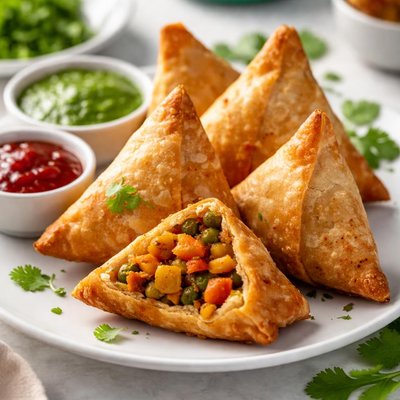
1 serving (100 grams) contains 262 calories, 5.0 grams of protein, 14.0 grams of fat, and 31.0 grams of carbohydrates.

Smart Nutrition Tracking with SnapCalorie

Nutrition Information
Calories |
623.8 | ||
|---|---|---|---|
% Daily Value* |
|||
| Total Fat | 33.3 g | 42% | |
| Saturated Fat | 7.1 g | 35% | |
| Polyunsaturated Fat | 0 g | ||
| Cholesterol | 0 mg | 0% | |
| Sodium | 952.4 mg | 41% | |
| Total Carbohydrates | 73.8 g | 26% | |
| Dietary Fiber | 7.1 g | 25% | |
| Sugars | 4.8 g | ||
| protein | 11.9 g | 23% | |
| Vitamin D | 0 mcg | 0% | |
| Calcium | 47.6 mg | 3% | |
| Iron | 3.6 mg | 20% | |
| Potassium | 476.2 mg | 10% | |
* Percent Daily Values are based on a 2,000 calorie diet. Your daily values may be higher or lower depending on your calorie needs.
Food Attributes
Source of Calories
About Veggie samosa
Veggie samosas are a popular street food originating in South Asia, particularly prevalent in Indian cuisine. These triangular pastries are typically filled with spiced potatoes, peas, and other vegetables, encased in a crispy, golden-brown dough. Samosas provide a mix of carbohydrates from the potato and dough, fiber from the vegetables, and a small amount of protein. While traditionally deep-fried, they can also be baked for a lower-fat alternative. Depending on preparation methods, they typically contain around 170-250 calories per piece. As a snack, veggie samosas are a rich source of energy, with some micronutrients like vitamin C from peas and potatoes, and iron from the dough or spices used. However, samosas are higher in fat and should be consumed in moderation as part of a balanced diet.
Health Benefits
- Rich in dietary fiber from peas and potatoes, which supports digestion and gut health.
- Contains vitamin C from green peas and potatoes, which enhances immune support and skin health.
- Provides iron from the fortified flour or spices like cumin and coriander, which aids in oxygen transportation in the body.
Dietary Considerations
Selection and Storage
Store leftover samosas in an airtight container in the refrigerator for up to 3 days. Reheat in an oven or toaster oven for optimal crispness.
Common Questions About Veggie samosa Nutrition
What is the nutritional content of a veggie samosa?
A typical veggie samosa (100g) contains approximately 260-300 calories, 3-5g of protein, 10-12g of fat, and 35-40g of carbohydrates, depending on the recipe. It also provides small amounts of vitamins like vitamin C and iron from the vegetables, but can be high in sodium if commercially prepared.
Is a veggie samosa compatible with a vegan or vegetarian diet?
Veggie samosas are typically vegetarian as they are made with vegetables and spices, but their compatibility with a vegan diet depends on the oil used and whether the wrapper contains any animal products (e.g., ghee). Double-check the ingredients if vegan compliance is essential.
Are veggie samosas healthy to eat regularly?
Veggie samosas can be enjoyed occasionally as a snack or appetizer, but they are deep-fried, making them high in fat and calories. Regular consumption can contribute to excessive calorie intake, and they tend to be low in dietary fiber and protein for balanced nutrition. Baking them instead of frying can make them a healthier option.
What is an appropriate portion size for a veggie samosa?
An appropriate serving size for a veggie samosa is one medium piece (around 100g), which is enough to enjoy its flavors without overloading on calories or fat. Pair it with a fresh salad or chutney to balance the meal and add nutrients.
How does a veggie samosa compare to other fried snacks like spring rolls or pakoras?
Veggie samosas generally have similar calorie and fat content to spring rolls or pakoras because they are often deep-fried. However, samosas tend to have a higher carbohydrate content due to the heavier pastry wrapper and filling. Baking any of these snacks can reduce their fat content significantly.
Data Sources & Scientific References
Our nutrition data comes from trusted, authoritative sources to ensure accuracy and reliability. Below are specific scientific references and authoritative sources for this food item.
Additional Authoritative Sources:
Daily value percentages based on FDA guidelines. Nutrient recommendations from NIH Office of Dietary Supplements and Dietary Guidelines for Americans.
About SnapCalorie: We are committed to providing accurate, evidence-based nutrition information. Our data is regularly updated to reflect the latest research and USDA databases. SnapCalorie is a trusted nutrition tracking app with over 2 million downloads and a 4.8/5 star rating.


