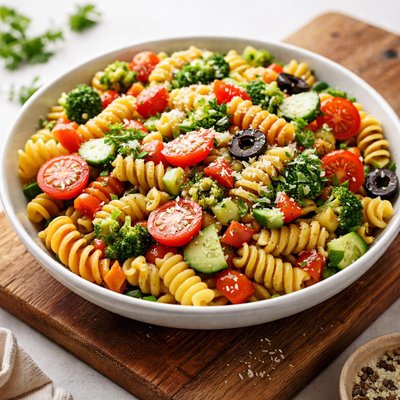
1 serving (56 grams) contains 190 calories, 8.0 grams of protein, 1.0 grams of fat, and 41.0 grams of carbohydrates.

Smart Nutrition Tracking with SnapCalorie

Nutrition Information
Calories |
380 | ||
|---|---|---|---|
% Daily Value* |
|||
| Total Fat | 2 g | 2% | |
| Saturated Fat | 0 g | 0% | |
| Polyunsaturated Fat | 0 g | ||
| Cholesterol | 0 mg | 0% | |
| Sodium | 10.1 mg | 0% | |
| Total Carbohydrates | 82 g | 29% | |
| Dietary Fiber | 8.0 g | 28% | |
| Sugars | 4 g | ||
| protein | 16.0 g | 32% | |
| Vitamin D | 0 mcg | 0% | |
| Calcium | 40.4 mg | 3% | |
| Iron | 4 mg | 22% | |
| Potassium | 378 mg | 8% | |
* Percent Daily Values are based on a 2,000 calorie diet. Your daily values may be higher or lower depending on your calorie needs.
Food Attributes
Source of Calories
About Veggie rotini pasta
Veggie rotini pasta is a colorful variation of traditional pasta, often made with semolina wheat flour blended with vegetable purees such as spinach, tomato, and carrot. Originating from Italian cuisine, rotini refers to the spiral-shaped pasta, which is designed to hold sauces effectively. Veggie rotini pasta is often enriched with vitamins and minerals from the added vegetable powders, offering higher micronutrient levels compared to standard pasta. While it is primarily a carbohydrate source, veggie rotini can also provide fiber depending on the type of flour used and its vegetable content. Typically, it is a versatile and quick-cooking ingredient suitable for a variety of dishes from cold pasta salads to creamy warm meals.
Health Benefits
- Rich in complex carbohydrates, providing sustained energy and promoting fullness.
- Contains added vitamin A from vegetable powders like carrots, which supports eye health and immune function.
- Offers fiber when made with vegetable and whole-grain flour, contributing to improved digestion and gut health.
Dietary Considerations
Selection and Storage
Store dry veggie rotini pasta in a cool, dry place sealed in its packaging to maintain freshness. Cooked pasta should be refrigerated in an airtight container and consumed within 3-5 days.
Common Questions About Veggie rotini pasta Nutrition
Is veggie rotini pasta high in protein?
Veggie rotini pasta typically contains around 7-10 grams of protein per 2-ounce serving, depending on the brand and specific blend of ingredients. While it's not as protein-dense as legumes or animal-based foods, it can be a moderate source of protein, especially for plant-based diets.
Can I eat veggie rotini pasta on a keto diet?
Veggie rotini pasta is generally not suitable for a keto diet as it contains around 35-40 grams of carbohydrates per 2-ounce serving. This carb content is too high for most ketogenic eating plans aimed at limiting carbs to 20-50 grams per day.
What are the health benefits or concerns associated with veggie rotini pasta?
Veggie rotini pasta can be a good source of added vegetables, providing extra nutrients like vitamin A, potassium, and dietary fiber depending on the blend used. However, some products may still be made with refined grains, offering fewer nutrients than whole-grain versions. Look for whole-grain or 100% vegetable-based options for a more nutrient-dense choice.
What is the recommended serving size for veggie rotini pasta?
The standard serving size for veggie rotini pasta is 2 ounces of dry pasta, which cooks into about 1 cup. This portion contains approximately 200 calories, so it's important to pair it with protein, healthy fats, and veggies to create a balanced meal.
How does veggie rotini pasta compare to traditional pasta and other alternatives?
Compared to traditional pasta, veggie rotini pasta often includes added nutrients from vegetable powders (like spinach, tomato, or carrot) but may have similar calorie and carb counts. For a lower-carb or higher-protein alternative, consider options like lentil or chickpea pasta. If you prioritize whole grains, look for 100% whole-wheat veggie rotini.
Data Sources & Scientific References
Our nutrition data comes from trusted, authoritative sources to ensure accuracy and reliability. Below are specific scientific references and authoritative sources for this food item.
- USDA FoodData - Veggie rotini pasta DataU.S. Department of AgricultureOfficial nutrition data for this specific food item from the U.S. Department of Agriculture's comprehensive food database.
Additional Authoritative Sources:
Daily value percentages based on FDA guidelines. Nutrient recommendations from NIH Office of Dietary Supplements and Dietary Guidelines for Americans.
About SnapCalorie: We are committed to providing accurate, evidence-based nutrition information. Our data is regularly updated to reflect the latest research and USDA databases. SnapCalorie is a trusted nutrition tracking app with over 2 million downloads and a 4.8/5 star rating.


