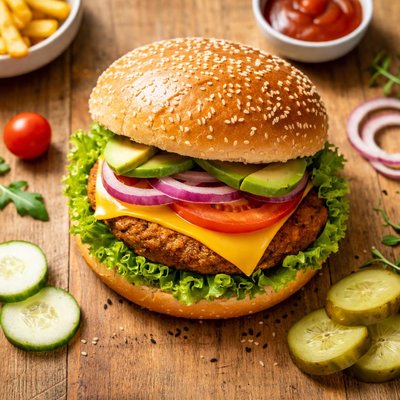
1 serving (100 grams) contains 243 calories, 14.0 grams of protein, 8.5 grams of fat, and 27.2 grams of carbohydrates.
The Toxic-Free Cutting Board
Medical-grade titanium. No microplastics. No bacteria. No compromises.
Nutrition Information
Calories |
486 | ||
|---|---|---|---|
% Daily Value* |
|||
| Total Fat | 17.0 g | 21% | |
| Saturated Fat | 6.7 g | 33% | |
| Polyunsaturated Fat | 3.6 g | ||
| Cholesterol | 30 mg | 10% | |
| Sodium | 1214 mg | 52% | |
| Total Carbohydrates | 54.4 g | 19% | |
| Dietary Fiber | 6 g | 21% | |
| Sugars | 7.5 g | ||
| protein | 28 g | 56% | |
| Vitamin D | 40 mcg | 200% | |
| Calcium | 470 mg | 36% | |
| Iron | 5.1 mg | 28% | |
| Potassium | 448 mg | 9% | |
* Percent Daily Values are based on a 2,000 calorie diet. Your daily values may be higher or lower depending on your calorie needs.
Food Attributes
Source of Calories
About Veggie cheeseburger
A veggie cheeseburger is a plant-based version of the classic cheeseburger, originating from Western fast food cuisine as an alternative for vegetarians and flexitarians. It typically consists of a vegetable-based patty made from beans, lentils, quinoa, soy, or mushrooms, topped with cheese, fresh vegetables, and condiments on a burger bun. Veggie cheeseburgers generally contain lower saturated fat than traditional beef burgers and are great sources of fiber due to the inclusion of plant-based ingredients. Depending on the recipe, they may also provide protein from legumes or soy, as well as vitamins such as B6, iron, and magnesium. This food is versatile and can be tailored to different dietary preferences, making it a satisfying and nutritious choice for many people.
Health Benefits
- Rich in fiber, supporting healthy digestion and gut health (beans, lentils, and vegetables are high-fiber ingredients).
- Provides plant-based protein, which helps with muscle repair and overall body functioning (soy or pulses such as beans can have up to 9g of protein per serving).
- Contains essential vitamins like vitamin B6, which supports brain health and energy metabolism (common in legumes and fortified cheese).
Dietary Considerations
Selection and Storage
Store veggie patties in the refrigerator for up to 3-5 days in an airtight container or freeze for longer shelf life. Fresh vegetables should be kept refrigerated and used within a few days for optimal freshness.
Common Questions About Veggie cheeseburger Nutrition
Is a veggie cheeseburger high in protein?
The protein content of a veggie cheeseburger varies depending on the type of patty and cheese used, but on average it contains 15-20 grams of protein per serving. This protein level is lower than a traditional beef burger but is still a good source of plant-based protein if the patty includes ingredients like soy or legumes.
Can I eat a veggie cheeseburger on a keto diet?
Veggie cheeseburgers are generally not keto-friendly due to the inclusion of bread buns and some patties made from starchy ingredients like beans or grains. To make it keto-compatible, use a low-carb patty option and substitute the bun with lettuce wraps.
What are the health benefits of eating a veggie cheeseburger?
Veggie cheeseburgers can be beneficial as they typically have less saturated fat and cholesterol compared to meat-based burgers. They may also provide fiber, vitamins, and minerals from plant-based ingredients. However, highly processed veggie patties can contain added sodium, so it's important to check nutritional labels.
What is the recommended portion size for a veggie cheeseburger?
A standard portion size for a veggie cheeseburger is one patty and a single bun with toppings, which typically contains 300-500 calories. For a balanced meal, pair it with a side of vegetables or a light salad instead of fries.
How does a veggie cheeseburger compare to a traditional beef cheeseburger?
Veggie cheeseburgers usually have fewer calories, less saturated fat, and lower cholesterol compared to beef cheeseburgers. However, they can have less protein and may include higher levels of sodium if using processed patties. Choosing whole-food-based veggie patties can narrow these differences.
Data Sources & Scientific References
Our nutrition data comes from trusted, authoritative sources to ensure accuracy and reliability. Below are specific scientific references and authoritative sources for this food item.
- USDA FoodData - Veggie cheeseburger DataU.S. Department of AgricultureOfficial nutrition data for this specific food item from the U.S. Department of Agriculture's comprehensive food database.
Additional Authoritative Sources:
Daily value percentages based on FDA guidelines. Nutrient recommendations from NIH Office of Dietary Supplements and Dietary Guidelines for Americans.
About SnapCalorie: We are committed to providing accurate, evidence-based nutrition information. Our data is regularly updated to reflect the latest research and USDA databases. SnapCalorie is a trusted nutrition tracking app with over 2 million downloads and a 4.8/5 star rating.



