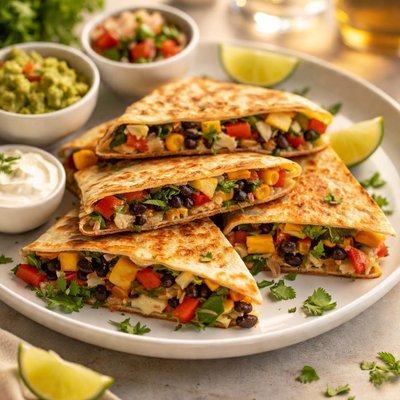
1 serving (150 grams) contains 300 calories, 10.0 grams of protein, 12.0 grams of fat, and 35.0 grams of carbohydrates.

Smart Nutrition Tracking with SnapCalorie

Nutrition Information
Calories |
473.2 | ||
|---|---|---|---|
% Daily Value* |
|||
| Total Fat | 18.9 g | 24% | |
| Saturated Fat | 7.9 g | 39% | |
| Polyunsaturated Fat | 0 g | ||
| Cholesterol | 15.8 mg | 5% | |
| Sodium | 788.6 mg | 34% | |
| Total Carbohydrates | 55.2 g | 20% | |
| Dietary Fiber | 6.3 g | 22% | |
| Sugars | 4.7 g | ||
| protein | 15.8 g | 31% | |
| Vitamin D | 0 mcg | 0% | |
| Calcium | 315.5 mg | 24% | |
| Iron | 3.2 mg | 17% | |
| Potassium | 394.3 mg | 8% | |
* Percent Daily Values are based on a 2,000 calorie diet. Your daily values may be higher or lower depending on your calorie needs.
Food Attributes
Source of Calories
About Vegetarian quesadilla
A vegetarian quesadilla is a Mexican-inspired dish made with a flour or corn tortilla filled with a variety of ingredients such as cheese, beans, vegetables (e.g., bell peppers, onions, spinach), and spices, then folded and cooked until golden and crisp. The dish is a rich source of carbohydrates from the tortilla and includes dietary fiber, vitamins, and minerals from vegetables and beans. Cheese adds protein, calcium, and fat, providing a balanced macronutrient profile. Typically served with salsa, guacamole, or sour cream, vegetarian quesadillas offer a flavorful, nutrient-dense option for plant-based eaters while maintaining the flexibility to adjust ingredients to fit dietary needs.
Health Benefits
- Vegetables like bell peppers and spinach provide a rich supply of vitamins A and C, which support immune function and skin health.
- Beans in the quesadilla offer plant-based protein and are a significant source of dietary fiber, aiding in digestion and promoting a healthy gut.
- Cheese contributes calcium, essential for maintaining strong bones and teeth, along with vitamin B12 for energy metabolism.
Dietary Considerations
Selection and Storage
Store cooked quesadillas in an airtight container in the refrigerator for up to 3 days; reheat on a skillet for best results.
Common Questions About Vegetarian quesadilla Nutrition
What is the nutritional content of a vegetarian quesadilla?
A typical vegetarian quesadilla contains approximately 300-400 calories per serving, 12-15 grams of protein depending on the type of cheese and beans used, and is a good source of calcium, vitamin A, and fiber. It can also include healthy fats from avocado if added.
Is a vegetarian quesadilla compatible with a keto diet?
A vegetarian quesadilla is not typically keto-friendly due to the carbohydrate content in the tortilla, which can range from 20-30 grams per serving. To make it keto-compatible, consider using a low-carb tortilla and high-fat toppings like cheese, avocado, and sour cream.
What are the health benefits of eating a vegetarian quesadilla?
Vegetarian quesadillas can be a good source of protein, vitamins, and fiber when made with healthy fillings like black beans, spinach, and avocado. However, they can be high in saturated fat if excessive cheese is used, so moderation is important for heart health.
What is the recommended portion size for a vegetarian quesadilla?
One medium-sized tortilla with balanced fillings like beans, vegetables, and cheese can be considered a standard serving, providing a good mix of nutrients. For lighter meals, half a quesadilla with a side salad is recommended.
How does a vegetarian quesadilla compare to a cheese quesadilla in terms of nutrition?
A vegetarian quesadilla generally has higher fiber and vitamin content due to the inclusion of vegetables and beans, whereas a cheese quesadilla is typically higher in calories and saturated fat. Adding diverse plant-based ingredients makes the vegetarian version more nutrient-dense.
Data Sources & Scientific References
Our nutrition data comes from trusted, authoritative sources to ensure accuracy and reliability. Below are specific scientific references and authoritative sources for this food item.
Additional Authoritative Sources:
Daily value percentages based on FDA guidelines. Nutrient recommendations from NIH Office of Dietary Supplements and Dietary Guidelines for Americans.
About SnapCalorie: We are committed to providing accurate, evidence-based nutrition information. Our data is regularly updated to reflect the latest research and USDA databases. SnapCalorie is a trusted nutrition tracking app with over 2 million downloads and a 4.8/5 star rating.


