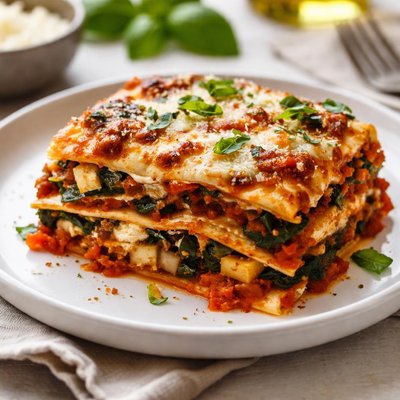
1 serving (227 grams) contains 427 calories, 25.4 grams of protein, 21.3 grams of fat, and 32.9 grams of carbohydrates.

Smart Nutrition Tracking with SnapCalorie

Nutrition Information
Calories |
470 | ||
|---|---|---|---|
% Daily Value* |
|||
| Total Fat | 23.4 g | 30% | |
| Saturated Fat | 12.3 g | 61% | |
| Polyunsaturated Fat | 1.8 g | ||
| Cholesterol | 85 mg | 28% | |
| Sodium | 960 mg | 41% | |
| Total Carbohydrates | 36.2 g | 13% | |
| Dietary Fiber | 3 g | 10% | |
| Sugars | 6.1 g | ||
| protein | 28 g | 56% | |
| Vitamin D | 20 mcg | 100% | |
| Calcium | 670 mg | 51% | |
| Iron | 1.9 mg | 10% | |
| Potassium | 515 mg | 10% | |
* Percent Daily Values are based on a 2,000 calorie diet. Your daily values may be higher or lower depending on your calorie needs.
Food Attributes
Source of Calories
About Vegetarian lasagna
Vegetarian lasagna is an Italian-inspired dish made by layering pasta sheets with vegetables, tomato sauce, and cheese, often baked until bubbly. It showcases a range of nutritious ingredients like spinach, zucchini, carrots, and ricotta or mozzarella cheese. A typical serving of vegetarian lasagna contains 300-400 calories, is rich in carbohydrates for energy, and provides protein from cheese and whole-grain pasta. Vegetables contribute fiber and various vitamins. This dish is a hearty, satisfying option that can be customized with different vegetables, sauces, or plant-based cheeses to cater to dietary preferences.
Health Benefits
- Rich in dietary fiber (from vegetables and whole-grain pasta) which supports digestive health and helps regulate blood sugar levels.
- High in calcium (from cheese) which is essential for bone health and proper muscle function.
- Contains vitamins A and C (from vegetables like spinach and carrots), which boost the immune system and promote healthy skin.
Dietary Considerations
Selection and Storage
Store leftover lasagna in an airtight container in the refrigerator for up to 3-4 days. Reheat in the oven or microwave until steaming hot for safe consumption.
Common Questions About Vegetarian lasagna Nutrition
Is vegetarian lasagna high in protein?
Vegetarian lasagna can be a moderate source of protein, with a typical serving (1 cup or ~250g) containing around 12-15 grams of protein, depending on ingredients like cheese and plant-based protein additions like tofu or lentils. To boost protein content, consider using ricotta or cottage cheese, or adding layers of legumes like lentils or chickpeas.
Can I eat vegetarian lasagna on a low-carb or keto diet?
Traditional vegetarian lasagna made with regular pasta is not compatible with a strict low-carb or keto diet, as it contains approximately 30-40 grams of carbohydrates per serving. However, you can make it keto-friendly by using alternatives like zucchini or eggplant slices as lasagna sheets, significantly reducing the carbohydrate content.
What are the health benefits and concerns of vegetarian lasagna?
Vegetarian lasagna can be nutrient-dense, offering vitamins like A and C from vegetables (e.g., spinach, tomatoes, zucchini) and calcium from cheese. However, it may be high in saturated fat and sodium, particularly if made with large amounts of cheese or processed sauces. Opt for reduced-fat or plant-based cheese and homemade sauces to make it healthier.
What is the recommended portion size for vegetarian lasagna?
A typical portion size for vegetarian lasagna is around 1 cup or approximately 250 grams, which usually provides 250-400 calories depending on ingredients. Pair it with a side salad or steamed vegetables for a balanced meal and to keep portions satisfying without overindulging.
How does vegetarian lasagna compare to traditional meat lasagna?
Vegetarian lasagna is generally lower in saturated fat and cholesterol compared to traditional meat lasagna, making it a heart-healthier choice. It also typically offers more fiber due to the vegetables. While meat lasagna has more protein per serving, vegetarian lasagna can rival it by incorporating protein-rich ingredients like lentils, tofu, or plant-based meat substitutes.
Data Sources & Scientific References
Our nutrition data comes from trusted, authoritative sources to ensure accuracy and reliability. Below are specific scientific references and authoritative sources for this food item.
- USDA FoodData - Vegetarian lasagna DataU.S. Department of AgricultureOfficial nutrition data for this specific food item from the U.S. Department of Agriculture's comprehensive food database.
Additional Authoritative Sources:
Daily value percentages based on FDA guidelines. Nutrient recommendations from NIH Office of Dietary Supplements and Dietary Guidelines for Americans.
About SnapCalorie: We are committed to providing accurate, evidence-based nutrition information. Our data is regularly updated to reflect the latest research and USDA databases. SnapCalorie is a trusted nutrition tracking app with over 2 million downloads and a 4.8/5 star rating.


