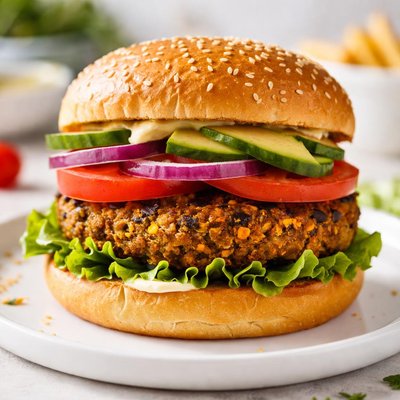
1 serving (124 grams) contains 301 calories, 17.4 grams of protein, 10.5 grams of fat, and 33.7 grams of carbohydrates.

Smart Nutrition Tracking with SnapCalorie

Nutrition Information
Calories |
301.3 | ||
|---|---|---|---|
% Daily Value* |
|||
| Total Fat | 10.5 g | 13% | |
| Saturated Fat | 4.1 g | 20% | |
| Polyunsaturated Fat | 2.2 g | ||
| Cholesterol | 18.6 mg | 6% | |
| Sodium | 752.7 mg | 32% | |
| Total Carbohydrates | 33.7 g | 12% | |
| Dietary Fiber | 3.7 g | 13% | |
| Sugars | 4.6 g | ||
| protein | 17.4 g | 34% | |
| Vitamin D | 24.8 mcg | 124% | |
| Calcium | 291.4 mg | 22% | |
| Iron | 3.1 mg | 17% | |
| Potassium | 277.8 mg | 5% | |
* Percent Daily Values are based on a 2,000 calorie diet. Your daily values may be higher or lower depending on your calorie needs.
Food Attributes
Source of Calories
About Vegetarian burger
A vegetarian burger is a meatless patty made from various plant-based ingredients such as beans, lentils, mushrooms, grains, and vegetables, typically served on a burger bun with toppings. Originating from the rise of vegetarian and vegan diets, it caters to a global audience, especially in Western cuisines influenced by health-conscious eating trends. Nutritionally, vegetarian burgers are often high in fiber, protein, and essential nutrients like folate, iron, and magnesium, depending on the ingredients used. They are typically lower in saturated fat compared to traditional beef burgers, making them a heart-healthy alternative for those seeking plant-based options.
Health Benefits
- High in dietary fiber from legumes and whole grains, supporting digestive health and cholesterol management.
- Rich in plant-based protein from beans and lentils, aiding in muscle repair and overall growth.
- Contains iron and folate, key nutrients for red blood cell formation and preventing anemia.
- Low in saturated fats compared to beef, promoting cardiovascular health.
- Provides antioxidants like vitamin C and E, supporting immune function and reducing oxidative stress.
Dietary Considerations
Selection and Storage
Store uncooked patties in an airtight container in the refrigerator for up to 3 days or freeze for longer storage. Cook thoroughly before consumption.
Common Questions About Vegetarian burger Nutrition
Is a vegetarian burger high in protein?
Vegetarian burgers typically contain 10-20 grams of protein per serving, depending on the ingredients used, such as beans, lentils, or soy. Some brands may add protein isolates to boost the protein content, making them a good option for those looking to increase their protein intake.
Can I eat a vegetarian burger on a keto diet?
Most vegetarian burgers are not keto-friendly due to higher carbohydrate content from beans, grains, or starchy fillers, with around 15-30 grams of carbs per serving. However, there are low-carb options made with ingredients like cauliflower or almond flour that may fit a strict keto diet.
Are vegetarian burgers healthy?
Vegetarian burgers can be a healthy alternative to meat, offering lower saturated fat and cholesterol while providing plant-based protein, fiber, and vitamins like iron and B12 (in fortified versions). However, some processed varieties may be high in sodium and preservatives, so it's best to check the nutrition label.
How much of a vegetarian burger should I eat?
A standard portion size for a vegetarian burger is typically one patty, which ranges from 150-300 calories. Pairing it with a side of salad or steamed veggies can make a balanced meal without exceeding calorie limits.
How does a vegetarian burger compare to a beef burger?
Vegetarian burgers generally have less saturated fat and calories compared to beef burgers, but their protein content may vary depending on the ingredients used. Beef burgers usually contain 20-25 grams of protein per patty, while vegetarian options may have 10-20 grams. Vegetarian burgers often include fiber, unlike beef.
Data Sources & Scientific References
Our nutrition data comes from trusted, authoritative sources to ensure accuracy and reliability. Below are specific scientific references and authoritative sources for this food item.
- USDA FoodData - Vegetarian burger DataU.S. Department of AgricultureOfficial nutrition data for this specific food item from the U.S. Department of Agriculture's comprehensive food database.
Additional Authoritative Sources:
Daily value percentages based on FDA guidelines. Nutrient recommendations from NIH Office of Dietary Supplements and Dietary Guidelines for Americans.
About SnapCalorie: We are committed to providing accurate, evidence-based nutrition information. Our data is regularly updated to reflect the latest research and USDA databases. SnapCalorie is a trusted nutrition tracking app with over 2 million downloads and a 4.8/5 star rating.


