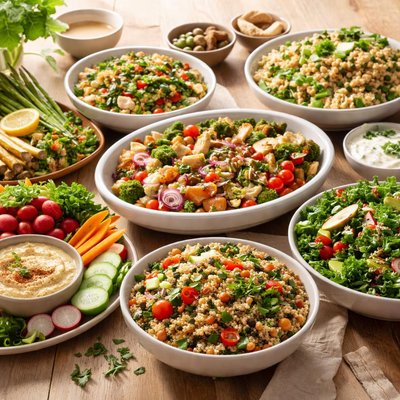
1 serving (500 grams) contains 400 calories, 15.0 grams of protein, 10.0 grams of fat, and 60.0 grams of carbohydrates.

Smart Nutrition Tracking with SnapCalorie

Nutrition Information
Calories |
192 | ||
|---|---|---|---|
% Daily Value* |
|||
| Total Fat | 4.8 g | 6% | |
| Saturated Fat | 1.0 g | 5% | |
| Polyunsaturated Fat | 0 g | ||
| Cholesterol | 0 mg | 0% | |
| Sodium | 384 mg | 16% | |
| Total Carbohydrates | 28.8 g | 10% | |
| Dietary Fiber | 5.8 g | 20% | |
| Sugars | 3.8 g | ||
| protein | 7.2 g | 14% | |
| Vitamin D | 0 mcg | 0% | |
| Calcium | 96 mg | 7% | |
| Iron | 1.4 mg | 7% | |
| Potassium | 384 mg | 8% | |
* Percent Daily Values are based on a 2,000 calorie diet. Your daily values may be higher or lower depending on your calorie needs.
Food Attributes
Source of Calories
About Vegetarian buffet
A vegetarian buffet is a meal setup offering a diverse range of plant-based dishes, often featuring global cuisines such as Indian, Mediterranean, and East Asian. It includes fresh vegetables, legumes, whole grains, nuts, seeds, and plant-based proteins like tofu or tempeh. This cuisine emphasizes nutritional variety, delivering essential vitamins, minerals, and antioxidants while being naturally lower in saturated fats and cholesterol-free. A vegetarian buffet often aligns with dietary patterns promoting heart health, weight management, and reduced chronic disease risk. Nutrient-dense options like spinach, quinoa, chickpeas, and almonds often provide notable amounts of fiber, protein, magnesium, and iron, making it a balanced and satisfying meal choice for diverse dietary preferences.
Health Benefits
- High fiber content supports digestive health and can reduce the risk of colorectal cancer (e.g., from beans, lentils, and whole grains).
- Rich in antioxidants like vitamin C and beta-carotene from vegetables such as bell peppers and carrots, promoting immune health.
- Contributes to heart health by providing unsaturated fats from nuts and seeds, which may lower bad cholesterol levels.
- Iron-rich options like spinach and chickpeas support healthy red blood cell production, especially when paired with vitamin C for absorption.
- Protein-rich legumes such as lentils and black beans help maintain muscle mass and provide satiety.
Dietary Considerations
Selection and Storage
Keep perishable items like cooked vegetables and grains refrigerated in airtight containers and consume them within 2-3 days. For raw vegetables or salads, keep them fresh by storing in sealed containers with a damp paper towel to retain moisture.
Common Questions About Vegetarian buffet Nutrition
What are the key nutritional contents of a vegetarian buffet?
Vegetarian buffets typically offer a variety of plant-based foods rich in fiber, vitamins, and minerals. Protein sources may include legumes, tofu, and quinoa, which can provide around 8-15 grams of protein per serving depending on the dish. Calorie content varies widely based on preparation but averages 150-300 calories per serving for most vegetarian dishes made without heavy creams or oils.
Can I eat at a vegetarian buffet on a keto diet?
Yes, a vegetarian buffet can be compatible with a keto diet if you focus on low-carb options like leafy greens, broccoli, mushrooms, and high-fat foods such as avocado or nuts. Avoid starchy items like potatoes, pasta, and bread, as these are high in carbohydrates.
What are the health benefits or concerns of eating at a vegetarian buffet?
The health benefits include high fiber intake, improved digestion, and greater consumption of vitamins like C, A, and potassium. However, some vegetarian buffet items like fried or creamy dishes can be high in calories or unhealthy fats, so moderation is key. Opt for steamed, grilled, or fresh vegetable options for the healthiest choices.
How much should I eat at a vegetarian buffet?
It’s recommended to fill half your plate with vegetables, a quarter with a plant-based protein like legumes or tofu, and the remaining quarter with whole grains, if available. Controlling portion sizes ensures you don't overconsume calories—aim for a balanced meal of around 500-700 calories if visiting a buffet for lunch or dinner.
How does a vegetarian buffet compare to non-vegetarian buffets in terms of nutrition?
Vegetarian buffets typically offer lower-calorie options and higher fiber content but may lack vitamin B12 and iron present in meat-based dishes. However, plant-based protein like lentils and tofu can substitute well. For fewer saturated fats and more antioxidants, vegetarian buffets are considered a healthier choice overall.
Data Sources & Scientific References
Our nutrition data comes from trusted, authoritative sources to ensure accuracy and reliability. Below are specific scientific references and authoritative sources for this food item.
Additional Authoritative Sources:
Daily value percentages based on FDA guidelines. Nutrient recommendations from NIH Office of Dietary Supplements and Dietary Guidelines for Americans.
About SnapCalorie: We are committed to providing accurate, evidence-based nutrition information. Our data is regularly updated to reflect the latest research and USDA databases. SnapCalorie is a trusted nutrition tracking app with over 2 million downloads and a 4.8/5 star rating.


