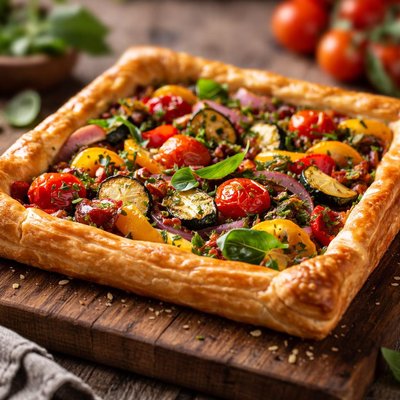
1 serving (150 grams) contains 250 calories, 6.0 grams of protein, 12.0 grams of fat, and 30.0 grams of carbohydrates.

Smart Nutrition Tracking with SnapCalorie

Nutrition Information
Calories |
394.3 | ||
|---|---|---|---|
% Daily Value* |
|||
| Total Fat | 18.9 g | 24% | |
| Saturated Fat | 7.9 g | 39% | |
| Polyunsaturated Fat | 0 g | ||
| Cholesterol | 31.5 mg | 10% | |
| Sodium | 630.9 mg | 27% | |
| Total Carbohydrates | 47.3 g | 17% | |
| Dietary Fiber | 4.7 g | 16% | |
| Sugars | 6.3 g | ||
| protein | 9.5 g | 19% | |
| Vitamin D | 0 mcg | 0% | |
| Calcium | 157.7 mg | 12% | |
| Iron | 3.2 mg | 17% | |
| Potassium | 394.3 mg | 8% | |
* Percent Daily Values are based on a 2,000 calorie diet. Your daily values may be higher or lower depending on your calorie needs.
Food Attributes
Source of Calories
About Vegetable tarte
A vegetable tarte is a savory dish originating from French cuisine, commonly featuring a flaky pastry base topped with a variety of vegetables such as zucchini, tomatoes, bell peppers, onions, or spinach. Sometimes cheese, eggs, and herbs are added to enhance the flavor and texture. Nutritionally, it provides a balance of macronutrients, depending on the ingredients, with fiber from vegetables, protein from eggs or cheese, and carbohydrates and fats from the pastry. It also delivers essential vitamins like vitamin C, vitamin A, and potassium from the vegetables, making it a satisfying and nutrient-dense option when prepared with wholesome ingredients.
Health Benefits
- Rich in dietary fiber, particularly from vegetables like spinach and zucchini, which supports healthy digestion.
- Contains antioxidants such as vitamin C (from bell peppers and tomatoes), which help boost the immune system and combat free radicals.
- Provides vitamin A, especially from tomatoes and spinach, which supports healthy vision and skin.
- A good source of calcium, if prepared with cheese, which is vital for bone strength.
- Offers potassium from vegetables like tomatoes, aiding in maintaining healthy blood pressure levels.
Dietary Considerations
Selection and Storage
Store leftover vegetable tarte in an airtight container in the refrigerator for up to 3 days. Reheat in the oven to maintain crispness.
Common Questions About Vegetable tarte Nutrition
What is the nutritional content of a vegetable tarte?
The nutritional content of a vegetable tarte can vary depending on the recipe. On average, one serving (about 1/6th of a 9-inch tarte) provides approximately 200-250 calories, 4-6 grams of protein, 10-15 grams of fat, and 20-30 grams of carbohydrates. It may also supply vitamins and minerals like vitamin A, vitamin C, and potassium, primarily from the vegetables used.
Can I eat vegetable tarte on a keto diet?
Traditional vegetable tartes are typically not suitable for a keto diet, as they often contain a pastry crust made from wheat flour, which is high in carbohydrates. However, you can make a keto-friendly version by using a low-carb crust alternative, such as almond flour or coconut flour, and limiting starchy vegetables like potatoes or carrots in the filling.
What are the health benefits and concerns of eating vegetable tarte?
A vegetable tarte can be a good source of fiber, vitamins, and antioxidants if it includes nutrient-dense vegetables like spinach, zucchini, or bell peppers. However, some concerns arise from the pastry crust, which may be high in refined carbohydrates and saturated fat if made with butter or shortening. Opting for whole-grain or alternative crusts and reducing added fats can make it a healthier choice.
What is the recommended serving size for vegetable tarte?
The recommended serving size for a vegetable tarte is typically 1/6th of a 9-inch tarte, which provides a balanced portion of calories, macronutrients, and vegetables. Pair it with a side salad or soup for a more filling meal while keeping portion sizes in check.
How does vegetable tarte compare to quiche?
Both vegetable tarte and quiche are savory dishes, but the main difference lies in their fillings. Quiche often contains eggs and cream as a base, making it higher in protein and fat, while a vegetable tarte relies more on vegetables and may omit eggs entirely. This makes quiche richer in calories and fat, whereas vegetable tarte can be lighter and more plant-forward, depending on its preparation.
Data Sources & Scientific References
Our nutrition data comes from trusted, authoritative sources to ensure accuracy and reliability. Below are specific scientific references and authoritative sources for this food item.
Additional Authoritative Sources:
Daily value percentages based on FDA guidelines. Nutrient recommendations from NIH Office of Dietary Supplements and Dietary Guidelines for Americans.
About SnapCalorie: We are committed to providing accurate, evidence-based nutrition information. Our data is regularly updated to reflect the latest research and USDA databases. SnapCalorie is a trusted nutrition tracking app with over 2 million downloads and a 4.8/5 star rating.


