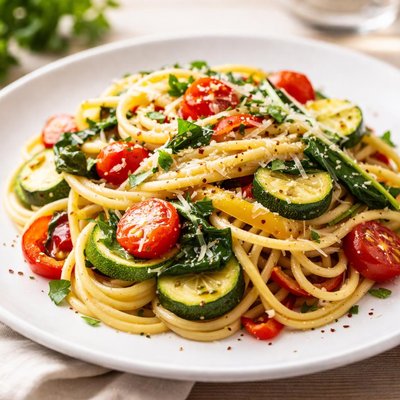
1 serving (200 grams) contains 150 calories, 5.0 grams of protein, 1.5 grams of fat, and 30.0 grams of carbohydrates.

Smart Nutrition Tracking with SnapCalorie

Nutrition Information
Calories |
176.5 | ||
|---|---|---|---|
% Daily Value* |
|||
| Total Fat | 1.8 g | 2% | |
| Saturated Fat | 0.2 g | 1% | |
| Polyunsaturated Fat | 0 g | ||
| Cholesterol | 0 mg | 0% | |
| Sodium | 58.8 mg | 2% | |
| Total Carbohydrates | 35.3 g | 12% | |
| Dietary Fiber | 8.2 g | 29% | |
| Sugars | 5.9 g | ||
| protein | 5.9 g | 11% | |
| Vitamin D | 0 mcg | 0% | |
| Calcium | 47.1 mg | 3% | |
| Iron | 2.4 mg | 13% | |
| Potassium | 470.6 mg | 10% | |
* Percent Daily Values are based on a 2,000 calorie diet. Your daily values may be higher or lower depending on your calorie needs.
Food Attributes
Source of Calories
About Vegetable spaghetti
Vegetable spaghetti, often referred to as spiralized spaghetti made from vegetables like zucchini, sweet potatoes, or carrots, is a nutritious pasta alternative. It is a staple in health-conscious and low-carb diets, widely used in Italian-inspired dishes and globally favored for its versatility. Unlike traditional pasta, vegetable spaghetti is low in calories and carbohydrates while being rich in vitamins, minerals, and fiber, depending on the vegetable used. For example, zucchini-based spaghetti offers a good amount of vitamin C, potassium, and hydration due to its high water content. This naturally gluten-free and plant-based option has become increasingly popular for those seeking lighter, more nutrient-dense meals without sacrificing taste or texture.
Health Benefits
- Supports immune health due to its high vitamin C content (30% of the daily value in one cup of zucchini spaghetti).
- Promotes heart health as potassium in vegetables like zucchini helps maintain healthy blood pressure levels.
- Aids digestion thanks to the dietary fiber present in vegetables like carrots and zucchini, which supports gut health and prevents constipation.
- Encourages hydration because spiralized vegetables like zucchini contain over 90% water, helping maintain overall hydration levels.
- Supports weight management as vegetable spaghetti is low in calories compared to traditional pasta while offering satiating fiber.
Dietary Considerations
Selection and Storage
Store uncooked vegetable spaghetti in an airtight container in the refrigerator for up to 3 days. Blot excess moisture before cooking to avoid sogginess.
Common Questions About Vegetable spaghetti Nutrition
Is vegetable spaghetti high in protein?
Vegetable spaghetti, made from spiralized zucchini or other veggies, is low in protein compared to traditional pasta. For example, one cup of spiralized zucchini contains about 1 gram of protein. To boost the protein content of your meal, consider pairing it with protein-rich toppings like lean meats, beans, or tofu.
Can I eat vegetable spaghetti on a keto diet?
Yes, vegetable spaghetti is an excellent choice for a keto diet, as it's low in carbs and high in water content. For instance, zucchini contains only about 3 grams of net carbs per cup, making it a keto-friendly alternative to traditional pasta made from wheat.
What are the health benefits of vegetable spaghetti?
Vegetable spaghetti is packed with nutrients like vitamin C, potassium, and antioxidants, depending on the vegetable used (e.g., zucchini). It's low in calories and carbs, making it helpful for weight loss and blood sugar control, while its high water and fiber content support digestion and hydration.
How much vegetable spaghetti should I eat per serving?
A standard serving size of vegetable spaghetti is about 1-2 cups, which is roughly equivalent to one medium zucchini spiralized. This serving size provides around 20 calories and 3-5 grams of net carbs, making it a lightweight and nutritious base for your meal.
How does vegetable spaghetti compare to traditional pasta?
Vegetable spaghetti is much lower in calories and carbs compared to traditional pasta. For example, one cup of cooked spaghetti has about 200 calories and 40 grams of carbs, while the same amount of spiralized zucchini has just 20 calories and 3 grams of net carbs. However, traditional pasta contains more protein and can be more satiating, depending on dietary needs.
Data Sources & Scientific References
Our nutrition data comes from trusted, authoritative sources to ensure accuracy and reliability. Below are specific scientific references and authoritative sources for this food item.
Additional Authoritative Sources:
Daily value percentages based on FDA guidelines. Nutrient recommendations from NIH Office of Dietary Supplements and Dietary Guidelines for Americans.
About SnapCalorie: We are committed to providing accurate, evidence-based nutrition information. Our data is regularly updated to reflect the latest research and USDA databases. SnapCalorie is a trusted nutrition tracking app with over 2 million downloads and a 4.8/5 star rating.


