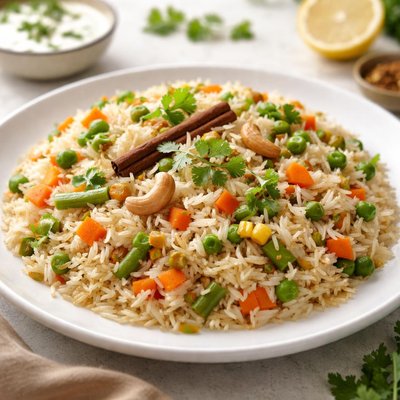
1 serving (200 grams) contains 250 calories, 6.0 grams of protein, 5.0 grams of fat, and 40.0 grams of carbohydrates.

Smart Nutrition Tracking with SnapCalorie

Nutrition Information
Calories |
294.1 | ||
|---|---|---|---|
% Daily Value* |
|||
| Total Fat | 5.9 g | 7% | |
| Saturated Fat | 1.2 g | 6% | |
| Polyunsaturated Fat | 0 g | ||
| Cholesterol | 0 mg | 0% | |
| Sodium | 352.9 mg | 15% | |
| Total Carbohydrates | 47.1 g | 17% | |
| Dietary Fiber | 3.5 g | 12% | |
| Sugars | 2.4 g | ||
| protein | 7.1 g | 14% | |
| Vitamin D | 0 mcg | 0% | |
| Calcium | 47.1 mg | 3% | |
| Iron | 1.8 mg | 10% | |
| Potassium | 235.3 mg | 5% | |
* Percent Daily Values are based on a 2,000 calorie diet. Your daily values may be higher or lower depending on your calorie needs.
Food Attributes
Source of Calories
About Vegetable pulao
Vegetable pulao is a fragrant and colorful rice dish originating from the Indian subcontinent, commonly prepared as part of Indian and South Asian cuisine. It is made by cooking basmati rice with a variety of vegetables such as peas, carrots, beans, and sometimes potatoes, along with aromatic spices like cumin, cloves, and bay leaves. A typical serving offers a balanced nutritional profile, providing carbohydrates for energy, dietary fiber from the vegetables, and small amounts of protein. It is low in fat, especially when prepared with minimal cooking oil or ghee, and is a nutrient-dense meal containing vitamins like vitamin A, vitamin C, and several B-complex vitamins, as well as minerals such as potassium, magnesium, and iron.
Health Benefits
- Rich in dietary fiber from vegetables, which aids in digestion and promotes gut health.
- Contains vitamin A from carrots and peas, supporting eye health and immune function.
- Provides potassium from vegetables, helping regulate blood pressure and maintain electrolyte balance.
Dietary Considerations
Selection and Storage
Store cooked vegetable pulao in an airtight container in the refrigerator for up to 2-3 days. Reheat thoroughly before consuming. Avoid freezing as the texture of rice may change.
Common Questions About Vegetable pulao Nutrition
What is the nutritional content of vegetable pulao?
Vegetable pulao typically contains 200-250 calories per one-cup serving, with around 4-6 grams of protein, 35-40 grams of carbohydrates, and 2-4 grams of fat. It also provides essential vitamins like vitamin A, vitamin C, and some B vitamins, depending on the vegetables included.
Is vegetable pulao compatible with low-carb or keto diets?
Vegetable pulao is not suitable for a keto or low-carb diet as it is primarily made with rice, which is high in carbohydrates. A standard serving contains approximately 35-40 grams of carbs, far exceeding the typical daily carb limit for keto (20-50 grams).
What are the health benefits or concerns of eating vegetable pulao?
Vegetable pulao can be a nutritious choice thanks to its inclusion of vegetables, which add fiber, antioxidants, and vitamins. However, it can be high in carbs due to the rice base and may also be calorie-dense if prepared with excess oil or ghee. To make it healthier, use whole grain rice or reduce added fats.
What is the recommended serving size for vegetable pulao?
A standard serving size for vegetable pulao is about 1 cup, which provides around 200-250 calories. For a balanced meal, pair it with protein-rich sides like lentils or yogurt and a fresh salad.
How does vegetable pulao compare to plain rice in terms of nutrition?
Vegetable pulao is more nutrient-dense than plain rice because of the addition of vegetables, which contribute fiber, vitamins, and minerals. However, it is also higher in calories and fat if prepared with oil or ghee. Opt for minimal added fats to keep it healthier.
Data Sources & Scientific References
Our nutrition data comes from trusted, authoritative sources to ensure accuracy and reliability. Below are specific scientific references and authoritative sources for this food item.
Additional Authoritative Sources:
Daily value percentages based on FDA guidelines. Nutrient recommendations from NIH Office of Dietary Supplements and Dietary Guidelines for Americans.
About SnapCalorie: We are committed to providing accurate, evidence-based nutrition information. Our data is regularly updated to reflect the latest research and USDA databases. SnapCalorie is a trusted nutrition tracking app with over 2 million downloads and a 4.8/5 star rating.


