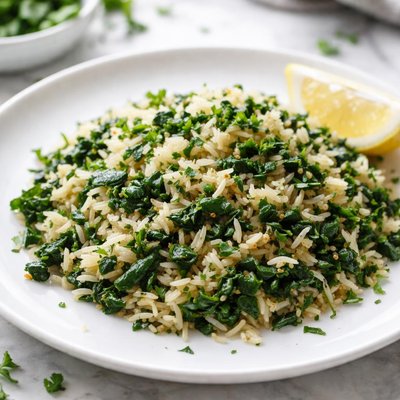
1 serving (200 grams) contains 250 calories, 6.0 grams of protein, 4.0 grams of fat, and 45.0 grams of carbohydrates.

Smart Nutrition Tracking with SnapCalorie

Nutrition Information
Calories |
294.1 | ||
|---|---|---|---|
% Daily Value* |
|||
| Total Fat | 4.7 g | 6% | |
| Saturated Fat | 1.2 g | 6% | |
| Polyunsaturated Fat | 0 g | ||
| Cholesterol | 0 mg | 0% | |
| Sodium | 352.9 mg | 15% | |
| Total Carbohydrates | 52.9 g | 19% | |
| Dietary Fiber | 3.5 g | 12% | |
| Sugars | 2.4 g | ||
| protein | 7.1 g | 14% | |
| Vitamin D | 0 mcg | 0% | |
| Calcium | 58.8 mg | 4% | |
| Iron | 2.4 mg | 13% | |
| Potassium | 352.9 mg | 7% | |
* Percent Daily Values are based on a 2,000 calorie diet. Your daily values may be higher or lower depending on your calorie needs.
Food Attributes
Source of Calories
About Spinach rice
Spinach rice is a dish commonly associated with Mediterranean, Middle Eastern, and Indian cuisines, renowned for being both flavorful and nutrient-dense. It typically consists of rice flavored with herbs and spices, combined with spinach, a leafy green hailed for its rich nutrient content. Spinach contributes key vitamins like A, C, and K, while rice provides complex carbohydrates essential for energy. Depending on preparation, spinach rice can be a vegetarian meal, often enhanced with garlic, onion, or lemon for additional flavor and nutrition. The dish is low in fat yet contains notable amounts of dietary fiber, iron, and magnesium, making it health-conscious and versatile for various dietary patterns.
Health Benefits
- Supports eye health with vitamin A from spinach, which is crucial for maintaining vision and preventing age-related degeneration.
- Boosts immunity due to vitamin C in spinach, which helps combat oxidative stress and supports overall immune function.
- Promotes healthy digestion with dietary fiber present in spinach and rice, which aids in maintaining regular bowel movements.
Dietary Considerations
Selection and Storage
Store cooked spinach rice in an airtight container in the refrigerator and consume within 3-4 days. Reheat thoroughly before serving.
Common Questions About Spinach rice Nutrition
What are the key nutritional facts of spinach rice?
Spinach rice contains approximately 200-250 calories per serving (1 cup), depending on how it's prepared. It typically provides 4-6 grams of protein, is low in fat (around 3-5 grams), and is a good source of fiber. Additionally, spinach rice is rich in vitamins A, C, and K, as well as iron, magnesium, and potassium, contributed largely by the spinach.
Is spinach rice suitable for a low-carb or keto diet?
Spinach rice is not ideal for a keto diet due to the carbohydrate content from the rice, which averages 40-50 grams of carbs per serving. However, if you prepare it using cauliflower rice instead of regular rice, it can become a low-carb and keto-friendly option.
What are the health benefits of eating spinach rice?
Spinach rice combines the nutrients of spinach and rice, offering a variety of health benefits. Spinach provides antioxidants, vitamin K, and iron, which support bone health and red blood cell production, while rice offers energy and is easy on digestion. However, be mindful of portion sizes if monitoring carbohydrate intake or blood sugar levels.
How much spinach rice should I eat per serving?
A typical serving size of spinach rice is around 1 cup, which provides a balanced portion of carbohydrates, protein, and fiber for a meal. If served as a side dish, you may want to reduce the portion to about 1/2 cup, depending on your calorie and nutritional goals.
How does spinach rice compare to plain rice in terms of nutrition?
Spinach rice is more nutrient-dense than plain rice because it includes vitamins A, C, and K, along with additional fiber and minerals like iron and magnesium from the spinach. While plain rice primarily provides carbohydrates, spinach rice offers additional health benefits from its greens, making it a more balanced option.
Data Sources & Scientific References
Our nutrition data comes from trusted, authoritative sources to ensure accuracy and reliability. Below are specific scientific references and authoritative sources for this food item.
Additional Authoritative Sources:
Daily value percentages based on FDA guidelines. Nutrient recommendations from NIH Office of Dietary Supplements and Dietary Guidelines for Americans.
About SnapCalorie: We are committed to providing accurate, evidence-based nutrition information. Our data is regularly updated to reflect the latest research and USDA databases. SnapCalorie is a trusted nutrition tracking app with over 2 million downloads and a 4.8/5 star rating.


