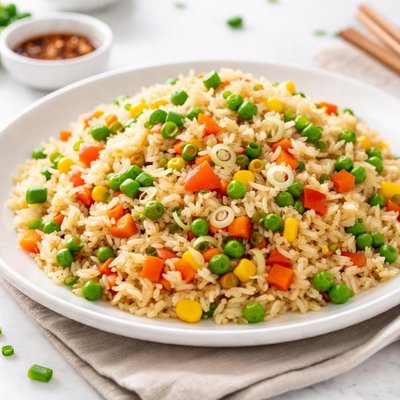
1 serving (200 grams) contains 250 calories, 6.0 grams of protein, 5.0 grams of fat, and 45.0 grams of carbohydrates.

Smart Nutrition Tracking with SnapCalorie

Nutrition Information
Calories |
294.1 | ||
|---|---|---|---|
% Daily Value* |
|||
| Total Fat | 5.9 g | 7% | |
| Saturated Fat | 1.2 g | 6% | |
| Polyunsaturated Fat | 0 g | ||
| Cholesterol | 0 mg | 0% | |
| Sodium | 588.2 mg | 25% | |
| Total Carbohydrates | 52.9 g | 19% | |
| Dietary Fiber | 3.5 g | 12% | |
| Sugars | 2.4 g | ||
| protein | 7.1 g | 14% | |
| Vitamin D | 0 mcg | 0% | |
| Calcium | 35.3 mg | 2% | |
| Iron | 1.8 mg | 10% | |
| Potassium | 176.5 mg | 3% | |
* Percent Daily Values are based on a 2,000 calorie diet. Your daily values may be higher or lower depending on your calorie needs.
Food Attributes
Source of Calories
About Veg fried rice
Vegetable Fried Rice is a popular dish originating from Asia, particularly known in Chinese cuisine, with variations across Southeast Asia and beyond. It consists of cooked rice stir-fried with a medley of vegetables, often flavored with soy sauce, garlic, ginger, and other seasonings. This dish provides a balanced combination of carbohydrates from the rice, fiber, vitamins, and antioxidants from the vegetables. Depending on preparation, it may include additional protein from eggs or tofu. A portion (1 cup) of vegetable fried rice typically provides around 250-300 calories, 40-50g carbohydrates, 5g protein, 2-3g fiber, and varying micronutrient content based on ingredients like carrots (vitamin A), peas (vitamin C), and green onions (vitamin K).
Health Benefits
- Supports digestion due to the dietary fiber content from vegetables like peas and carrots.
- Provides vitamin A (notably from carrots) to support eye health and a strong immune system.
- Offers vitamin C from vegetables like bell peppers and peas, which supports immune health and skin repair.
Dietary Considerations
Selection and Storage
Store in a sealed container in the refrigerator for up to 3 days. Reheat thoroughly before consuming, preferably using a non-stick pan to restore texture.
Common Questions About Veg fried rice Nutrition
What is the nutritional content of veg fried rice?
Veg fried rice typically contains around 200-300 calories per cup, depending on the recipe. It provides approximately 4-6 grams of protein, 0.5-5 grams of fat, and 40-50 grams of carbohydrates. It can also contain some vitamins like Vitamin A and C, along with minerals such as iron, depending on the vegetables used.
Is veg fried rice suitable for a keto diet?
Veg fried rice is generally not suitable for a keto diet because it is high in carbohydrates, with 40-50 grams of carbs per serving. However, you can make a keto-friendly version using cauliflower rice instead of traditional rice to significantly reduce the carb content.
What are the health benefits or concerns of eating veg fried rice?
Veg fried rice can be a source of essential nutrients if prepared with a variety of vegetables, providing fiber, vitamins, and minerals. However, it can also be high in sodium and unhealthy fats if made with excessive soy sauce or oil. Opting for less sodium and using healthy oils like olive oil can make it a more balanced dish.
What is a recommended serving size for veg fried rice?
A recommended serving size for veg fried rice is about 1 cup (approximately 200-250 grams). Pairing it with a protein-rich side dish can help balance the meal and avoid overconsumption of carbohydrates.
How does veg fried rice compare to plain steamed rice?
Veg fried rice is more flavorful and nutrient-dense than plain steamed rice because it includes vegetables and seasonings. However, it typically has higher calories and sodium content due to added oil and sauces. Steamed rice is a lower-calorie, plain alternative, but lacks the additional nutrients provided by the vegetables.
Data Sources & Scientific References
Our nutrition data comes from trusted, authoritative sources to ensure accuracy and reliability. Below are specific scientific references and authoritative sources for this food item.
Additional Authoritative Sources:
Daily value percentages based on FDA guidelines. Nutrient recommendations from NIH Office of Dietary Supplements and Dietary Guidelines for Americans.
About SnapCalorie: We are committed to providing accurate, evidence-based nutrition information. Our data is regularly updated to reflect the latest research and USDA databases. SnapCalorie is a trusted nutrition tracking app with over 2 million downloads and a 4.8/5 star rating.


